Chechen terrorist Shamil Basayev has more honesty than the BBC. He'll claim the label 'terrorist':
NEW YORK - The Chechen rebel leader who organized a deadly hostage-taking attack on a Russian school last year admitted he was a terrorist but said in an interview being broadcast Thursday that each Russian had to feel the impact of war before it would stop in
Chechnya.
What a pity that the BBC is declining to join him with this newfound descriptor. It does, however, describe the murderer of the schoolchildren in Beslan as a "fugitive warlord" and a "rebel".
I wonder how many innocent Britons will have to die before the BBC will change its mind about Islamofascism.
If a highjacked jumbo jetliner slammed straight through Noam Chomsky's front door, I doubt that it would be enough.
Sunday, July 31, 2005


Bible Study Resource
I like to pepper my Bible studies with one or two well-phrased quotations by prominent Christians of the past 2,000 years. They help to provoke discussion related to the selected Scripture. When searching for the right phrase, I first turn to The Quotable Christian. It's a lengthy list of Christian quotations indexed by topic. Check it out.
White House Seeks Conservative to Replace Lance Armstrong
Moments after seven-time Tour de France champion Lance Armstrong announced that he was retiring from competitive cycling, the White House served notice that it intended to replace Mr. Armstrong with a cyclist who shares President Bush’s conservative political views.
While Mr. Armstrong has never officially identified himself as a Democrat, the fact that he was cheered on in his seventh Tour victory by 2004 Democratic presidential nominee Sen. John Kerry (D-Mass) was not lost on President Bush, who immediately urged aides to find a conservative cyclist to replace him.
At the White House, spokesman Scott McClellan assured reporters that there would be “no litmus test” to determine who Mr. Armstrong’s successor might be, but did indicate that “he or she will be someone with integrity, a strong sense of values, and a conservative interpretation of the U.S. Constitution.”
In Democratic circles, fears abounded over Mr. Bush’s choice, since Mr. Armstrong’s successor might very well shift U.S. cycling to the right for years to come.
“President Bush handpicking Lance Armstrong’s replacement is the worst-case scenario many of us have been dreading,” said Democratic activist Clarisse Hartnett. “We were really hoping Lance would hang in there until Bush was out of office.”
Read the rest here. I've little confidence in conservative strength in the cycling world. It's more likely that Bush will choose someone that's center-left, such as Charles Johnson.
While Mr. Armstrong has never officially identified himself as a Democrat, the fact that he was cheered on in his seventh Tour victory by 2004 Democratic presidential nominee Sen. John Kerry (D-Mass) was not lost on President Bush, who immediately urged aides to find a conservative cyclist to replace him.
At the White House, spokesman Scott McClellan assured reporters that there would be “no litmus test” to determine who Mr. Armstrong’s successor might be, but did indicate that “he or she will be someone with integrity, a strong sense of values, and a conservative interpretation of the U.S. Constitution.”
In Democratic circles, fears abounded over Mr. Bush’s choice, since Mr. Armstrong’s successor might very well shift U.S. cycling to the right for years to come.
“President Bush handpicking Lance Armstrong’s replacement is the worst-case scenario many of us have been dreading,” said Democratic activist Clarisse Hartnett. “We were really hoping Lance would hang in there until Bush was out of office.”
Read the rest here. I've little confidence in conservative strength in the cycling world. It's more likely that Bush will choose someone that's center-left, such as Charles Johnson.
Scientology Launches Major Offensive in India
Books on scientology - a faith that has a famous follower in Tom Cruise and even claims links with the Vedas - are ready to hit India, not only in English but in Hindi too.
Aiming to help people build self-confidence and explore their inner self, they dwell on wide-ranging subjects, from marriage, children and communication to study techniques.
Thomas Goldenitz, a Danish publisher, has come forward with the Hindi versions of scientology founder L Ron Hubbard's works.
"We are releasing these books in 13 major cities of India," Goldenitz told IANS. Lucknow is the second city after Kolkata where the books were released last week.
Story in the Hindustan Times. Let's pray that God strikes down this demonic force before it impairs the spread of the Gospel message in India.
Aiming to help people build self-confidence and explore their inner self, they dwell on wide-ranging subjects, from marriage, children and communication to study techniques.
Thomas Goldenitz, a Danish publisher, has come forward with the Hindi versions of scientology founder L Ron Hubbard's works.
"We are releasing these books in 13 major cities of India," Goldenitz told IANS. Lucknow is the second city after Kolkata where the books were released last week.
Story in the Hindustan Times. Let's pray that God strikes down this demonic force before it impairs the spread of the Gospel message in India.
A Major New Methodist Blog
Dean Snyder has unveiled a new and improved Untied Methodist -- a site that I will predict will become the WesleyBlog of the Left. In addition to his regular columns, Dean is also producing a separate blog on his right-side sidebar called "50 Words or Less" for shorter items. Check it out.
Saturday, July 30, 2005
A Practical Library School Curriculum
“You have to go to school to be a librarian?”
Yes, you do, and hearing this question over and over again during graduate school never failed to infuriate me. It would be asked less, however, if library school curricula were more sensibly designed.
I went to a fairly average library school program, ranked at 20th among the 56 ALA-accredited master’s programs in the US and Canada. It consisted of 36 semester hours of largely abstract lectures and class projects. You might not think that there is such a thing as “theory of librarianship”, but give someone a Ph.D. in library science and tenure, and they’ll invent a few. My wife actually had to study Marxist theory of librarianship, but that was an extreme that I never had to address.
My course of study consisted of eleven 3-semester hour classes, a 2-hour research thesis, and a 1-hour workshop. There were four foundation-level courses, a course on social science research methods, and a required research thesis. The rest of the curriculum was fleshed out with electives.
In general, the courses and the program did not reflect real world librarianship, and I was left flailing in uncertainly at the beginning of my first job. I've heard that this experience was not unique. A more thoughtful library school curriculum that was fully integrated into the world of library work would have been more useful for me and other MLS graduates. Here’s what I would suggest:
Basic Reference Services: 3-hour course plus 150 hours during the semester spent behind an actual reference desk. Total credit: 6 hours.
Basic Children’s Services: 3-hour course plus 150 hours in children’s department in a public library. Total credit: 6 hours.
Basic Cataloging and Technical Services: 3-hour course plus 150 hours working in a technical services department in a library. Total credit: 6 hours.
Basic Computer Skills: I graduated with only a passing familiarity with computers. That shouldn’t be acceptable. In my proposal MLS grads leave with a knowledge of web page design, computer networking, and Microsoft Office Specialist Certification. Total credit: 6 hours.
Electives: 12 hours.
I think that this model would make MLS grads of a particular institution more competitive, as will be more prepared for real world library work. Library supervisors are a breed apart from library school professors, and care not if the job applicant is familiar with facet theory or feminist approaches to library theory. They want to know if a librarian can do the job correctly from day one. Seeing credentials from a sensible library school curriculum on the applicant's resume will answer 'yes'.
Yes, you do, and hearing this question over and over again during graduate school never failed to infuriate me. It would be asked less, however, if library school curricula were more sensibly designed.
I went to a fairly average library school program, ranked at 20th among the 56 ALA-accredited master’s programs in the US and Canada. It consisted of 36 semester hours of largely abstract lectures and class projects. You might not think that there is such a thing as “theory of librarianship”, but give someone a Ph.D. in library science and tenure, and they’ll invent a few. My wife actually had to study Marxist theory of librarianship, but that was an extreme that I never had to address.
My course of study consisted of eleven 3-semester hour classes, a 2-hour research thesis, and a 1-hour workshop. There were four foundation-level courses, a course on social science research methods, and a required research thesis. The rest of the curriculum was fleshed out with electives.
In general, the courses and the program did not reflect real world librarianship, and I was left flailing in uncertainly at the beginning of my first job. I've heard that this experience was not unique. A more thoughtful library school curriculum that was fully integrated into the world of library work would have been more useful for me and other MLS graduates. Here’s what I would suggest:
Basic Reference Services: 3-hour course plus 150 hours during the semester spent behind an actual reference desk. Total credit: 6 hours.
Basic Children’s Services: 3-hour course plus 150 hours in children’s department in a public library. Total credit: 6 hours.
Basic Cataloging and Technical Services: 3-hour course plus 150 hours working in a technical services department in a library. Total credit: 6 hours.
Basic Computer Skills: I graduated with only a passing familiarity with computers. That shouldn’t be acceptable. In my proposal MLS grads leave with a knowledge of web page design, computer networking, and Microsoft Office Specialist Certification. Total credit: 6 hours.
Electives: 12 hours.
I think that this model would make MLS grads of a particular institution more competitive, as will be more prepared for real world library work. Library supervisors are a breed apart from library school professors, and care not if the job applicant is familiar with facet theory or feminist approaches to library theory. They want to know if a librarian can do the job correctly from day one. Seeing credentials from a sensible library school curriculum on the applicant's resume will answer 'yes'.
Friday, July 29, 2005

Thursday, July 28, 2005
The Root Causes of Terrorism
What we've done wrong according to Jeff Goldstein:
1. Abu Ghraib / Gitmo
2. Supporting Israel
3. Women drivers
4. Allowing homosexuals to live
5. Infidel boots on sacred Muslim soil (though not sacred enough that keeping open the option to target that sacred soil might conceivably act as a deterrent against WMD attacks in US cities)
6. R-rated movies / freedom
7. Pork
8. An unwillingness on the part of the majority of Westerners to submit to the will of Allah and Sharia law…
9. Harry Potter
Political analyst F. J. Fleming has related thoughts.
1. Abu Ghraib / Gitmo
2. Supporting Israel
3. Women drivers
4. Allowing homosexuals to live
5. Infidel boots on sacred Muslim soil (though not sacred enough that keeping open the option to target that sacred soil might conceivably act as a deterrent against WMD attacks in US cities)
6. R-rated movies / freedom
7. Pork
8. An unwillingness on the part of the majority of Westerners to submit to the will of Allah and Sharia law…
9. Harry Potter
Political analyst F. J. Fleming has related thoughts.
Confusing Libertarianism and Libertinism
A Look at Fool's Gold by John MacArthur

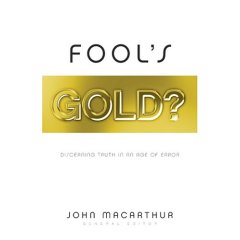
I've recently read Fool's Gold by John MacArthur. This book is a collection of essays by John MacArthur and his followers about 'discerning truth in an age of error'. The authors address a variety of trends in the modern evangelical church such as Christian rock music, altar calls, and Christian consumerism. They also critique certain popular Christian books that they consider to be theologically flawed: The Purpose-Driven Life by Rick Warren, What Saint Paul Really Said by N.T. Wright, Wild at Heart by John Eldredge, and the Revolve New Testament from Transit Books.
MacArthur's book is an ambitious, readable, and necessary attempt to hold up Christian practices to the light of Scriptural truth. Nathan Busenitz wrote a systematic attack on The Purpose Driven Life that is worthy of examination. I've long been wary of this book, given its appallingly extensive prooftexting and the bizarre reverence that many Christians seem to give it (e.g. members of my congregation bringing it to church instead of the Bible). Daniel Gillespie composed a chapter studying the theology of Wild at Heart, which I confess, had seduced me by providing non-existent Biblical confirmation of what I really wanted to be true, but is not.
The gift of discernment is a necessary instrument for Christian development, for we must exclude truth for error, to which the Apostles devoted most of the Epistles. Fool's Gold, however, sometimes borders on Phariseanism with its nitpicky attacks on its theological foes. For example, the critics of the books The Purpose Driven Life and Wild at Heart both argue that the popular works do not present a complete theology. Well, duh. They're 200-page books on one topic. The authors miss the irony that even Fool's Gold does not compose a systematic theology in its 219 pages.
Many of the book's criticisms of popular Christian trends are really just expressions of Calvinism. The clearest example is in the chapter on altar calls (Joe Carter and Shane Raynor have related and recent thoughts). Carey Hardy concluded that they undermine a proper view of the sovereignty of God:
But where is God's sovereignty in all of this? Scripture makes it clear that salvation is of the Lord -- every aspect of it -- and that those whom the Lord has foreknown and predestined, He does indeed call and justify, and whom He justifies, He will indeed someday glorify. Salvation is presented in Scripture as completed from God's perspective. Our role is faithfulness and obedience to the Lord. (p.140)
Yet in spite of the Calvinist threads of criticism running through the book, Fool's Gold is a worthwhile read for its intriguing and relevant perspectives into pop Christian trends. I recommend it.
Wednesday, July 27, 2005
Nebraska Man Charged with Having Sex with Wife
On MSNBC:
LINCOLN, Neb. - A 22-year-old man faces criminal charges in Nebraska for having sex with an underage 13-year-old girl, although he legally married her in Kansas after she became pregnant.
The man’s lawyer said the couple, with their families’ support, “made a responsible decision to try to cope with the problem.”
Matthew Koso, 22, was charged Monday with first-degree sexual assault, punishable by up to 50 years in prison. He was released on $7,500 bail pending an Aug. 17 preliminary hearing.
I dunno. It sounds like he crossed state lines to marry this kid and avoid prison. Anyway, sex between a 22-year-old and a 13-year-old is a no-brainer. Lock him up.
Hat tip: Hit and Run
LINCOLN, Neb. - A 22-year-old man faces criminal charges in Nebraska for having sex with an underage 13-year-old girl, although he legally married her in Kansas after she became pregnant.
The man’s lawyer said the couple, with their families’ support, “made a responsible decision to try to cope with the problem.”
Matthew Koso, 22, was charged Monday with first-degree sexual assault, punishable by up to 50 years in prison. He was released on $7,500 bail pending an Aug. 17 preliminary hearing.
I dunno. It sounds like he crossed state lines to marry this kid and avoid prison. Anyway, sex between a 22-year-old and a 13-year-old is a no-brainer. Lock him up.
Hat tip: Hit and Run
How to Really Make Poverty History
Via Russell Roberts comes a real understanding of why rich nations are rich and poor nations are poor:
People in rich countries are not rich because people in poor countries are poor, nor vice versa. Rich countries are rich mainly because they have benefited from two centuries of evolution of political, economic and social institutions. Poor countries are poor mainly because they have not.
If this is even partly true, the capacity of rich countries to “make poverty history” is very limited. Rich countries can damage poor countries, by destroying their social structures or looting their resources, and they once did. But they have largely ceased to do this and when de-colonisation occurred there was widespread optimism about what could be achieved. Modern technology was available, so poor countries could be spared the long, unpleasant process of development experienced by existing rich countries. With sufficient investment in infrastructure, plant and machinery and education they could progress rapidly towards higher standards of living. Aid could bridge their funding gap. In retrospect, this all seems naive. Some still argue that these measures failed because of insufficient resources, but there is general acceptance that the principal weakness of the programme was inadequate attention to institutions.
[snip]
It is time to get serious. The good news about extreme poverty is that more people have been lifted out of it in the past 10 years than in any decade in world history; that this is mainly the result of rapid economic growth in China and India, which is in turn principally due to internal reform not external action; that the real contributions of rich countries have mainly been through trade and investment, not aid; and that world leaders have played only a minor though constructive role in that process. The lesson is that world poverty will be ended by the actions of poor people themselves.
The economic success of a nation or civilization is due to, in large part, its culture. Cultures that tolerate corruption, such as Mexico or Russia, do poorly. Cultures that promote entrepreneurship tend to thrive. Those that value bureaucratic power do not. Nations that value hard work are booming. Those that value lengthy vacations are not.
These are cultural decisions, and are therefore almost impossible to influence. Just as individuals make decisions about their priorities (e.g. paying for a master's degree or buying a new car) so do cultures establish priorities that determine their economic success.
There are external factors, such as invasions or natural disasters, but as we consider ways to Make Poverty History, it's worth noting that not all problems can be solved by the movement of small green pieces of paper. Some, such as those created by differing cultural values, are beyond the reach of outside forces. Progress must come from reform, and that starts from within.
People in rich countries are not rich because people in poor countries are poor, nor vice versa. Rich countries are rich mainly because they have benefited from two centuries of evolution of political, economic and social institutions. Poor countries are poor mainly because they have not.
If this is even partly true, the capacity of rich countries to “make poverty history” is very limited. Rich countries can damage poor countries, by destroying their social structures or looting their resources, and they once did. But they have largely ceased to do this and when de-colonisation occurred there was widespread optimism about what could be achieved. Modern technology was available, so poor countries could be spared the long, unpleasant process of development experienced by existing rich countries. With sufficient investment in infrastructure, plant and machinery and education they could progress rapidly towards higher standards of living. Aid could bridge their funding gap. In retrospect, this all seems naive. Some still argue that these measures failed because of insufficient resources, but there is general acceptance that the principal weakness of the programme was inadequate attention to institutions.
[snip]
It is time to get serious. The good news about extreme poverty is that more people have been lifted out of it in the past 10 years than in any decade in world history; that this is mainly the result of rapid economic growth in China and India, which is in turn principally due to internal reform not external action; that the real contributions of rich countries have mainly been through trade and investment, not aid; and that world leaders have played only a minor though constructive role in that process. The lesson is that world poverty will be ended by the actions of poor people themselves.
The economic success of a nation or civilization is due to, in large part, its culture. Cultures that tolerate corruption, such as Mexico or Russia, do poorly. Cultures that promote entrepreneurship tend to thrive. Those that value bureaucratic power do not. Nations that value hard work are booming. Those that value lengthy vacations are not.
These are cultural decisions, and are therefore almost impossible to influence. Just as individuals make decisions about their priorities (e.g. paying for a master's degree or buying a new car) so do cultures establish priorities that determine their economic success.
There are external factors, such as invasions or natural disasters, but as we consider ways to Make Poverty History, it's worth noting that not all problems can be solved by the movement of small green pieces of paper. Some, such as those created by differing cultural values, are beyond the reach of outside forces. Progress must come from reform, and that starts from within.
Ask Dr. John
I’m sure that you’re asking all sorts of questions about this post. I get asked lots of things all the time like “John, why are you standing over my bed at 2 AM?” and “Where are your clothes?”So I get asked questions all the time, and it appears that even a vigorous pistol-whipping is no longer an effective means of deterring them. That’s why, having downloaded a degree from a diploma mill, I’m starting my own advice column. Let’s get started.
Dear Dr. John-
I’m a pastor of a large UMC church in Washington, D.C. I’ve recently been considering changing careers into something more dynamic. After a recent trip abroad, I’m giving thought to staging a coup d’etat in a small African nation. Does this dress make me look fat?
Dear Joe,
From the photos that you included I can tell you with certainty that you look good in that dress -- but you could look better. The thong shots reveal that you have excellent legs. I suggest that you use them to full effect by selecting a flirty microskirt. Besides being sexy, it's the latest fashion for murderous African despots.
Dr. John-
I have led a blessed life. I'm a successful engineer and am engaged to a beautiful Jewish girl. There's one little snag in my plan: a couple of years ago, I got drunk in Vegas and woke up married to a girl that I met in a bar. And there's my mail order bride from the Ukraine. And my three other wives in Utah. I'm thinking that the reception line at my wedding would be a good time to break the news to my beloved new bride. What do you think?
You never can tell how wives will react to past (or present) romances. Polygamy, although practiced for thousands of years, is only now gaining acceptance in America. Utah and West Virginia are among the more tolerant states in our union. I advise you to sell your Jewish princess on the idea of polygamy by professing its many advantages -- for example, she doesn't have to spend as much time with you. Futhermore, additional wives have a multiplier effect on the productivity of nagging in the home. Six wives can produce the nagging of ten solitary wives due to their sharing of resources. Look at the happy expression on the face of this man. You could be him!
Dear Dr. John-
I’m a pastor of a large UMC church in Washington, D.C. I’ve recently been considering changing careers into something more dynamic. After a recent trip abroad, I’m giving thought to staging a coup d’etat in a small African nation. Does this dress make me look fat?
Sincerely,
Joe(sephine) in D.C.
Dear Joe,
From the photos that you included I can tell you with certainty that you look good in that dress -- but you could look better. The thong shots reveal that you have excellent legs. I suggest that you use them to full effect by selecting a flirty microskirt. Besides being sexy, it's the latest fashion for murderous African despots.
Good luck,
John
John
Dr. John-
I have led a blessed life. I'm a successful engineer and am engaged to a beautiful Jewish girl. There's one little snag in my plan: a couple of years ago, I got drunk in Vegas and woke up married to a girl that I met in a bar. And there's my mail order bride from the Ukraine. And my three other wives in Utah. I'm thinking that the reception line at my wedding would be a good time to break the news to my beloved new bride. What do you think?
Mark in Delaware
Dear Mark,You never can tell how wives will react to past (or present) romances. Polygamy, although practiced for thousands of years, is only now gaining acceptance in America. Utah and West Virginia are among the more tolerant states in our union. I advise you to sell your Jewish princess on the idea of polygamy by professing its many advantages -- for example, she doesn't have to spend as much time with you. Futhermore, additional wives have a multiplier effect on the productivity of nagging in the home. Six wives can produce the nagging of ten solitary wives due to their sharing of resources. Look at the happy expression on the face of this man. You could be him!

Blessings,
Dr. John
Do you have any questions to ask Dr. John? Leave a note in the comments or e-mail locustsandhoney2005 at yahoo dot com!
Tuesday, July 26, 2005
The Price of Marriage
NAIROBI (AFP) - Former US president Bill Clinton, who was visiting Kenya, will probably never hear about it but he's being offered 20 head of cattle and 40 goats for the hand of his daughter in marriage.
The 36-year-old bachelor, Godwin Kipkemoi Chepkurgor, has waited five years after writing to the president and vows to remain unmarried until he gets an answer.
Story via Right Wing Duck. I had to strike a similar bargain with my big, tough, "I'm going to eat you alive" father-in-law. Fortunately, I only had to pay in the currency of Texas -- cow chips.
My bet: Clinton will hold out until he's offered an intern.
The 36-year-old bachelor, Godwin Kipkemoi Chepkurgor, has waited five years after writing to the president and vows to remain unmarried until he gets an answer.
Story via Right Wing Duck. I had to strike a similar bargain with my big, tough, "I'm going to eat you alive" father-in-law. Fortunately, I only had to pay in the currency of Texas -- cow chips.
My bet: Clinton will hold out until he's offered an intern.
Monday, July 25, 2005

Eliminating Clerk Positions at the Supreme Court
Michael Barone has a radical plan for changing the way the Supreme Court does business:
As a former law clerk to a federal appeals court judge (the late Wade H. McCree, Jr., of the Sixth Circuit), I have long felt that the Supreme Court justices have too many clerks. Some time ago I took a look at the statistics in the annual Harvard Law Review issue on the Supreme Court, and found that each time there was an increase in the number of Supreme Court law clerks there was also a step increase in the number of separate concurring and dissenting opinions. In the 1920s, when Chief Justice Taft encouraged unanimity and when justices had one or zero law clerks, there were few dissenting opinions and very few separate concurrences.
My radical proposal, which I am sure will never be adopted, is: reduce the number of Supreme Court law clerks to one or two. My expected result, were this ever to be done: many fewer separate opinions and clearer, more straightforward opinions that intelligent citizens could easily read in full. Try reading the opinions in most important cases today, and you need to set aside several hours and start by making a flow chart of which justices agreed with which sections of the majority (or plurality) opinion and with which sections of the separate dissents or concurring opinions. Supreme Court jurisprudence has become unfollowable even for intelligent, interested citizens. Almost no one goes through this exercise except law professors, law review editors and members of the bar who are paid upward of $500 an hour for doing so.
Fascinating! Certainly the Supreme Court justices would have less time to rape the Constitution if they actually had to personally perform the act themselves.
Anyway, the Supreme Court is increasingly resembling Weekend at Bernie's, and requiring Justices to actually work full-time might persuade the more elderly judges to retire.
As a former law clerk to a federal appeals court judge (the late Wade H. McCree, Jr., of the Sixth Circuit), I have long felt that the Supreme Court justices have too many clerks. Some time ago I took a look at the statistics in the annual Harvard Law Review issue on the Supreme Court, and found that each time there was an increase in the number of Supreme Court law clerks there was also a step increase in the number of separate concurring and dissenting opinions. In the 1920s, when Chief Justice Taft encouraged unanimity and when justices had one or zero law clerks, there were few dissenting opinions and very few separate concurrences.
My radical proposal, which I am sure will never be adopted, is: reduce the number of Supreme Court law clerks to one or two. My expected result, were this ever to be done: many fewer separate opinions and clearer, more straightforward opinions that intelligent citizens could easily read in full. Try reading the opinions in most important cases today, and you need to set aside several hours and start by making a flow chart of which justices agreed with which sections of the majority (or plurality) opinion and with which sections of the separate dissents or concurring opinions. Supreme Court jurisprudence has become unfollowable even for intelligent, interested citizens. Almost no one goes through this exercise except law professors, law review editors and members of the bar who are paid upward of $500 an hour for doing so.
Fascinating! Certainly the Supreme Court justices would have less time to rape the Constitution if they actually had to personally perform the act themselves.
Anyway, the Supreme Court is increasingly resembling Weekend at Bernie's, and requiring Justices to actually work full-time might persuade the more elderly judges to retire.
Methodist Blogs Weekly Roundup #23
Here's the week in review in the Methodist blogosphere:
Andy Bryan wrote about pastoral priorities.
Gerry Charlotte Phelps blogged about repentance as a requirement for salvation and anti-Semitism as an alarm bell for human rights.
Chris Morgan wrote about aerobic replacements for running.
At Bandits No More, Richard blogged about church discipline.
Ben Thomas wrote about Christian environmentalism and a Christian view of mystery.
Ben Witherington blogged about the validity of spiritual encounters with God and efforts to save the archaeological site of Colossae from destruction.
Beth Quick reviewed the book The Working Poor by David K. Shipler. She also wrote about the new Harry Potter novel.
James Swanson wrote about what mainline churches need to do to grow.
Cole Wakefield blogged about the execution of two gay boys in Iran.
At Connexions, Richard Hall blogged about the Brazilian man shot by London police in the Underground.
Dan McGuire wrote about castrating sex offenders and expelling illegal immigrants.
Dave Warnock blogged about creating WSGI applications, his 17th wedding anniversary, and the boredom of running a SunRays server (it never beaks down).
David Camphouse wrote about ways to staff a church when it reaches 250 members or more.
Dean Snyder was surprised to discover old materials from his own church in another UMC church in Liberia. He also wrote about a UM leading the presidential race in Liberia, a new addition to the Methodist blogosphere, and who paid for the pro-gay demonstration at Junaluska.
Donald Sensing wrote about the status of Islamic fanaticism in Britain, British Muslims working with the police, and planting identification information on cell phones.
Gavin Richardson wrote a Methodist blogger profile and blogged about efforts for a government takeover of the Catholic Church in Canada.
The Gospel According to the Hood reviewed a book about applying the Trinity to Christian living, a Christian view of the Virgin Mary, reverence for God in the modern church, the purpose of attending church (his hint: it's not about your needs), and the moral dimension of environmentalism.
Greg Hazelrig blogged about supportive relationships in a church, loving strangers, unity in the Church, being teachable, and the damage done by hateful words.
Growing Up wrote about discerning about what parts of Christian culture can be safely changed from which must be kept, wrong assumptions about autism, and why she's a United Methodist.
Inside Mike's Head blogged about the proper application of capitalism to Christian ministry management.
James Spring wrote about the nomination of Judge Roberts to the Supreme Court.
Jay Voorhees blogged about Harry Potter.
John Wilks wrote about the factuality of the Bible and a balanced understanding of miracles.
Jonathon Norman blogged about creating alternatives to the War on Terror, the devastating impact of consumerism on theology, and modern church discipline.
Jordan Cooper wrote about articulating an emergent theology, why he takes theological disagreements personally, and how the Conservative Party of Canada can better spread its message through blogging.
Josh Tinley blogged about making your financial investments reflect your moral values, simplifying the English language, and Harry Potter.
Ken Carter wrote about turning aside from the busyness of life to take care of people and summer life in a church.
Maobi blogged about Ricky Martin, modern warfare as being thought-focused, Islamic intolerance to apostates, Malaysian monetary policy, Lance Armstrong, economic redistribution in Malaysia, the shooting in the London Underground, Malaysian currency regulations, people confusing Singapore for Malaysia, Australian PM John Howard's response to terrorism, hiding Islam's ugly side, the death of James Doohan and the mentality of engineers, and female role-models in Malaysia.
Matthew Johnson wrote about finding wisdom in the music of Weezer and being owned by his possessions.
Michael Daniel blogged about a Christian view of the power of the state, decided what issues should be allowed to divide the church, the necessity of faith, the Judaizers that the apostle Paul struggled against, and the perceived need for ethical studies.
Son of Spring wrote about the new version of Microsoft Windows and a new blogging gimmick called Gavatar.
OctoMusing blogged about the tsunami disaster in Sri Lanka and a story of survival through faith and called upon God to convict His church to end poverty in Africa.
Wes Magruder wrote about the arrival of a Cameroonian UMC pastor in America.
Progressive Christian blogged about defending the Christian Alliance for Progress from the attacks of Jerry Falwell.
Theresa Coleman wrote about relics of her family history, being called of God, and dragonology research.
Rich Jones blogged about the value of Scripture.
See-Through Faith wrote about church as a place of escape, breaking addictions spiritually, a generation gap in her church, the second round of terrorist attacks in London, what it means to be sorry or regretful, learning Swedish as preparation for ministry, and ideal worship in the perfect church.
Jim McKay blogged about Judge Roberts' young son, an upcoming Smurf movie, and Lakewood Church's new building.
Wes the Wesleyan wrote about the General Board of Church and Society supporting certain organizations in violation of UMC Judicial Council decisions.
Shane Raynor blogged about John Sprong's efforts to establish a liberal Christian base, a Christian view of church marketing, proposed changes in Methodist seminaries, and the importance of a life of holiness for good Christians, above and beyond good theology.
Additions? Corrections? Do you know of a blog that should be added to the MBWR? Leave a note in the comments or e-mail locustsandhoney2005 at yahoo dot com.
I'm too rushed and too tired to note the 'Best of the Methodist Blogosphere'. If you see something worthy, note it in the comments and I will make the change.
Andy Bryan wrote about pastoral priorities.
Gerry Charlotte Phelps blogged about repentance as a requirement for salvation and anti-Semitism as an alarm bell for human rights.
Chris Morgan wrote about aerobic replacements for running.
At Bandits No More, Richard blogged about church discipline.
Ben Thomas wrote about Christian environmentalism and a Christian view of mystery.
Ben Witherington blogged about the validity of spiritual encounters with God and efforts to save the archaeological site of Colossae from destruction.
Beth Quick reviewed the book The Working Poor by David K. Shipler. She also wrote about the new Harry Potter novel.
James Swanson wrote about what mainline churches need to do to grow.
Cole Wakefield blogged about the execution of two gay boys in Iran.
At Connexions, Richard Hall blogged about the Brazilian man shot by London police in the Underground.
Dan McGuire wrote about castrating sex offenders and expelling illegal immigrants.
Dave Warnock blogged about creating WSGI applications, his 17th wedding anniversary, and the boredom of running a SunRays server (it never beaks down).
David Camphouse wrote about ways to staff a church when it reaches 250 members or more.
Dean Snyder was surprised to discover old materials from his own church in another UMC church in Liberia. He also wrote about a UM leading the presidential race in Liberia, a new addition to the Methodist blogosphere, and who paid for the pro-gay demonstration at Junaluska.
Donald Sensing wrote about the status of Islamic fanaticism in Britain, British Muslims working with the police, and planting identification information on cell phones.
Gavin Richardson wrote a Methodist blogger profile and blogged about efforts for a government takeover of the Catholic Church in Canada.
The Gospel According to the Hood reviewed a book about applying the Trinity to Christian living, a Christian view of the Virgin Mary, reverence for God in the modern church, the purpose of attending church (his hint: it's not about your needs), and the moral dimension of environmentalism.
Greg Hazelrig blogged about supportive relationships in a church, loving strangers, unity in the Church, being teachable, and the damage done by hateful words.
Growing Up wrote about discerning about what parts of Christian culture can be safely changed from which must be kept, wrong assumptions about autism, and why she's a United Methodist.
Inside Mike's Head blogged about the proper application of capitalism to Christian ministry management.
James Spring wrote about the nomination of Judge Roberts to the Supreme Court.
Jay Voorhees blogged about Harry Potter.
John Wilks wrote about the factuality of the Bible and a balanced understanding of miracles.
Jonathon Norman blogged about creating alternatives to the War on Terror, the devastating impact of consumerism on theology, and modern church discipline.
Jordan Cooper wrote about articulating an emergent theology, why he takes theological disagreements personally, and how the Conservative Party of Canada can better spread its message through blogging.
Josh Tinley blogged about making your financial investments reflect your moral values, simplifying the English language, and Harry Potter.
Ken Carter wrote about turning aside from the busyness of life to take care of people and summer life in a church.
Maobi blogged about Ricky Martin, modern warfare as being thought-focused, Islamic intolerance to apostates, Malaysian monetary policy, Lance Armstrong, economic redistribution in Malaysia, the shooting in the London Underground, Malaysian currency regulations, people confusing Singapore for Malaysia, Australian PM John Howard's response to terrorism, hiding Islam's ugly side, the death of James Doohan and the mentality of engineers, and female role-models in Malaysia.
Matthew Johnson wrote about finding wisdom in the music of Weezer and being owned by his possessions.
Michael Daniel blogged about a Christian view of the power of the state, decided what issues should be allowed to divide the church, the necessity of faith, the Judaizers that the apostle Paul struggled against, and the perceived need for ethical studies.
Son of Spring wrote about the new version of Microsoft Windows and a new blogging gimmick called Gavatar.
OctoMusing blogged about the tsunami disaster in Sri Lanka and a story of survival through faith and called upon God to convict His church to end poverty in Africa.
Wes Magruder wrote about the arrival of a Cameroonian UMC pastor in America.
Progressive Christian blogged about defending the Christian Alliance for Progress from the attacks of Jerry Falwell.
Theresa Coleman wrote about relics of her family history, being called of God, and dragonology research.
Rich Jones blogged about the value of Scripture.
See-Through Faith wrote about church as a place of escape, breaking addictions spiritually, a generation gap in her church, the second round of terrorist attacks in London, what it means to be sorry or regretful, learning Swedish as preparation for ministry, and ideal worship in the perfect church.
Jim McKay blogged about Judge Roberts' young son, an upcoming Smurf movie, and Lakewood Church's new building.
Wes the Wesleyan wrote about the General Board of Church and Society supporting certain organizations in violation of UMC Judicial Council decisions.
Shane Raynor blogged about John Sprong's efforts to establish a liberal Christian base, a Christian view of church marketing, proposed changes in Methodist seminaries, and the importance of a life of holiness for good Christians, above and beyond good theology.
Additions? Corrections? Do you know of a blog that should be added to the MBWR? Leave a note in the comments or e-mail locustsandhoney2005 at yahoo dot com.
I'm too rushed and too tired to note the 'Best of the Methodist Blogosphere'. If you see something worthy, note it in the comments and I will make the change.
Sunday, July 24, 2005
Applying Biblical Prophecy to History
I don't completely buy into the idea that the modern state of Israel shares the same covenant and relationship with God that ancient Israel did, but when I ran across these verses in Isaiah 19 today, I became curious:
16In that day the Egyptians will become like women, and they will tremble and be in dread because of the waving of the hand of the LORD of hosts, which He is going to wave over them.
17The land of Judah will become a terror to Egypt; everyone to whom it is mentioned will be in dread of it, because of the purpose of the LORD of hosts which He is purposing against them.
18In that day five cities in the land of Egypt will be speaking the language of Canaan and swearing allegiance to the LORD of hosts; one will be called the City of Destruction.
The only time in history that I can recall of such an event would be the Six Day War, after which Israel briefly attempted to colonize the Sinai.
Of course, this prophecy could refer to an event yet to take place.
What other interpretations of this Scripture are possible?
16In that day the Egyptians will become like women, and they will tremble and be in dread because of the waving of the hand of the LORD of hosts, which He is going to wave over them.
17The land of Judah will become a terror to Egypt; everyone to whom it is mentioned will be in dread of it, because of the purpose of the LORD of hosts which He is purposing against them.
18In that day five cities in the land of Egypt will be speaking the language of Canaan and swearing allegiance to the LORD of hosts; one will be called the City of Destruction.
The only time in history that I can recall of such an event would be the Six Day War, after which Israel briefly attempted to colonize the Sinai.
Of course, this prophecy could refer to an event yet to take place.
What other interpretations of this Scripture are possible?
Methodist Blogger Profile: Me
Gavin Richardson has profiled me (different from the FBI profiler's report) over on his blog.
I'm honored that he asked me. Thanks, Gavin!
I'm honored that he asked me. Thanks, Gavin!
Saturday, July 23, 2005
Leader of Methodist Church in Fiji Dead
ABC Asia Pacific:
The president of the Methodist Church in Fiji, Reverend Jione Langi, has died at his home in Suva.
Reverend Langi became president of the church last year, after serving six years as general secretary.
The president of the Methodist Church in Fiji, Reverend Jione Langi, has died at his home in Suva.
Reverend Langi became president of the church last year, after serving six years as general secretary.

Friday, July 22, 2005
Mere Coincidence
Observe that Hurricane Dennis didn't happen until Dean was safely away from the danger in Liberia.
Not that I'm accusing anyone of anything. I'm just sayin'.
Not that I'm accusing anyone of anything. I'm just sayin'.
Thursday, July 21, 2005

Wednesday, July 20, 2005
An Epiphany of Great Importance
Have you ever realized that 'rabbit' spelled backwards is 'tibbar"?
Kind makes you think, huh?
Kind makes you think, huh?
Tuesday, July 19, 2005
Methodist Blogs Weekly Roundup #22
Here's the week in review in the Methodist blogosphere:
James Gibson has an idea for a book: 100 People Who Aren't as Important to the Church as They Think.
Andy Bryan wrote about the travails of being a famous blogger.
Chris Morgan blogged about car shopping from a Christian perspective and learning to listen to God through the distractions of life, rather than instead of them (Best of the Methodist blogosphere!).
At Bandits No More, Richard blogged about the nature of unity in the UMC and Steve wrote that leaders lose credibility when they fail to respect followers.
Ben Thomas explored doctrinal formation from a deconstructionist perspective, the fallacy of assuming that anything new is progress, the spiritual importance of the nudity of Adam and Eve, the importance of struggle to spiritual development, and his position on the 10 Commandments in public buildings.
Beth Quick wrote about the responses to her survey on pastoral visitation.
Ben Witherington wrote a review to the movie Fantastic Four.
James Swanson said that Christians do not live by the standard of 'winning at any cost'.
Cole Wakefield wrote that the UMC will destroy itself if it doesn't accept homosexuals and gave an update on Zach, the gay teenager forced into a re-education camp.
At Connexions, Richard Hall blogged about Rep. Tancredo's 'nuke Mecca' remark, the future science of teleportation and its spiritual implications, and thoughts on the London bombings. Joel Thomas blogged about the proper description of his rants.
ConXian preached about opening your eyes and finding God in your midst.
Daniel McGuire wrote about the utility of Tasers in the hands of police.
Dave Warnock wrote that it's okay to call Christianity a religion and exposing pro-masculine bias in Bible translation.
David Camphouse blogged about when it's time for a growing church to acquire an associate pastor, the difference between a church and a temple, and approaches and tools for sermon preparation.
Donald Sensing wrote about how the US should respond to a terrorist nuclear attack, the theology of Islamic martyrdom, Rep. Tancredo's 'nuke Mecca' remark, expanding the armed forces by a Presidential call for volunteers, Harry Potter sales, the BBC's struggle with the term 'terrorist'.
Gavin Richardson blogged about gangsta theologian Jonathon Norman.
Grandma Jean, as usual, got mixed up with the police.
Greg Hazelrig wrote about the importance of being theologically correct and forgiving others to receive forgiveness yourself.
Growing Up explains why she's a United Methodist and a Christian response to illegal immigration.
Guy Williams blogged about confronting intellectual challenges to your cultural assumptions.
James Spring wrote about impeaching Bush.
Jay Voorhees blogged about reading Tom Friedman's The World is Flat and the UMC itinerancy system.
John Wilks' unborn child has died. He asks for prayers for his wife.
Jonathon Norman wrote about how to blog in silence and the Parable of the Thistles and the Wheat.
Jordan Cooper's health is improving. He wrote about the importance of sweatshops for economic development.
Josh Tinley wrote about conservative support for animal rights, reducing abortion (Best of the Methodist blogosphere!).
Ken Carter blogged about dealing with regime changes in everyday life.
Maobi wrote about Microsoft's certification programs, Muslim intolerance to others in Malaysia, the meaning of Malaysia's national anthem, enjoying the sight of expats scrambling for hot dogs, and what college grads need to succeed in the job market, and whether discrimination is a good thing or a bad thing (Best of the Methodist blogosphere!)
OctoMusings wrote about rediscovering the Holy Spirit in the British Methodist Church and the future economic losses of London bombings.
Wes Magruder blogged about the mistake of being surprised that other people are spiritual, too.
Progressive Christian wrote about a 4th of July church service that he'd like to see (Best of the Methodist blogosphere!).
Theresa Coleman blogged about a spiritual journey taking place on a single Monday.
See-Through Faith wrote about being so spiritually focused as to be unaware of a material world, spiritual dieting, integrity at the workplace, and the challenge of being a Christian in an increasingly sexualized culture.
Shawn Richardson blogged about serving the needs of the poor in Iraq as a Christian witness.
Thoughts from a Clay Pot wrote about gardening as a spiritual discipline.
Shane Raynor blogged about praying for the UMC, criticism of Lakewood Church, universalism in the UMC, and people leaving the UMC but continuing to slam it.
Scandal of Particularity wrote about pre-natal testing of developmental disorders.
Corrections? Additions? Have I made any mistakes in my sleep-deprived haze? Do you know of a blog that should be added to the MBWR? Leave a note in the comments.
James Gibson has an idea for a book: 100 People Who Aren't as Important to the Church as They Think.
Andy Bryan wrote about the travails of being a famous blogger.
Chris Morgan blogged about car shopping from a Christian perspective and learning to listen to God through the distractions of life, rather than instead of them (Best of the Methodist blogosphere!).
At Bandits No More, Richard blogged about the nature of unity in the UMC and Steve wrote that leaders lose credibility when they fail to respect followers.
Ben Thomas explored doctrinal formation from a deconstructionist perspective, the fallacy of assuming that anything new is progress, the spiritual importance of the nudity of Adam and Eve, the importance of struggle to spiritual development, and his position on the 10 Commandments in public buildings.
Beth Quick wrote about the responses to her survey on pastoral visitation.
Ben Witherington wrote a review to the movie Fantastic Four.
James Swanson said that Christians do not live by the standard of 'winning at any cost'.
Cole Wakefield wrote that the UMC will destroy itself if it doesn't accept homosexuals and gave an update on Zach, the gay teenager forced into a re-education camp.
At Connexions, Richard Hall blogged about Rep. Tancredo's 'nuke Mecca' remark, the future science of teleportation and its spiritual implications, and thoughts on the London bombings. Joel Thomas blogged about the proper description of his rants.
ConXian preached about opening your eyes and finding God in your midst.
Daniel McGuire wrote about the utility of Tasers in the hands of police.
Dave Warnock wrote that it's okay to call Christianity a religion and exposing pro-masculine bias in Bible translation.
David Camphouse blogged about when it's time for a growing church to acquire an associate pastor, the difference between a church and a temple, and approaches and tools for sermon preparation.
Donald Sensing wrote about how the US should respond to a terrorist nuclear attack, the theology of Islamic martyrdom, Rep. Tancredo's 'nuke Mecca' remark, expanding the armed forces by a Presidential call for volunteers, Harry Potter sales, the BBC's struggle with the term 'terrorist'.
Gavin Richardson blogged about gangsta theologian Jonathon Norman.
Grandma Jean, as usual, got mixed up with the police.
Greg Hazelrig wrote about the importance of being theologically correct and forgiving others to receive forgiveness yourself.
Growing Up explains why she's a United Methodist and a Christian response to illegal immigration.
Guy Williams blogged about confronting intellectual challenges to your cultural assumptions.
James Spring wrote about impeaching Bush.
Jay Voorhees blogged about reading Tom Friedman's The World is Flat and the UMC itinerancy system.
John Wilks' unborn child has died. He asks for prayers for his wife.
Jonathon Norman wrote about how to blog in silence and the Parable of the Thistles and the Wheat.
Jordan Cooper's health is improving. He wrote about the importance of sweatshops for economic development.
Josh Tinley wrote about conservative support for animal rights, reducing abortion (Best of the Methodist blogosphere!).
Ken Carter blogged about dealing with regime changes in everyday life.
Maobi wrote about Microsoft's certification programs, Muslim intolerance to others in Malaysia, the meaning of Malaysia's national anthem, enjoying the sight of expats scrambling for hot dogs, and what college grads need to succeed in the job market, and whether discrimination is a good thing or a bad thing (Best of the Methodist blogosphere!)
OctoMusings wrote about rediscovering the Holy Spirit in the British Methodist Church and the future economic losses of London bombings.
Wes Magruder blogged about the mistake of being surprised that other people are spiritual, too.
Progressive Christian wrote about a 4th of July church service that he'd like to see (Best of the Methodist blogosphere!).
Theresa Coleman blogged about a spiritual journey taking place on a single Monday.
See-Through Faith wrote about being so spiritually focused as to be unaware of a material world, spiritual dieting, integrity at the workplace, and the challenge of being a Christian in an increasingly sexualized culture.
Shawn Richardson blogged about serving the needs of the poor in Iraq as a Christian witness.
Thoughts from a Clay Pot wrote about gardening as a spiritual discipline.
Shane Raynor blogged about praying for the UMC, criticism of Lakewood Church, universalism in the UMC, and people leaving the UMC but continuing to slam it.
Scandal of Particularity wrote about pre-natal testing of developmental disorders.
Corrections? Additions? Have I made any mistakes in my sleep-deprived haze? Do you know of a blog that should be added to the MBWR? Leave a note in the comments.
State Legislatures Respond to the Kelo SCOTUS Decision
Outraged responses to the Supreme Court's bizarre Kelo decision is percolating through the state legislatures. Texas, Alabama, Tennessee, Illinois, Virginia, New York, New Jersey, Massachusetts, Pennsylvania, California, Connecticut, Alabama, Georgia, and Michigan are some of the state governments considering action to limit the abuse of eminent domain.
Monday, July 18, 2005
Methodist Blogger Profile: Jonathan Norman

Jonathon Norman of the Phaith of Saint Phransus
I have lived in Tennessee all my life- and Nashville most of my life. I didn’t grow up going to church but began attending a United Methodist church when I was in middle school. I became active in the life of Dalewood UMC through the youth group, fell in love with one of the girls in the youth group and never left the church after that. I dated Jennifer (the girl in the youth group) all through high school, college and we got married right after college and how have 2 beautiful children- Jonas, 3 and Abby, 9 months.
I attended Middle Tennessee State University where I studied Philosophy with a minor in Religious Studies. I am now working on a Masters in Theological Studies at Trevecca Nazarene University. I’ve been a youth pastor for 11 years now and am currently in the candidacy process to become a licensed local pastor. I absolutely love youth ministry.
Why do you blog?
I blog mainly because I love to write, and for me- blogging is a spiritual practice, a lot like journaling. Plus, it helps me get my ideas out and wrestle with what I think.
What has been your best blogging experience?
My best blogging experience was my interview with theologian James K.A. Smith. Smith is the author of “Introducing Radical Orthodoxy” which is a book I’m reading that is having a big impact on my thinking. The interview went great and I discovered that he also blogs. So we’ve developed a pseudo friendship now.
What would be your main advice to a novice blogger?
Keep writing until you find your voice. Once you do, look for others to network with. My favorite part of blogging has been the small community of friends I’ve made that all visit one another’s blog.
If you only had time to read three blogs a day, what would they be?
1. Gavin Richardson’s http://www.gavoweb.blogs.com/
2. Jonny Baker’s http://jonnybaker.blogs.com/jonnybaker/
3. Jay Voorhees’ http://onlywonder.com/wordpress/
Who are your spiritual heroes?
1. Saint Francis (duh, go figure)
2. St. Benedict
3. Oscar Romero
What are you reading at the moment?
At the moment I am reading, not completely by choice although it’s good, Introducing Radical Orthodoxy by James K.A. Smith, Radical Orthodoxy by John Milbank and others, and then by choice- Another City by Barry Harvey
What is your favorite hymn and why?
“Jesu, Jesu”, 432 in the UM Hymnal. It’s a really cool folk song from Ghana. I love the lyrics and the melody.
Can you name a major moral, political, or philosophical issue on which you've changed your mind?
I have actually changed my mind twice on the issue of abortion. During college as my theology and politics began to shift I went from being pro-life to pro-choice. I also moved from supporting the death penalty to not supporting the death penalty. Since then I have adopted a pro-life stance: pro life that means that I believe ALL LIFE is sacred. For me pro life is inconsistent unless it opposes: 1. abortion, 2. capital punishment, 3. war.
What philosophical thesis do you think is most important to combat?
I think in our culture- the idea that “it’s all about me”/ie individualism is a HUGE problem that must be addressed by the church, and responded to. An affect of individualism is that Christians tend to see our relationship with Jesus as personal rather than communal (it’s just me and Jesus). I won’t go into specifics here, but both conservative and liberal Christians suffer theologically from individualist theology. If we take the Trinity seriously then we take serious that God is communal in nature
If you could affect one major change in the governing of your country, what would it be?
At this point, being the very impractical person that I am, I would find a way to create a level playing field for 3rd party candidates- whether green or libertarian, etc… Democrats and Republicans have taken us for granted for two long and their arguments and squabbles tire me.
If you could affect one major policy change in the United Methodist Church, what would it be?
I would like to see Bishops able to move across jurisdictional boundaries. I think our conferences and bishops have missed out on some wonderful potential “good fits” for ministry because we only allow bishops to move within a certain geographical area. Although, I’m still holding out that Bishop Willimon might make it to Tennessee next go around.
What would be your most important piece of advice about life?
When it comes to others- take life seriously; when it comes to yourself- don’t take it too seriously. I’m a pretty serious person who acts way to silly; although some would say that I am a pretty silly person who acts way too serious. Go figure.
What, if anything, do you worry about?
Paying bills on time, being a good dad and husband, and the violence in our world.
If you were to relive your life to this point, is there anything that you'd do differently?
I married my high school sweetheart, I have 2 extremely cute and loving kids, and I love what I do presently- hmmmm… Nope. I fear if I were to relive something it would be like “Back to the Future” and all of a sudden the faces of people I love are disappearing from family photos. That’s scary stuff.
Where would you most like to live (other than where you do now)?
Easy- I’d live in either Savannah Georgia, or Charleston SC. I love the southern charm of both cities. Every time I see a youth pastor position open in one of the cities I kind of get teary eyed thinking, “wouldn’t that be nice”.
What do you like doing in your spare time?
I would say that I enjoy writing (which I actually do immensely) but grad school has sucked the fun out of it... (not really, but my procrastination certainly has). But I also enjoy road trips with Jen, Jonas and Abby, hanging out in coffee shops with Gavin, reading fairly dry theology, and songwriting.
What is your most treasured possession?
Well, I don’t really consider my kids, Jonas and Abby, possessions- but they are what I treasure the most. But if it must be a possession, I suppose it would be my laptop since I depend on it for work, play and communication.
What talent would you most like to have?
Quick wit, and the ability to create ice cream socials all over the country where liberals and conservative Christians would sit, eat, and lick ice cream cones in joyful merriment, talking doctrine and theology while laughing and commenting on how good the chocolate chip ice cream is.
If you could have three guests, past or present, to dinner, who would they be?
1. Stanley Hauerwas (he would be fun as all get out to hang out with, especially with Soren in the room)
2. Soren Kierkegaard (I hear he was the life of the party back in the day)
3. Socrates (I think he’d keep the conversation going with all his questions)Now, that’s one kickin’ dinner party with some rich theological /ethical conversation, eh?
Saturday, July 16, 2005
Top Ten Hymns for the Elderly
10. It is Well With My Soul (But My Back Aches a Lot)
9. Nobody Knows the Trouble I have Seeing
8. There's Something About That Name (But I Can't Remember What It Is At the Moment...)
7. Just a Slower Walk With Thee
6. Count Your Many Birthdays, Name Them One By One
5. Go Tell It On the Mountain--and Speak Up!
More here.
9. Nobody Knows the Trouble I have Seeing
8. There's Something About That Name (But I Can't Remember What It Is At the Moment...)
7. Just a Slower Walk With Thee
6. Count Your Many Birthdays, Name Them One By One
5. Go Tell It On the Mountain--and Speak Up!
More here.
Friday, July 15, 2005
The Sweatshop: a Sign of Progress
Don Boudreaux on child labor in developing nations:
I lectured this past weekend at an IHS seminar. A few of the outstanding students in attendance questioned my support of free trade with countries in which children work in factories. To these students, such labor is evil and should not be encouraged or even tolerated. (I think I’ll e-mail to these students this Postrel column.)
"What’s the alternative?" I asked these students.
Asking such a question sounds callous. But if the alternative to working in a factory is working on a (probably subsistence) farm, two thoughts should spring immediately to mind: (1) in societies in which child labor is prevalent, children will labor somewhere, even if regulations and trade sanctions remove them from factories producing goods for export to rich countries – locking children out of factory work does not thereby send them home to watch tv, practice piano, read Roald Dahl, or help grandma bake muffins; (2) farm work isn’t necessarily safer or more pleasant than factory work – perhaps it is better in some dimensions (maybe even in most dimensions); my point is that farm labor shouldn’t be romanticized just because it’s done outdoors with furry or feathery critters (who kick, bite, defecate, and attract vermin and insects). If reliable data could be gathered, I'd bet that they'd show that farm labor in such countries is almost as dangerous and unpleasant as is the typical job performed by a child laborer in a factory.
Boudreaux's reasoning can likewise be applied to adults laboring in sweatshops -- the proverbial Indonesian working for 50 cents a day in a dangerous factory making high-priced sneakers for Americans. This man might be making a ghastly pittance by American standards, but it was a pittance that he didn't receive before the shoe factory was built.
Sweatshop work looks horrible to American eyes, but it is obviously a good idea to the citizens of developing nations, as they would otherwise they wouldn't choose* to work there. The Sweatshop Stage of economic development is an ugly, but essential step on the road to progress.
If critics of sweatshop imports are serious about helping people in developing nations, they would buy their products, rather than boycott them.
*As to distinguish from literal slave-labor nations, such as China, where workers do not have a choice.
UPDATE: Dare We Be Christians and Maobi have related comments.
I lectured this past weekend at an IHS seminar. A few of the outstanding students in attendance questioned my support of free trade with countries in which children work in factories. To these students, such labor is evil and should not be encouraged or even tolerated. (I think I’ll e-mail to these students this Postrel column.)
"What’s the alternative?" I asked these students.
Asking such a question sounds callous. But if the alternative to working in a factory is working on a (probably subsistence) farm, two thoughts should spring immediately to mind: (1) in societies in which child labor is prevalent, children will labor somewhere, even if regulations and trade sanctions remove them from factories producing goods for export to rich countries – locking children out of factory work does not thereby send them home to watch tv, practice piano, read Roald Dahl, or help grandma bake muffins; (2) farm work isn’t necessarily safer or more pleasant than factory work – perhaps it is better in some dimensions (maybe even in most dimensions); my point is that farm labor shouldn’t be romanticized just because it’s done outdoors with furry or feathery critters (who kick, bite, defecate, and attract vermin and insects). If reliable data could be gathered, I'd bet that they'd show that farm labor in such countries is almost as dangerous and unpleasant as is the typical job performed by a child laborer in a factory.
Boudreaux's reasoning can likewise be applied to adults laboring in sweatshops -- the proverbial Indonesian working for 50 cents a day in a dangerous factory making high-priced sneakers for Americans. This man might be making a ghastly pittance by American standards, but it was a pittance that he didn't receive before the shoe factory was built.
Sweatshop work looks horrible to American eyes, but it is obviously a good idea to the citizens of developing nations, as they would otherwise they wouldn't choose* to work there. The Sweatshop Stage of economic development is an ugly, but essential step on the road to progress.
If critics of sweatshop imports are serious about helping people in developing nations, they would buy their products, rather than boycott them.
*As to distinguish from literal slave-labor nations, such as China, where workers do not have a choice.
UPDATE: Dare We Be Christians and Maobi have related comments.

Stretched Too Thin
Signaling a shift in strategy, the White House acknowledged today that the United States may not possess adequate forces to wage war against Iraq and gay marriage at the same time.
In the past, Pentagon planners had always formulated their budget requests on the assumption that the U.S. must be able to fight the insurgency in Iraq and the rising tide of gay marriages at home simultaneously, but that calculus has changed, the White House said.
In a press briefing, spokesman Scott McClellan acknowledged the difficulties of trying to wipe out the insurgency and gay weddings at the same time: “It turns out that these insurgents are more determined than we originally expected, and so are these damn gay couples.”
Mr. McClellan also raised the possibility that the insurgency in Iraq could prevent the U.S. from continuing to fight the war on obesity.
“Let’s face it, folks,” Mr. McClellan said. “For the near term at least, we may be looking at a gayer, fatter America.”
More here.
In the past, Pentagon planners had always formulated their budget requests on the assumption that the U.S. must be able to fight the insurgency in Iraq and the rising tide of gay marriages at home simultaneously, but that calculus has changed, the White House said.
In a press briefing, spokesman Scott McClellan acknowledged the difficulties of trying to wipe out the insurgency and gay weddings at the same time: “It turns out that these insurgents are more determined than we originally expected, and so are these damn gay couples.”
Mr. McClellan also raised the possibility that the insurgency in Iraq could prevent the U.S. from continuing to fight the war on obesity.
“Let’s face it, folks,” Mr. McClellan said. “For the near term at least, we may be looking at a gayer, fatter America.”
More here.
Taking Responsibility for Past Racism
From Christian Century via Infotrac:
Alabama United Methodists have made a symbolic gesture to demonstrate their repentance for past support of segregation in their state. William Willimon, bishop of the North Alabama Conference of the United Methodist Church, led a walk in Birmingham to the steps of one of the denomination's former landmark churches June 6 for a service to repent of racial injustice and to pledge to be more inclusive. Willimon stood on the front steps of the former McCoy United Methodist Church, which closed in 1993. In recent decades, dozens of largely white United Methodist churches have closed as neighborhoods around them became predominantly black. Outside the former church, the Methodists recited a prayer that included harsh self-analysis: "We hereby repent of our sins as a church. Forgive our self-centered, defensive, cowardly ways."
Alabama United Methodists have made a symbolic gesture to demonstrate their repentance for past support of segregation in their state. William Willimon, bishop of the North Alabama Conference of the United Methodist Church, led a walk in Birmingham to the steps of one of the denomination's former landmark churches June 6 for a service to repent of racial injustice and to pledge to be more inclusive. Willimon stood on the front steps of the former McCoy United Methodist Church, which closed in 1993. In recent decades, dozens of largely white United Methodist churches have closed as neighborhoods around them became predominantly black. Outside the former church, the Methodists recited a prayer that included harsh self-analysis: "We hereby repent of our sins as a church. Forgive our self-centered, defensive, cowardly ways."
Thursday, July 14, 2005
Excluding People from Church Membership
Shane and the Methoblogosphere has been a-talkin' about a UMC pastor who has been suspended from his position for refusing to admit a homosexual as a member of his church.
Me? I'm all for excluding certain undesirable 'people' from the church. You know who I'm talking about -- zombies. Even when the altar candles are scented, I can barely get through a worship service if some decaying zombie stinking up the sanctuary. What, was the local United Church of Christ full? I tell you, the next time that I swallow my pride and shake a zombie's hand, only to have it fall off...well, let's just say that their kind ought to go back where they belong. Their whole 'I'm going to eat your brain' attitude is hardly conducive to Christian fellowship. Since they can't move too quickly, they've been preying on the elderly, who are the most consistent attenders, so our attendance numbers have had a net loss, in spite of the stupid "Open Hearts, Open Minds, Open Doors" to zombies thing.
Anyway, I can't believe that we're even debating this issue, as the Bible is awfully clear on the subject of the zombies. I mean, could Obaderemiah 4:8 be any more explicit? Sheesh. Oh, I'm sure that Joel Thomas is going to go off on one of his rants "why are you picking on the zombies? Why that sin in particular? You let ghouls, vampires, mummies, and even libertarians in -- why exclude only zombies?" For once, be reasonable, Joel. We all go through tough times in life -- divorce, adultery, greed, mummification. But zombies are different. What, are we supposed to let our children around these people?
Every four years at General Conference we have these stupid debates about zombieality. The Left is always pushing for defining undeadification down and making zombie conduct morally acceptable. Now there are even openly zombie pastors being fully ordained and rogue conferences are simply refusing to enforce the clear dictates of The Book of Discipline on the subject! What's next?
Me? I'm all for excluding certain undesirable 'people' from the church. You know who I'm talking about -- zombies. Even when the altar candles are scented, I can barely get through a worship service if some decaying zombie stinking up the sanctuary. What, was the local United Church of Christ full? I tell you, the next time that I swallow my pride and shake a zombie's hand, only to have it fall off...well, let's just say that their kind ought to go back where they belong. Their whole 'I'm going to eat your brain' attitude is hardly conducive to Christian fellowship. Since they can't move too quickly, they've been preying on the elderly, who are the most consistent attenders, so our attendance numbers have had a net loss, in spite of the stupid "Open Hearts, Open Minds, Open Doors" to zombies thing.
Anyway, I can't believe that we're even debating this issue, as the Bible is awfully clear on the subject of the zombies. I mean, could Obaderemiah 4:8 be any more explicit? Sheesh. Oh, I'm sure that Joel Thomas is going to go off on one of his rants "why are you picking on the zombies? Why that sin in particular? You let ghouls, vampires, mummies, and even libertarians in -- why exclude only zombies?" For once, be reasonable, Joel. We all go through tough times in life -- divorce, adultery, greed, mummification. But zombies are different. What, are we supposed to let our children around these people?
Every four years at General Conference we have these stupid debates about zombieality. The Left is always pushing for defining undeadification down and making zombie conduct morally acceptable. Now there are even openly zombie pastors being fully ordained and rogue conferences are simply refusing to enforce the clear dictates of The Book of Discipline on the subject! What's next?
Wednesday, July 13, 2005
Wycliffe Bible Translation Project: Valley Girl
Blessed be the humble workers of the Wycliffe Bible Translators, who have strived to make the Word available to all the nations of the earth. In addition to their difficult, yet fruitful effort to translate the Bible into Smurf, they have now released their edition of the Scriptures in Valley Girl:
13Someone in the crowd said to like, him, "Teacher, tell my brother to like, divide the inheritance with me."
14Jesus replied, "Man, who appointed me a judge or an arbiter between you?"
15Then he said to like, them, "Watch out. Oh my God! Be on your guard against all kinds of greed; a man's life does not consist in the abundance of his possessions."
16And he told them this parable: "The ground of a certain rich man produced a good crop.
17He thought to like, himself, 'What shall I do? I have no place to like, store my crops.'
18"Then he said, 'This is like totally what I'll do. I will like, tear down my barns and build bigger ones, and there I will like, store all my grain and my goods.
19And I'll say to like, myself, "You have plenty of good things laid up for many years. Take life easy; eat, drink and be merry." '
20"But God said to like, him, 'You fool. Oh my God! This totally night your life will like, be demanded from you. Then who will like, get what you have prepared for yourself?'
21"This is like totally how it will like, be with anyone who stores up things for himself but is like totally not rich toward God."
13Someone in the crowd said to like, him, "Teacher, tell my brother to like, divide the inheritance with me."
14Jesus replied, "Man, who appointed me a judge or an arbiter between you?"
15Then he said to like, them, "Watch out. Oh my God! Be on your guard against all kinds of greed; a man's life does not consist in the abundance of his possessions."
16And he told them this parable: "The ground of a certain rich man produced a good crop.
17He thought to like, himself, 'What shall I do? I have no place to like, store my crops.'
18"Then he said, 'This is like totally what I'll do. I will like, tear down my barns and build bigger ones, and there I will like, store all my grain and my goods.
19And I'll say to like, myself, "You have plenty of good things laid up for many years. Take life easy; eat, drink and be merry." '
20"But God said to like, him, 'You fool. Oh my God! This totally night your life will like, be demanded from you. Then who will like, get what you have prepared for yourself?'
21"This is like totally how it will like, be with anyone who stores up things for himself but is like totally not rich toward God."
Methodist Blogger Profile: Andy Bryan
Andy Bryan of Enter the Rainbow
I am a United Methodist pastor in North Kansas City, Missouri. I graduated from seminary in May of 2004 from Saint Paul School of Theology here in Kansas City, and will be ordained at the annual conference of 2007. Erin and I have been married for 12 years, and have two fabulous children. Corneille is 7 and Wesley is 4. I grew up in the United Methodist church. In fact, my dad is a United Methodist pastor. In FACT, my brother (also a UM pastor) and I represent the seventh generation in our family to serve as Methodist clergy.
Why do you blog?
I blog in order to clarify my own thoughts, mostly. I do it as a reflective discipline. When I read something I have written and I am able to say, “Yes, I agree with that person,” it is assuring, especially when I remember that “that person” was me! Another way to name it might be “Theological Journaling.”
What has been your best blogging experience?
I haven’t been at it very long, so I don’t have a great well of experience from which to draw like some other bloggers do. Okay, this might sound cheesy, but I love it when my mom comments on my blog entries. She has a way of writing her comments that makes it feel like she is reaching right out through the screen and tousling my hair like I was five years old again. “Ooo, isn’t he so cute! He’s got his own little blog.” (I love you, mom!) But seriously, I feel good knowing that I am making her proud of me.
What would be your main advice to a novice blogger?
Dive in! Write what you feel, get to the point, and keep it short.
If you only had time to read three blogs a day, what would they be?
Well, it goes without saying that Locust & Honey of course is right at the top of my list. But in addition to this site I’d have to say…
1) I love Real Live Preacher – what an amazing storyteller.
2) I would feel bad about leaving out Jesus’ General, which always makes me laugh.
3) And for an opinion different than my own spoken in a more-often-than-not fair and balanced voice, I suppose I would say Wesley Blog.
Who are your spiritual heroes?
I feel like the “Children’s Sermon answer” should be Jesus, so I’ll go ahead and list him. (Tee, hee. Actually, I’d list him, anyway – just trying to be funny.)
Others: Charles & John Wesley, in that order. Gustavo Gutierrez, who gave content to my form. Bishop Monk Bryan, my grandfather.
What are you reading at the moment?
I jumped on the Gilead bandwagon. Not a good decision, but at least I’m almost done with it.I am really loving Marginality by Jung Young Lee.But the most important book I am reading right now is The Birds of Storm Hill, which my wife and I are reading to our children a half a chapter per night.
What is your favorite hymn and why?
“And Can It Be” by Charles Wesley
No more sublime matching of hymn text and tune is to be found in our hymnal. And the theology of the poem is without question Charles’ most profound exploration of the experience of the grace of God.
Can you name a major moral, political, or intellectual issue on which you've changed your mind?
I have swung back and forth several times on the issue of war: from youthful fascination to college peace freak to revolutionary liberation guy to Iraq War protester to “love the troops / hate the war.” Serving as pastor for B-2 Bomber pilots in Warrensburg, Missouri really deepened and enriched my reflections on war.
What philosophical thesis do you think is most important to combat?
Pharisaic rigidity. Jesus fought against the “my way or the highway” people of his day, and lo and behold, they are still around today.
If you could affect one major change in the governing of your country, what would it be?
The elimination of the two party system. In democracies where coalition building is necessary for political survival, the governments are much less ideologically driven. We are diverse people; we should have a whole bunch of political parties that reflect that diversity.
If you could affect one major change in the United Methodist Church, what would it be?
The elimination of the clause that states homosexuality is “incompatible with Christian teaching,” which would subsequently lead to the allowance for marriage and ordination of people who are homosexual. No single clause has caused the denomination more strife than this one.
What would be your most important piece of advice about life?
“Slow down, you move too fast.
You got to make the morning last,
just kicking down the cobblestones.
Life, I love you. All is groovy.” (Simon & Garfunkle)
What, if anything, do you worry about?
I worry about the world in which my children will live as adults. My sweet children. I don’t worry about them per se, but about the world that will be their home.
If you were to relive your life up to this point, is there anything that you'd do differently?
I’d spend less time preparing for the future, and more time living in the moment. (Somebody call Hallmark, I think I have an idea for a card!)
Where would you most like to live (other than where you do now)?
I am a log cabin in a pine forest by a mountain stream person. (A log cabin with internet access, incidentally.) I’m not particular about the mountains; any range will do. It would have to be, at most, a half an hour’s drive to a town, too. Somewhere we could have a few good friends to hang out with, some kids for my kids to play with, etc. But with lots and lots of trees.
What do you like doing in your spare time?
I am a musician. (In my pre-seminary life I was a church choir director.) I sing and play the piano. I also compose. My musical passion is writing and singing contemporary tunes for traditional hymn texts. I play and sing in a band at my church that presents my songs in worship every so often.I love to take pictures. I just got a super nice digital camera that I am still learning to use. Canon EOS Rebel Digital – it is sweet!
My family loves to travel. We are the kind of people who plan next year’s vacation on the way home from this year’s.
Other than that, doing just about anything with my wife and kids is fun for me in my spare time. Even going to Disney World!
What is your most treasured possession?
I honestly can’t think of any one possession I treasure. I have lots of stuff that I enjoy, but nothing comes to mind as a true “treasure.”
What talent would you most like to have?
Telekinesis would be cool.
If you could have any three guests, past or present, to dinner, who would they be?
Fred Rogers. Bono. Francis Asbury. (But not all at the same dinner. One at a time. Although I do wonder what Bono would have to say to Mr. Rogers.)
Tuesday, July 12, 2005
Methodist Blogs Weekly Roundup # 21
Here's the Week in Review in the Methodist blogosphere:
James Gibson wrote about leaving the UMC.
Andy Bryan blogged about the death of Martin Luther King and gay marriage in the United Church of Christ.
Gerry Charlotte Phelps wrote about the strategy of the London terrorists.
Chris Morgan blogged about making a decision to change, a Biblical perspective on property rights, and mourned the passing of his pickup truck.
At Bandits No More, Steve Heyduck directs us to handy strategies for avoiding challenging Biblical commands and at what age someone is too old for the youth ministry (Best of the Methodist blogosphere!). Richard blogged about Christianity and total war and congregational satisfaction and discontent.
Ben Thomas wrote about the experience of being evaluated by your congregation, the painful reality of sin and a Christian view of war.
Ben Witherington blogged about conspicuous consumption as sinful.
Beth Quick wrote about the Gospel message as focusing on relationships, not material wealth. She is also conducting a survey on pastoral visitation (Best of the Methodist blogosphere!)
James Swanson blogged about a prayerful response to terrorism.
William Willimon wrote about finding hope in the most hopeless situations.
Cole Wakefield blogged about masturbation and questionable statistics from ex-gay people.
At Connexions, Richard Hall wrote about the results of the G8 Summit, the response of Muslim bloggers to the terrorist attacks in London, prayers for the victims of the London attacks, and a roundup of reactions to the attacks. Joel Thomas wrote about church membership for homosexuals in the UMC.
ConXian blogged about the Parable of the Sower.
Daniel McGuire wrote about the former governor of Alabama considering another run for that office and the possibility of and Alabamian getting nominated for Supreme Court vacancies.
Dave Warnock blogged about measuring blogging success, the changing roles of women in the ministry, gender as expressed in the ESV translation, pastoral uses for podcasting, methods for evaluating the trustworthiness of Bible translations, and the drawbacks of perfectionism.
David Camphouse wrote about what it means to be a seed of faith.
Donald Sensing blogged about modern legacies of the Confederacy, video camera techniques for amateurs, religious people mobilizing against the Kelo decision, and the flypaper strategy in Iraq.
Gavin Richardson wrote about the nature of relationships as taught by the Parable of the Wise and Foolish Virgins and the spiritual metaphors of bread.
Gregory Lee blogged about experiences in UMC congregation growth and suggestions that new churches should be planted in areas that already have stagnant UMC congregations.
Growing Up wrote about the false compartmentalization of many Christians and the spiritual purity of young children.
Guy Williams blogged about reading Chaim Potok.
Inside Mike's Head wrote about UMC ministry mentors.
Jay Voorhees prayed for the bombing victims in London.
John Wilks blogged about the calling of every Christian into ministry, the Biblical basis for Scriptural authority, and trusting in God when he doesn't make sense.
Jonathan Norman wrote about the attitude of the UMC toward homosexuality, his crushes on Tim Burton and Johnny Depp, the Parable of the Sower, and a Christian understanding of good and evil in regards to the War on Terror, and satirized Pres. Bush and Bono.
Jordon Cooper is in very poor health. Pray for him.
Josh Tinley blogged about the politicians involved in TennCare, minimum wage policy (Best of the Methodist blogosphere!), and the role of the 10 Commandments in the public sphere.
Ken Carter wrote about an approach to sharing the Good News.
Maobi blogged about the BBC's integrity problem, NZ mosque vandalization, British spine, tribalism as a problem for modern states, the quiet consequences of a visit by an American aircraft carrier, corporate diversification in Malaysia.
Michael Daniel wrote about decisions to exclude people from church membership, churches grappling with homosexuality, reading Simon Wiesenthal, and smokers' rights.
OctoMusing blogged about the need of people to community with family members about potential genetic disorders and the vice-presidential election in the British Methodist church.
Wes Magruder has some ideas for reality TV shows and blogged about returning home from six months in Cameroon.
Progressive Christian wrote about a Christian response to terrorism, the evil nature of the War on Terror, and Christian environmentalism.
Theresa Coleman blogged about the experience of the Biblical figure Rebekah.
Rich Jones wrote about experiencing the Kingdom of God now, in this life.
Second Grade Teacher blogged about division and reunion in the UMC.
Rev. Fife noticed bottom-feeding in Christian bookselling (Best of the Methodist blogosphere!)
Wes Sanders questioned the balance of the General Board of Church and Society, and wrote about reviving the reading and reverence of the Bible in the UMC, returning theological unity to the UMC, addressing the unsaved among our churches, good things going on in the UMC, why he stays in the UMC, and balancing the priorities of evangelism and social action in the UMC.
Shane Raynor blogged about a pro-gay rally at Lake Junaluska, calling evangelicals to return to and stay in the UMC, a PBS presentation on the Emergent church movement, what the UMC can learn from the fracturing of the ECUSA, and Rick Warren's efforts to focus attention on poverty.
Corrections? Additions? Do you know of a blog that should be added to the MBWR? Leave a note in the comments or e-mail locustsandhoney2005 at yahoo dot com.
James Gibson wrote about leaving the UMC.
Andy Bryan blogged about the death of Martin Luther King and gay marriage in the United Church of Christ.
Gerry Charlotte Phelps wrote about the strategy of the London terrorists.
Chris Morgan blogged about making a decision to change, a Biblical perspective on property rights, and mourned the passing of his pickup truck.
At Bandits No More, Steve Heyduck directs us to handy strategies for avoiding challenging Biblical commands and at what age someone is too old for the youth ministry (Best of the Methodist blogosphere!). Richard blogged about Christianity and total war and congregational satisfaction and discontent.
Ben Thomas wrote about the experience of being evaluated by your congregation, the painful reality of sin and a Christian view of war.
Ben Witherington blogged about conspicuous consumption as sinful.
Beth Quick wrote about the Gospel message as focusing on relationships, not material wealth. She is also conducting a survey on pastoral visitation (Best of the Methodist blogosphere!)
James Swanson blogged about a prayerful response to terrorism.
William Willimon wrote about finding hope in the most hopeless situations.
Cole Wakefield blogged about masturbation and questionable statistics from ex-gay people.
At Connexions, Richard Hall wrote about the results of the G8 Summit, the response of Muslim bloggers to the terrorist attacks in London, prayers for the victims of the London attacks, and a roundup of reactions to the attacks. Joel Thomas wrote about church membership for homosexuals in the UMC.
ConXian blogged about the Parable of the Sower.
Daniel McGuire wrote about the former governor of Alabama considering another run for that office and the possibility of and Alabamian getting nominated for Supreme Court vacancies.
Dave Warnock blogged about measuring blogging success, the changing roles of women in the ministry, gender as expressed in the ESV translation, pastoral uses for podcasting, methods for evaluating the trustworthiness of Bible translations, and the drawbacks of perfectionism.
David Camphouse wrote about what it means to be a seed of faith.
Donald Sensing blogged about modern legacies of the Confederacy, video camera techniques for amateurs, religious people mobilizing against the Kelo decision, and the flypaper strategy in Iraq.
Gavin Richardson wrote about the nature of relationships as taught by the Parable of the Wise and Foolish Virgins and the spiritual metaphors of bread.
Gregory Lee blogged about experiences in UMC congregation growth and suggestions that new churches should be planted in areas that already have stagnant UMC congregations.
Growing Up wrote about the false compartmentalization of many Christians and the spiritual purity of young children.
Guy Williams blogged about reading Chaim Potok.
Inside Mike's Head wrote about UMC ministry mentors.
Jay Voorhees prayed for the bombing victims in London.
John Wilks blogged about the calling of every Christian into ministry, the Biblical basis for Scriptural authority, and trusting in God when he doesn't make sense.
Jonathan Norman wrote about the attitude of the UMC toward homosexuality, his crushes on Tim Burton and Johnny Depp, the Parable of the Sower, and a Christian understanding of good and evil in regards to the War on Terror, and satirized Pres. Bush and Bono.
Jordon Cooper is in very poor health. Pray for him.
Josh Tinley blogged about the politicians involved in TennCare, minimum wage policy (Best of the Methodist blogosphere!), and the role of the 10 Commandments in the public sphere.
Ken Carter wrote about an approach to sharing the Good News.
Maobi blogged about the BBC's integrity problem, NZ mosque vandalization, British spine, tribalism as a problem for modern states, the quiet consequences of a visit by an American aircraft carrier, corporate diversification in Malaysia.
Michael Daniel wrote about decisions to exclude people from church membership, churches grappling with homosexuality, reading Simon Wiesenthal, and smokers' rights.
OctoMusing blogged about the need of people to community with family members about potential genetic disorders and the vice-presidential election in the British Methodist church.
Wes Magruder has some ideas for reality TV shows and blogged about returning home from six months in Cameroon.
Progressive Christian wrote about a Christian response to terrorism, the evil nature of the War on Terror, and Christian environmentalism.
Theresa Coleman blogged about the experience of the Biblical figure Rebekah.
Rich Jones wrote about experiencing the Kingdom of God now, in this life.
Second Grade Teacher blogged about division and reunion in the UMC.
Rev. Fife noticed bottom-feeding in Christian bookselling (Best of the Methodist blogosphere!)
Wes Sanders questioned the balance of the General Board of Church and Society, and wrote about reviving the reading and reverence of the Bible in the UMC, returning theological unity to the UMC, addressing the unsaved among our churches, good things going on in the UMC, why he stays in the UMC, and balancing the priorities of evangelism and social action in the UMC.
Shane Raynor blogged about a pro-gay rally at Lake Junaluska, calling evangelicals to return to and stay in the UMC, a PBS presentation on the Emergent church movement, what the UMC can learn from the fracturing of the ECUSA, and Rick Warren's efforts to focus attention on poverty.
Corrections? Additions? Do you know of a blog that should be added to the MBWR? Leave a note in the comments or e-mail locustsandhoney2005 at yahoo dot com.
Subscribe to:
Posts (Atom)


