Why not mirror the 'draft' system of professional sports teams?
Calvin grads dominate 2006 pastors draft
COLORADO SPRINGS — Big names and big surprises converged before a nationwide audience at the 2006 Pastors Draft on April 27.
"I've been waiting a long time for this," said Alvin DeWalt, 26, of Fuller Seminary, pacing his apartment in Pasadena and watching the draft on the Daystar network. His wife had made guacamole, and thirty friends were on hand to see which church picked DeWalt, one of this year's top ranked prospects.
In the first round, Geoff Parsons and Rick Benson, of Westminster and Calvin seminaries respectively, went first, as scouts had predicted they would. Parsons heads to a struggling mid-sized Methodist church in Memphis, Tenn., which had the top pick this year. Benson was drafted by a mega-church in Casper, Wyo., which had traded two mid-career pastors for a higher pick. Both draftees say they are ready to "help their teams."
Calvin Seminary overall showed surprising strength, placing two dozen graduates at leading churches around the country, plus sending many more to minor league ministries. Of the Big 10 schools, last year's leaders, Dallas and Asbury, showed less strength. Both call this a "building year" and say their classes of 2007 will be much stronger. Southern Baptist Theological Seminary and Westminster say they were "pleased" with how many grads they placed in respectable positions.
Wednesday, May 31, 2006
James Spring is Back!
Retired Methoblogger James Spring has returned to blogging. I think that he left the UMC for the United Church of Christ. Do I have that right, James?
Art Blogging: Julien Dupré
 Julien Dupré (1851-1910) was a French Naturalist painter. Naturalism was the part of the Realism movement which focused on the natural world. Dupré was a noted painter of peasant women with livestock. Such was a common theme of the day. But unlike his contemporaries, Dupré’s peasant women were not merely studio models tossed into a rural backdrop.
 Dupré’s women were prototypes for Rosie the Riveter. In an age when Neoclassicism portrayed women as either refined, delicate ladies in a salon or sensuous nymphs, Dupré lifted up the peasant woman as a symbol of strength, determination, and independence. Dupré's women were idealized, but not fetishized.
 The Haymaker at the Rehs Galleries is exemplary. This woman is dressed practically and intent on completing her work. Her muscular body moves with confidence and power.
 The Wheatfield (1882). A man and woman work, side by side, at the same task. There is an implied gender equality in this painting. The woman is not objectified as a pretty thing to be placed on a pedestal. She is humanized and valued for more than just physical beauty.
The Rubber Nose of Biblical Sexual Ethics
 About a year ago, I read Steve Farrar's Finishing Strong: Going the Distance for Your Family. It's a good small-group book for middle-aged men which advises them to keep striving for moral perfection. Farrar asserts that perhaps only one in ten Christian men are able to reach the end of their lives without hitting major moral failings and that avoiding such requires a conscious and concentrated effort to lead a moral life. But even those men who have wrecked their families or lives can finish the race strongly. Life is a marathon and marathon running necessitates personal self-discipline.
It's a pretty good book. But among other issues, one chapter particularly misused Scripture to prove a point. It addressed the importance of marital fidelity and used the example of King David and Bathsheba. Farrar asserts that David's great fault was his failure to stay loyal to his wife and family. He failed to be a man and he and his family suffered great consequences for it.
There's a serious problem with this reading of the text. David's sin, as it was presented in Scripture, was not that he was disloyal to his own wife, but that he bedded the wife of another man. His sin was not against his own family, but against Uriah by trespassing on his sexual property.
Farrar is right: it's wrong to cheat on your wife and violate your marriage covenant. But that moral statement cannot be supported through this passage in 2 Samuel.
Such mistreatment of what the Bible says about sexual ethics is commonplace. Yes, the Bible condemns adultery. But how does it define adultery?
It is clearly an offense against the husband in the Mosaic Law. A woman has no cause for complaint if her husband sleeps with another woman. There is no implication that an adulterous husband sins against his wife until the time of Malachi. The pervasive sense in the OT is that adultery is primarily a form of theft against the cuckolded husband.
Jesus extends Malachi's teaching to assert that adultery is an offense against the woman in Mark. Matthew's Jesus, however, takes the same source material and says that a man only commits adultery himself when he takes an already-married woman. In the same gospel, Jesus says that even contemplating such activity is itself a sin.
Paul echoes Jesus by asserting that a woman commits adultery if she divorces her husband and marries another. Otherwise, the NT is silent about about the parameters of adultery, but makes general condemnations of the practice. The epistolary writers apparently assumed that their readers knew what they are talking about by the word 'adultery'.
But we can't make that assumption when explaining what the Bible says about sexual ethics. There was clearly a change in the definition of adultery over Israelite history and much of that definition would not square with the sexual ethics of modern American Christianity. We believe that a wife is wronged with a husband is adulterous. Steve Farrar would agree with that statement, as would Malachi and Mark's Jesus. The prophet Nathan, who Farrar quoted, however, would not.
I'm certainly not advocating a libertine Christian sexuality. Quite the opposite. But I am saying that the Biblical portrait of sexual behavior is complex. Terms like 'adultery' and 'fornication' -- and yes, even homosexuality -- must be studied in such a way that we do not conflate modern and ancient understandings.
 These thoughts came to mind as I read Every Man's Battle and Every Woman's Battle for a class. They're good books that provide practical advice on important subjects. But their explanation of Biblical sexuality consists of pretty sloppy prooftexting. It's not enough to point out that the Bible teaches against sexual immorality and impurity (Man's 45-47). These terms must be defined because we have no reason to believe that the cultures of modern America and 1st Century Judea attached identical definitions.
 When I read Finishing Strong in a small group, I spotted the David/Bathsheba error immediately. None of the other men did, but instead expressed admiration at Farrar's teaching. It was, of course, correct: it is wrong and wimpy to cheat on one's wife.
I kept my mouth shut and did not point out the egregious exegetical error. I didn't want to undermine the legitimacy of Farrar's point.
But on such a critical topic as sexual purity, would pop Christian authors not aid themselves by basing their writings on sound exegesis? And if their goal is to encourage Christian men and women to live holy lives, do they not hinder their goal by misusing Scripture?
Tuesday, May 30, 2006

Monday, May 29, 2006
Methodist Blogs Weekly Roundup # 67
Here's the week in review in the Methodist blogosphere:
Andy Bryan wrote about a forum on immigration that he held at his church. He also wrote that Jesus doesn't expect his followers to know everything, just to be faithful witnesses of what they do know.
Andy Stoddard lectionary blogged for May 26.
Chuck Russell wrote that Adobe's acquisition of Macromedia has not effected that company's focus on the non-profit market.
Beth Quick met a UM missionary from Ghana.
Brian Russell went to the Origins conference in L.A. and wrote about the sense of mission that God gave the people of Israel at Mt. Sinai.
Josh Tinley read 1 Kings 9:11-13 in the light over the homosexuality controversy and wrote that people shouldn't be judgmental of Pat Robertson.
CBRN wrote that the characteristics of the influenza virus suggest that species do not change beyond their type.
Dave Morris wrote about how he copes with depression, which he compared to a house whose damage is hidden from view. That doesn't mean that it isn't there.
Dave Warnock wrote about music composition software and the relative importance of doctrine in the church.
Derek Tang reviewed the movie The DaVinci Code and handicapped the World Cup. That's some sort of sport thingy that foreigners do. It looks like it involves kicking around a little black and white ball. I guess they don't have football over there and have to come up with substitutes.
Sally Coleman wrote about how big God is to forgive everyone who seeks him and embracing our weaknesses.
Steve Heyduck has learned that the more he knows, the less certain he is of his own correctness.
Greg Crofford advised airline travellers to check their reservations and wrote about Puritanical Christian morality.
Greg Hazelrig suggested that readers allow Jesus to move in with them. He also dreamed about the perfect church.
Greg Lee reviewed the movie The DaVinci Code.
Henry Neufield wrote about a Christian perspective on abiogenesis (the origin of the very first life form on earth), prayer as a political weapon, the effectiveness of Christian boycotts, excessive punishments for white collar crime, how Bible translators address different literary styles in the original languages, practicing form criticism with Isaiah 24-27, how much theological diversity is acceptable in the ordained ministry of the UMC, and that voters are responsible for the people that they elect.
Chris Roberts wrote about the proposed merger of the two Annual Conferences in Indiana.
John Battern wrote a really long post and I just didn't have the patience to finish reading it.
Just As I Am looked at the wisdom of parents and how we should respond to it.
Ken Carter preached on what it means to be grafted onto the vine of Christ and wrote about the defining characteristics of emerging churches.
Lake Neuron wrote about American Idol. Did I mention that the winner of that show and I went to the same high school? True story. Lake Neuron also wrote that our popular society and media are too militarized.
Larry Hollon wrote about the Catholic response to The DaVinci Code and the slow pace of recovery in New Orleans.
Matthew Johnson reviewed the new Mark Driscoll book.
Keith McIlwain wrote about the retreat center near Ft. Necessity, the ascension of the first female President of the Council of Bishops, that people shouldn't threaten the Dixie Chicks for their political views, and preached on the Ascension.
Craig Moore has learned some shocking facts about George Washington.
Michael Daniel thinks that many anti-illegal immigration activists have lost sight of what it means to be American and wrote about the response of Congress to the bribery investigation of William Jefferson.
Mike Hensley wrote about US energy consumption.
Neil Bishop wrote that Christians should engage the world, rather than hide from it.
At New Reality Blog, Jared Williams reviewed the new X-Men movie.
At Connexions, Richard Hall wrote that Trinitarian theology logically requires that our sin debt be paid.
Olive Morgan wrote about the impact of UK Methodist relief in the tsunami-stricken India, shoes made out of fish, and about some sort of university labor strike in the UK (near as I can figure out).
Padre Complex warned that pastors may be damaging their health by restraining their emotions for the saking of maintaining their 'game faces' (Best of the Methodist blogosphere!).
Pastor Laura wrote that all she ever needed to know she learned in Sunday School.
Pulpit Perspectives wrote about how taxation and gambling issues could effect education in Ohio and preached that an authentic church is one that encourages discipleship, sanctification, and the development of spiritual gifts.
Todd Bergman wrote that pastor/leaders should always seek to be infilled with the Holy Spirit if they wish to remain effective. He also said that Jesus kind of steals identities, but not of the esteemed, but of the loathed.
ReligioNews wrote about the importance of Christians responding to global warming.
Rereason analyzed the financial system of his school district and his tradition of planting American flags over the graves of veterans.
Theresa Coleman wrote about the reason why paper poppies are a Memorial Day and Veterans' Day tradition.
Sandpiper wrote that we must live a life of good works and holiness because we are thankful for the grace of God, the difficulty of letting go of ourselves in order to grasp God, that churches should have an open bar of grace, reviewed the new Philip Yancey book, and wrote about the phenomenon of sacred spaces and that life, including spiritual life, doesn't have to be complicated.
Lorna Koskela reviewed the book Every Woman's Battle.
Sky Lowe-McCracken wondered what the future of the episcopacy in the UMC will be.
Tony Mitchell introduced readers to the history of bowling.
Shane Raynor wrote about the importance of building new churches and what he wishes that he had known when he graduated from high school.
Additions? Corrections? Do you know of a blog that should be included in the MBWR? Would you like to receive the MBWR via e-mail? Leave a note in the comments or e-mail locustsandhoney2005 at yahoo dot com!
Andy Bryan wrote about a forum on immigration that he held at his church. He also wrote that Jesus doesn't expect his followers to know everything, just to be faithful witnesses of what they do know.
Andy Stoddard lectionary blogged for May 26.
Chuck Russell wrote that Adobe's acquisition of Macromedia has not effected that company's focus on the non-profit market.
Beth Quick met a UM missionary from Ghana.
Brian Russell went to the Origins conference in L.A. and wrote about the sense of mission that God gave the people of Israel at Mt. Sinai.
Josh Tinley read 1 Kings 9:11-13 in the light over the homosexuality controversy and wrote that people shouldn't be judgmental of Pat Robertson.
CBRN wrote that the characteristics of the influenza virus suggest that species do not change beyond their type.
Dave Morris wrote about how he copes with depression, which he compared to a house whose damage is hidden from view. That doesn't mean that it isn't there.
Dave Warnock wrote about music composition software and the relative importance of doctrine in the church.
Derek Tang reviewed the movie The DaVinci Code and handicapped the World Cup. That's some sort of sport thingy that foreigners do. It looks like it involves kicking around a little black and white ball. I guess they don't have football over there and have to come up with substitutes.
Sally Coleman wrote about how big God is to forgive everyone who seeks him and embracing our weaknesses.
Steve Heyduck has learned that the more he knows, the less certain he is of his own correctness.
Greg Crofford advised airline travellers to check their reservations and wrote about Puritanical Christian morality.
Greg Hazelrig suggested that readers allow Jesus to move in with them. He also dreamed about the perfect church.
Greg Lee reviewed the movie The DaVinci Code.
Henry Neufield wrote about a Christian perspective on abiogenesis (the origin of the very first life form on earth), prayer as a political weapon, the effectiveness of Christian boycotts, excessive punishments for white collar crime, how Bible translators address different literary styles in the original languages, practicing form criticism with Isaiah 24-27, how much theological diversity is acceptable in the ordained ministry of the UMC, and that voters are responsible for the people that they elect.
Chris Roberts wrote about the proposed merger of the two Annual Conferences in Indiana.
John Battern wrote a really long post and I just didn't have the patience to finish reading it.
Just As I Am looked at the wisdom of parents and how we should respond to it.
Ken Carter preached on what it means to be grafted onto the vine of Christ and wrote about the defining characteristics of emerging churches.
Lake Neuron wrote about American Idol. Did I mention that the winner of that show and I went to the same high school? True story. Lake Neuron also wrote that our popular society and media are too militarized.
Larry Hollon wrote about the Catholic response to The DaVinci Code and the slow pace of recovery in New Orleans.
Matthew Johnson reviewed the new Mark Driscoll book.
Keith McIlwain wrote about the retreat center near Ft. Necessity, the ascension of the first female President of the Council of Bishops, that people shouldn't threaten the Dixie Chicks for their political views, and preached on the Ascension.
Craig Moore has learned some shocking facts about George Washington.
Michael Daniel thinks that many anti-illegal immigration activists have lost sight of what it means to be American and wrote about the response of Congress to the bribery investigation of William Jefferson.
Mike Hensley wrote about US energy consumption.
Neil Bishop wrote that Christians should engage the world, rather than hide from it.
At New Reality Blog, Jared Williams reviewed the new X-Men movie.
At Connexions, Richard Hall wrote that Trinitarian theology logically requires that our sin debt be paid.
Olive Morgan wrote about the impact of UK Methodist relief in the tsunami-stricken India, shoes made out of fish, and about some sort of university labor strike in the UK (near as I can figure out).
Padre Complex warned that pastors may be damaging their health by restraining their emotions for the saking of maintaining their 'game faces' (Best of the Methodist blogosphere!).
Pastor Laura wrote that all she ever needed to know she learned in Sunday School.
Pulpit Perspectives wrote about how taxation and gambling issues could effect education in Ohio and preached that an authentic church is one that encourages discipleship, sanctification, and the development of spiritual gifts.
Todd Bergman wrote that pastor/leaders should always seek to be infilled with the Holy Spirit if they wish to remain effective. He also said that Jesus kind of steals identities, but not of the esteemed, but of the loathed.
ReligioNews wrote about the importance of Christians responding to global warming.
Rereason analyzed the financial system of his school district and his tradition of planting American flags over the graves of veterans.
Theresa Coleman wrote about the reason why paper poppies are a Memorial Day and Veterans' Day tradition.
Sandpiper wrote that we must live a life of good works and holiness because we are thankful for the grace of God, the difficulty of letting go of ourselves in order to grasp God, that churches should have an open bar of grace, reviewed the new Philip Yancey book, and wrote about the phenomenon of sacred spaces and that life, including spiritual life, doesn't have to be complicated.
Lorna Koskela reviewed the book Every Woman's Battle.
Sky Lowe-McCracken wondered what the future of the episcopacy in the UMC will be.
Tony Mitchell introduced readers to the history of bowling.
Shane Raynor wrote about the importance of building new churches and what he wishes that he had known when he graduated from high school.
Additions? Corrections? Do you know of a blog that should be included in the MBWR? Would you like to receive the MBWR via e-mail? Leave a note in the comments or e-mail locustsandhoney2005 at yahoo dot com!
Sunday, May 28, 2006
Prayer as a Weapon
 To many Christians get worked up about the portrayal of Christians in the popular media. Television and music are forever lampooning Christianity, to the ire of the Perpetually Alarmed. Every now and then, I get e-mails from the American Family Association, which is always worked up in a tizzy about prayer in schools, public displays of the Ten Commandments, and a host of other trivialities. These thoughts come to my mind as I read Henry Neufield's excellent piece on public prayer. He correctly points out (as I have) that authentic prayer is directed toward God, not a dramatic presentation in order to score a political point. I'll go a step further and say that prayer which uses God as a prop is not just inauthentic, but disrespectful of our Lord.
"When you pray, you are not to be like the hypocrites; for they love to stand and pray in the synagogues and on the street corners so that they may be seen by men Truly I say to you, they have their reward in full. But you, when you pray, go into your inner room, close your door and pray to your Father who is in secret, and your Father who sees what is done in secret will reward you." Matthew 6:5-6

Saturday, May 27, 2006

Energy Inventiveness
Here's an interesting perspective on US energy use: America isn't an energy hog. We're just more inventive than other nations.
Complaining about America's energy use is something like getting angry at the self-made millionaire for being rich and successful. Cry me a river.
If there's a problem, it isn't that America uses so much energy; it's that most other nations use so little. The solution isn't to make America poor, but other nations rich. And that solution is called 'capitalism'.
Hat tip to someone, but I can't remember who.
Complaining about America's energy use is something like getting angry at the self-made millionaire for being rich and successful. Cry me a river.
If there's a problem, it isn't that America uses so much energy; it's that most other nations use so little. The solution isn't to make America poor, but other nations rich. And that solution is called 'capitalism'.
Hat tip to someone, but I can't remember who.
Odd Search Terms Used to Find This Blog
Why does Chinese sound so slow
Pictures of Arminian freedom fighters
Long chest hair
“walk to Emmaus” Baptist secret warning Methodist
Kill white people
Lingerie for Christians
Methodism for dummies
Theresa Coleman, Playboy
“born again” silicone breasts
Pictures of Arminian freedom fighters
Long chest hair
“walk to Emmaus” Baptist secret warning Methodist
Kill white people
Lingerie for Christians
Methodism for dummies
Theresa Coleman, Playboy
“born again” silicone breasts
Friday, May 26, 2006
US Methodist Clergy Banned From Britain
Here's a curious story: Britain bars US clergy under 'anti-terror' law.
Art Blogging: What is Orientalism?
 Napoleon Bonaparte's 1798 campaign in Egypt re-introduced the Islamic world to the attention of Western Europe. The following century saw a flourishing of Western interest in Islamic civilization. Many artists fetishized it as a culture of beauty, mystery, courage, and sensuality.
One prominent Orientalist was Frenchman Jean-Leon Gerome. This is Pelt Merchant of Cairo, who entices the Western viewer with an example of the exotic goods and sights to be found in the Middle East.
 In an age of mass publishing and cheap international transportation -- including the revolutionary idea of tourism -- idealized portraits of an exotic culture across the Mediterranean were exciting. The development of the steam engine meant that for the wealthy, worldwide travel was actually feasible. This possibility fueled a hunger for the strange and the foreign.
Evening Prayer by Austria's Rudolf Ernst.

In the 18th Century, European philosophers like Jean-Jacques Rousseau developed the notion of the "noble savage" -- that civilization sapped the vitality out of masculinity, which is only fully realized among barbarians. An idealized concept of Islamic manhood is prominent in Orientalist art, as seen in Adolf Schreyer's Arab Warrior Leading a Charge.
 Middle Eastern social institutions, such as the harem and the Turkish bath (at least as they existed in the imaginations of Westerners) also provided artists with a contrived excuse to depict naked women, just as Greco-Roman mythology had served for centuries. This trend began with Jean Auguste Dominique Ingres' Odalisque and became a dominant Orientalist theme. 'Odalisque' is a a Frankification of the Turkish word odalik, meaning the junior-most slave in a harem.
Talkin' Trash
Joe Carter has decided to drive up his traffic by launching verbal attacks against all of the major Godbloggers, including our own Richard Hall:
I was going to say something rude about Richard but then I remembered he’s a Methodist, which means he’s already got enough to worry about, being predestined to damnation and all (See: David Wayne).
I was going to say something rude about Richard but then I remembered he’s a Methodist, which means he’s already got enough to worry about, being predestined to damnation and all (See: David Wayne).
Jimmy Kimmel Bitten by a Snake
Late night talk show host Jimmy Kimmel had an exotic animal expert on last night, displaying his wares. Kimmel was bitten by a huge poisonous snake during the show and taken to the hospital. Here's the video.
Thursday, May 25, 2006
Art Blogging: Jehan Georges Vibert
 Jehan Georges Vibert (1840-1902) was a French Academic artist in style, but a satirist at heart. Vibert was trained at the Ecole des Beaux Arts and a decorated hero of the Franco-Prussian War. After the war, he became an aficionado of the stage and wrote several successful comedies. Through words and pictures, he lampooned the leading figures of French society, particularly the Catholic Church. Among his favorite targets were cardinals, which is the focus of my selections.
 The Diet is my favorite. A plump cardinal has separated himself from an elegant dinner party, which has now begun the dessert course. He dips a meager ladyfinger in milk and looks mournfully up at the Lord, as though to express confusion at this divinely-wrought punishment.
 Scramble for Lunch depicts a monk and a cardinal sharing a picnic. A dispute over who shall eat what has resulted in a brawl.
 The Marvelous Sauce. Here, a cardinal educates the resident cook on the proper way to prepare his food.
Wednesday, May 24, 2006
An Upcoming Wedding
 Jeff the Baptist and his fiance Amy are getting married on Saturday. What ill-conceived and poorly thought-out marriage advice can you give him? A prize goes to whoever comes up with the worst advice.
WINNER: Tony:
I go along with Larry's first suggestion. I had a friend who claimed he actually did this, but the claim is in doubt because he's still breathing.
He said that his wife asked him: "Does this dress make me look fat?"
His answer: "It's not the dress."
Your prize is a kiss from Amy. Or Jeff. Your choice.
Question of the Day
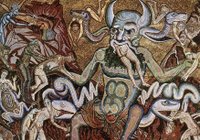 Bruce Alderman has written an insightful series of posts on what the Bible says about Hell.
What do you think Hell is?
Another Victory
I'm going to take a risk that this Onion article is in mildly bad taste, but hilarious nonetheless.

Art Blogging: Frédéric Soulacroix
 Frederic Soulacroix (1858-1933) was an Italian Academic painter. At least, I think that he was. A lot of the biographical information, even in professional sources, conflates Soulacroix with his father of the same name, who was also a successful painter and sculptor. In fact, I can't even tell if he was Italian (his paintings scream 'Paris salon'). Either way, he was a great painter of elite women in silk dresses and romantic couples in historical scenes. I like his refined elegance, like that of Tissot.
 Afternoon Tea is typical of Soulacroix -- wealthy, blissful splendor.
 The Cavalier's Kiss. What magnificent draping! Even within the painting (within a painting) in the upper-right corner. Soulacroix's command of detail is breathtaking.
 The Afternoon Visitor. Masterful simply doesn't begin to describe the level of detail in this painting, particularly in the paneling, furniture, and flooring. It's nearly photographic.
What I like about this painting is its balance of color and form, all perfectly proportioned.
Tuesday, May 23, 2006
Jim Winkler Calls for President Bush's Impeachment
 Methodist Leader Calls For President’s Impeachment
 (May 23, 2006)--The United Methodist Church's chief social-issues spokesman, the Rev. Jim Winkler, says Congress should impeach President Bush "to advance the kingdom of God."
Winkler proposed that during the annual "Ecumenical Advocacy Days," attended by delegates from his church and other denominations, most of them members of the National Council of Churches.
The article incorrectly labels Mr. Winkler as clergy. He is a layman who heads the General Board on Church and Society.
Book Review: The Call by Os Guinness
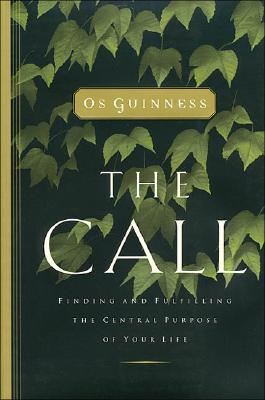 Back in my atheist days, I found myself reading Time for Truth: Living Free in a World of Lies, Hype, and Spin by Os Guinness. Even though it was filled with Christiany stuff, it was a refreshing call for living in truth and integrity. In a time when I was confronted with lies on a daily basis, I echoed Guinness' trumpet blast, regardless of its religious context.
For a summer semester class, I have read The Call: Finding and Fulfilling the Central Purpose of Your Life. It's quite good. The Call is like The Purpose-Driven Life, but less artificial and formulaic, and Resident Aliens without the snarky anti-Americanism. It is a weaving of the two senses that God calls us to live for him and that doing so requires a radical shift in values.
The book has an extensive study guide in the back that makes it imminently suitable for small groups. I heartily recommend it.
Methodist Blogs Weekly Roundup # 66
Here's the week in review in the Methodist blogosphere:
A Thing With Feathers thinks that those who don't watch Grey's Anatomy are living under a rock. She also likes her crossing guard.
Steven Manskar thinks that preachers should preach only from the pulpit (Best of the Methodist blogosphere!).
Among the Hills had thoughts on the story of Cornelius in the Book of Acts.
Andy Bryan wrote about the inclusive gospel of Jesus.
Andy Stoddard lectionary blogged for May 15, 16, 17, 18, and 19.
Chris Morgan has some questions on hypocricy.
Steve Heyduck wrote about how the Central Texas AC is trying to figure out its clergy pension system. He also wrote about locking church buildings after hours.
Beth Quick wrote about some minister evaluation proposals floating about her Conference.
Betty Newman wrote an overview of the Gospels.
Brian Russell preached on the story of the shepherds at Christmas.
Bruce Alderman explored what the NT says about the afterlife.
Richard Hall wrote about how the new car fee in London is effecting embassies there.
Dave Morris wrote about faithful preaching and that spiritual gifts are really just different ways of loving.
Dave Warnock has a series of posts on the Together for the Gospel conference. He also provided definitions for terms in the church gender inclusivity debate.
Dave Camphouse wrote about the joys and challenges of writing.
Greg Crofford wrote about the beauty of old cars, reviewed the movie Little Manhattan, and blogged that Christians shouldn't take themselves too seriously or too lightly.
Sally Coleman did a blessing of the animals service and that there are grey areas in life issues, such as abortion and the death penalty. She wrote that Jesus is wisdom, not instructions, about an experience witnessing to a New Age adherent, and belief in angels.
Michael Daniel wrote that Christians shouldn't fret over the DaVinci Code and that we are all lawbreakers.
Gavin Richardson wrote about an encounter with Mormon missionaries, how his youth group responded to the DaVinci Code, and what web communication tools like myspace can do for youth ministry and evangelism.
Gerry Charlotte Phelps wrote that Republicans who are angry with Bush should back away from the cliff edge.
Daniel McLain Hixon evaluated how threatening the DaVinci Code is to Christianity and wrote about the role of N.T. Wright in modern theology.
Guy Williams wrote about the contrast of the righteous and the wicked in Psalm 1, the concept of blessedness in the modern and Israelite worlds, and the concept of beatitude.
Phil Smith thought about a Brian McLaren seminar that he attended.
Chris Roberts wrote about the ages of clergy and laymen in the North Indiana Annual Conference.
Jay Voorhees wrote about the summer slowdown at church and what his congregation is doing about it.
John Battern thinks that it's inappropriate for Christians to protest movies (Best of the Methodist blogosphere!). He also wrote about his plan to read the NT in 90 days.
John Wilks preached on the meaning of confirmation, Jesus' call to abandon materialism, and that Jesus is more concerned with saving souls than helping America.
Just As I Am taught about personal integrity.
Ken Carter preached that the Eucharist is about love and and the symbolic nature of the vinyard in Scripture.
At Kindlings, Jan wrote that you don't get into Heaven based upon the person that you are, how to understand the DaVinci Code, and that we are pots shaped by God. Chris wrote about finding satisfaction in God.
Lake Neuron would like to see a solution to spam e-mail and the neat gadgets on the show American Inventor.
Larry Hollon wrote about how the makers of the DaVinci Code movie are exploiting hysterical Christians, violence and poverty in Brazil's favelas, what the WHO is doing to fight communicable diseases, how corruption effects foreign aid, and how media shape and distort reality.
Mark Winter wrote about grace in a public bathroom and the the DaVinci Code idea that Jesus was married.
Keith McIlwain wrote about reading the Bible as myth and the end of certain quality sitcoms.
Craig Moore told a wonderful story of baptism and repentance (Best of the Methodist blogosphere!).
Mike Lamson wrote that church should have a partying atmosphere.
Nate Loucks wondered how we can help people in very poor nations.
At New Reality Blog, Ric wrote about frivilous resolutions at Annual Conference.
Nigel Coke-Woods toured Versailles and drew lessons from its implications.
Pulpit Perspectives preached that ideal worship provides instruction, celebration, and repentance. He is also pleased that his county is moving toward wifi.
Jason Woolever thinks that kids might be more interested in church if the Eucharist was offered more often. He also asked how long sermons should be and how to set goals in ministry.
Todd Bergman listed excerpts of reviews of the DaVinci Code.
Rereason says that the education system in Kansas is communist.
Sandpiper wrote about gender bias in medical research, that God gives us grace even when we barf on him, Philip Yancy's teachings on grace, God acting through our consciences as a VBS theme, and that heroes are everyday people who say 'yes' to challenges.
Lorna Koskela wrote about the importance of unity in the Christian community, imagining Jesus as a worshipping Jew, worrying about material possessions, and that the failing of the Pharisees was their zeal for orthodoxy at the expense of everything else.
Sky Lowe-McCracken witnessed an execution expressed the ambiguous nature of life decisions (Best of the Methodist blogosphere!).
Kurt Boemler described evangelism as a game of hide and seek.
Brett Royal says that "Why did God let this horrible thing happen?" is the wrong question.
Whit Johnstone is wrestling with the concept of episcopacy.
Tony Mitchell wrote that the church must be open to all who seek God.
Shane Raynor wrote about the new NRSV children's Bible and what graduating high schoolers should be told about the future.
Scott McKaycelebrated mourned the departure of his DS for other duties.
Additions? Corrections? Do you know of a blog that should be included in the MBWR? Would you like to receive the MBWR via e-mail? Leave a note in the comments or e-mail locustsandhoney2005 at yahoo dot com!
UPDATE: Chris Morgan's name corrected.
A Thing With Feathers thinks that those who don't watch Grey's Anatomy are living under a rock. She also likes her crossing guard.
Steven Manskar thinks that preachers should preach only from the pulpit (Best of the Methodist blogosphere!).
Among the Hills had thoughts on the story of Cornelius in the Book of Acts.
Andy Bryan wrote about the inclusive gospel of Jesus.
Andy Stoddard lectionary blogged for May 15, 16, 17, 18, and 19.
Chris Morgan has some questions on hypocricy.
Steve Heyduck wrote about how the Central Texas AC is trying to figure out its clergy pension system. He also wrote about locking church buildings after hours.
Beth Quick wrote about some minister evaluation proposals floating about her Conference.
Betty Newman wrote an overview of the Gospels.
Brian Russell preached on the story of the shepherds at Christmas.
Bruce Alderman explored what the NT says about the afterlife.
Richard Hall wrote about how the new car fee in London is effecting embassies there.
Dave Morris wrote about faithful preaching and that spiritual gifts are really just different ways of loving.
Dave Warnock has a series of posts on the Together for the Gospel conference. He also provided definitions for terms in the church gender inclusivity debate.
Dave Camphouse wrote about the joys and challenges of writing.
Greg Crofford wrote about the beauty of old cars, reviewed the movie Little Manhattan, and blogged that Christians shouldn't take themselves too seriously or too lightly.
Sally Coleman did a blessing of the animals service and that there are grey areas in life issues, such as abortion and the death penalty. She wrote that Jesus is wisdom, not instructions, about an experience witnessing to a New Age adherent, and belief in angels.
Michael Daniel wrote that Christians shouldn't fret over the DaVinci Code and that we are all lawbreakers.
Gavin Richardson wrote about an encounter with Mormon missionaries, how his youth group responded to the DaVinci Code, and what web communication tools like myspace can do for youth ministry and evangelism.
Gerry Charlotte Phelps wrote that Republicans who are angry with Bush should back away from the cliff edge.
Daniel McLain Hixon evaluated how threatening the DaVinci Code is to Christianity and wrote about the role of N.T. Wright in modern theology.
Guy Williams wrote about the contrast of the righteous and the wicked in Psalm 1, the concept of blessedness in the modern and Israelite worlds, and the concept of beatitude.
Phil Smith thought about a Brian McLaren seminar that he attended.
Chris Roberts wrote about the ages of clergy and laymen in the North Indiana Annual Conference.
Jay Voorhees wrote about the summer slowdown at church and what his congregation is doing about it.
John Battern thinks that it's inappropriate for Christians to protest movies (Best of the Methodist blogosphere!). He also wrote about his plan to read the NT in 90 days.
John Wilks preached on the meaning of confirmation, Jesus' call to abandon materialism, and that Jesus is more concerned with saving souls than helping America.
Just As I Am taught about personal integrity.
Ken Carter preached that the Eucharist is about love and and the symbolic nature of the vinyard in Scripture.
At Kindlings, Jan wrote that you don't get into Heaven based upon the person that you are, how to understand the DaVinci Code, and that we are pots shaped by God. Chris wrote about finding satisfaction in God.
Lake Neuron would like to see a solution to spam e-mail and the neat gadgets on the show American Inventor.
Larry Hollon wrote about how the makers of the DaVinci Code movie are exploiting hysterical Christians, violence and poverty in Brazil's favelas, what the WHO is doing to fight communicable diseases, how corruption effects foreign aid, and how media shape and distort reality.
Mark Winter wrote about grace in a public bathroom and the the DaVinci Code idea that Jesus was married.
Keith McIlwain wrote about reading the Bible as myth and the end of certain quality sitcoms.
Craig Moore told a wonderful story of baptism and repentance (Best of the Methodist blogosphere!).
Mike Lamson wrote that church should have a partying atmosphere.
Nate Loucks wondered how we can help people in very poor nations.
At New Reality Blog, Ric wrote about frivilous resolutions at Annual Conference.
Nigel Coke-Woods toured Versailles and drew lessons from its implications.
Pulpit Perspectives preached that ideal worship provides instruction, celebration, and repentance. He is also pleased that his county is moving toward wifi.
Jason Woolever thinks that kids might be more interested in church if the Eucharist was offered more often. He also asked how long sermons should be and how to set goals in ministry.
Todd Bergman listed excerpts of reviews of the DaVinci Code.
Rereason says that the education system in Kansas is communist.
Sandpiper wrote about gender bias in medical research, that God gives us grace even when we barf on him, Philip Yancy's teachings on grace, God acting through our consciences as a VBS theme, and that heroes are everyday people who say 'yes' to challenges.
Lorna Koskela wrote about the importance of unity in the Christian community, imagining Jesus as a worshipping Jew, worrying about material possessions, and that the failing of the Pharisees was their zeal for orthodoxy at the expense of everything else.
Sky Lowe-McCracken witnessed an execution expressed the ambiguous nature of life decisions (Best of the Methodist blogosphere!).
Kurt Boemler described evangelism as a game of hide and seek.
Brett Royal says that "Why did God let this horrible thing happen?" is the wrong question.
Whit Johnstone is wrestling with the concept of episcopacy.
Tony Mitchell wrote that the church must be open to all who seek God.
Shane Raynor wrote about the new NRSV children's Bible and what graduating high schoolers should be told about the future.
Scott McKay
Additions? Corrections? Do you know of a blog that should be included in the MBWR? Would you like to receive the MBWR via e-mail? Leave a note in the comments or e-mail locustsandhoney2005 at yahoo dot com!
UPDATE: Chris Morgan's name corrected.
Monday, May 22, 2006
Plaigarism is Okay!
The Secret Is Out
The next conspiracy theory novel will plant John Wesley at the heart of terrifying secret order holding sway over the world for centuries.
Patience with the Sins of Seekers
Chris Monroe thinks that it's important that we not condemn the sinful lifestyles of spiritual seekers if we wish to be effective evangelists:
By suggesting that we must "let the seeker sin," I am not saying that we should endorse, excuse, or embrace sin. Sin is a powerfully destructive force, ruining not only one's own life, but wreaking havoc in one's family, one's circle of acquaintances, and even society. I am, however, suggesting that we must learn how to be with seekers -- resisting the urge to judge or demean them for their choices and lifestyle -- but instead, extend a heartfelt welcome to all people, inviting them to be our friends and to begin exploring with us (for we are ALL sinners) a life of following Jesus Christ.
By suggesting that we must "let the seeker sin," I am not saying that we should endorse, excuse, or embrace sin. Sin is a powerfully destructive force, ruining not only one's own life, but wreaking havoc in one's family, one's circle of acquaintances, and even society. I am, however, suggesting that we must learn how to be with seekers -- resisting the urge to judge or demean them for their choices and lifestyle -- but instead, extend a heartfelt welcome to all people, inviting them to be our friends and to begin exploring with us (for we are ALL sinners) a life of following Jesus Christ.
Calling All Lectionary Bloggers!
 John Wilks is continuing to assemble lectionary bloggers into a group.
The Church That Willie Nelson Bought
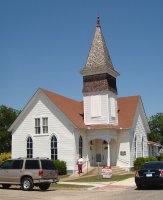 Steve Heyduck remembers a little country church where country singer Willie Nelson was a member.
Attention Preachers!
When you're done with your sermon and you need to go to the bathroom, first turn off your lapel microphone.
Sunday, May 21, 2006

Quality Workers
 I need to do a lot of cleanup work around the church, and we presently don't have a custodian.
So I went down to the Home Depot where there are always Mexican laborers (undocumented, of course), hanging about, looking for work.
To my surprise, they didn't want to work at all. No interest whatsoever. I offered each one a bright, shiny quarter for a mere day of cleaning the building and dragging off brush, and they simply wouldn't do it.
I guess that there are some jobs that Mexicans just won't do. It's outrageous that anyone would be so lazy as to refuse to do such work. That's why we need to open our borders up to workers who are willing to do the jobs that
Art Therapy: Boucher
Art Blogging about Greuze on Friday put me in a Rococo mood. Rococo was a sort of Surrealism of the 18th Century -- a time of dreams. It was a movement about the joy of life in heaven and earth.
 It was all a lie, of course. The movement, like its patrons, met its end at the guillotine and the Edenic existence it portrayed was built upon the backs of the destitute French peasantry.
Still - let us indulge in their illusion for a while and take a walk through the Garden that the French aristocracy reveled in. French (to differentiate from the Italian variant) Rococo reached its apex during the tenure of court painter Francois Boucher (1703-1770).
I once saw a special exhibit of Boucher's work at the Kimbell. They are massive, wall-devouring canvases. A Summer Pastoral (1749, at the Wallace) is 8 1/2 by 6 1/2 feet wide. Here the aristocracy disastrously misrepresents the lifestyle of the lower classes, but let's ignore the socioeconomic analysis of the painting for the time being. Let the dead bury the dead.
Here we see happy people and happy farm animals. And happy little trees. All relishing an idle afternoon of picking flowers and playing bagpipes. No one is knocking on the parsonage door, asking to be let into the church. No one is critiquing your sermon. And there are no District Superintendents in sight. Art is therapeutic, folks. Indulge in happy art.
 Adoration of the Shepherds (1750 at the Musee des Beaux-Arts in Lyon). Notice how in this painting and in the previous one, Boucher frames the top of the painting in a circular sweep of clouds. He did this a lot. It creates a sense of separateness or sanctuary. Boucher's work is many things, but it is fundamentally escapist. After a stressful day of flogging peasants and chasing chambermaids, a man needed to rest and relax. A Boucher painting provided him with a private, joyful world that was sheltered from the woes of everyday life.
Whether you're a pastor or an engineer or a peasant-flogger, you need a place of escape, too. Load up a Boucher pic as your screensaver and slip away.
 The circular effect is even more pronounced in Vulcan Presenting Venus with Arms for Aeneas (1757, at the Louvre). Happy gods, happy cherubs, and happy little clouds.
Some painters make you think. Some make you cry. Some make you a pretentious chain-smoking art snob consciously putting angst into every facial expression.
But Boucher? He makes you relax. Relaxation is good. So slip away into his world.
It was all a lie, of course. The movement, like its patrons, met its end at the guillotine and the Edenic existence it portrayed was built upon the backs of the destitute French peasantry.Still - let us indulge in their illusion for a while and take a walk through the Garden that the French aristocracy reveled in. French (to differentiate from the Italian variant) Rococo reached its apex during the tenure of court painter Francois Boucher (1703-1770).
I once saw a special exhibit of Boucher's work at the Kimbell. They are massive, wall-devouring canvases. A Summer Pastoral (1749, at the Wallace) is 8 1/2 by 6 1/2 feet wide. Here the aristocracy disastrously misrepresents the lifestyle of the lower classes, but let's ignore the socioeconomic analysis of the painting for the time being. Let the dead bury the dead.
Here we see happy people and happy farm animals. And happy little trees. All relishing an idle afternoon of picking flowers and playing bagpipes. No one is knocking on the parsonage door, asking to be let into the church. No one is critiquing your sermon. And there are no District Superintendents in sight. Art is therapeutic, folks. Indulge in happy art.
Adoration of the Shepherds (1750 at the Musee des Beaux-Arts in Lyon). Notice how in this painting and in the previous one, Boucher frames the top of the painting in a circular sweep of clouds. He did this a lot. It creates a sense of separateness or sanctuary. Boucher's work is many things, but it is fundamentally escapist. After a stressful day of flogging peasants and chasing chambermaids, a man needed to rest and relax. A Boucher painting provided him with a private, joyful world that was sheltered from the woes of everyday life.Whether you're a pastor or an engineer or a peasant-flogger, you need a place of escape, too. Load up a Boucher pic as your screensaver and slip away.
The circular effect is even more pronounced in Vulcan Presenting Venus with Arms for Aeneas (1757, at the Louvre). Happy gods, happy cherubs, and happy little clouds.Some painters make you think. Some make you cry. Some make you a pretentious chain-smoking art snob consciously putting angst into every facial expression.
But Boucher? He makes you relax. Relaxation is good. So slip away into his world.
Saturday, May 20, 2006

Changes to the UMC Candidacy Process
Here are a couple of things that I think should be included in the UMC process for ordaining ministers:
1. Drug testing -- if we do extensive medical and psychological testing, why not run a urine sample for narcotics? Most employers do it now. We don't want cokeheads under guaranteed appointment.
2. Doctrinal checklist -- run though major issues like virgin birth, resurrection, original sin, and infant baptism to make sure that a candidate lines up with UMC orthodoxy.
Both should be done very early in the process, probably before Certification.
What do you think?
1. Drug testing -- if we do extensive medical and psychological testing, why not run a urine sample for narcotics? Most employers do it now. We don't want cokeheads under guaranteed appointment.
2. Doctrinal checklist -- run though major issues like virgin birth, resurrection, original sin, and infant baptism to make sure that a candidate lines up with UMC orthodoxy.
Both should be done very early in the process, probably before Certification.
What do you think?
Perhaps I Should Feel Insulted
By such a low reward. Especially given the serious nature of the crime.
Friday, May 19, 2006
Art Blogging: Jean-Baptiste Greuze
 Jean-Baptiste Greuze (1725-1805) was a French Rococo painter and draftsman. He was born in Burgundy and educated in Lyon and Paris. Greuze was admitted into the Academy in 1755. After traveling to Italy in that year, he had an affair with the Italian Rococo style, before returning to the French flavor of Rococo painting and drawing. He was commercially successful and acquired great wealth until the Revolution, and died in poverty in 1805.
This painting is his self-portrait.
 Thank God that Greuze went to Italy. Here you see the precision of Italian painting that would not become dominant in the French tradition for several decades. The alternative was Dutch precision which is so...stale. I've never cared for the Dutch painting tradition because although it was realistic, it was also bland...sterile...depressing. Only the French managed to synthesize the realism which emerged from the Renaissance with the idealism of the Enlightenment into the Neoclassicism of the 19th Century -- the pinnacle of Western art.
This is The Spoiled Child (1765), housed at the Hermitage in Russia.
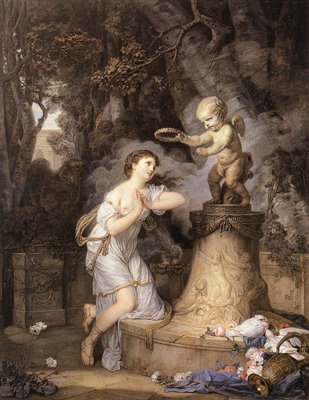 This is Votive Offering to Cupid (1767, housed at the Wallace Collection), which is a good example. Remember how Bob Ross used to paint 'happy trees'? This is a happy painting. Unlike some oily Dutch portrait, it doesn't make you want to go out and slit your wrists. French painting is happy painting. I like happy paintings.
What, did you expect advanced aesthetic analysis from me? I just like purty pictures. That's all.
Methodists on the Sacraments
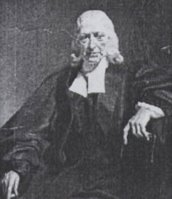 A while back, Tim Sisk created a brilliant series of blog posts on communion. He e-mailed every Methodist blogger and asked each one for his/her preferences in serving and receiving the Eucharist. He listed the responses, which were fascinating.
I'd like to ask the same question to all readers, but regarding the other sacrament recognized by the Methodist tradition -- snake handling. How do you conduct snake-handling services? What liturgy do you prefer?
"Form: Blazing Sword!"
 Last week, I noted the sexual orientation of He-Man, and David Camphouse requested that I instead pick on Voltron. Implicit in this statement is that calling attention to He-Man's homosexuality is an insult, but I'll just let that misunderstanding drop.
Meanwhile, Voltron is getting served.
Thursday, May 18, 2006
Heroic Computer Dies To Save World From Master's Thesis
 WALTHAM, MA—A courageous young notebook computer committed a fatal, self-inflicted execution error late Sunday night, selflessly giving its own life so that professors, academic advisors, classmates, and even future generations of college students would never have to read Jill Samoskevich's 227-page master's thesis, sources close to the Brandeis University English graduate student reported Monday.
"This fearless little machine saved me from unspoken hours of exasperated head-scratching and eyestrain, as well as years of agonizing self-doubt over my decision to devote my life to teaching," said professor John Rebson, who had already read through three drafts of Samoskevich's sprawling, 38,000-word dissertation, titled A Hermeneutical Exploration Of Onomatopoeia In The Works Of William Carlos Williams As It May Or May Not Relate To Post-Agrarian Appalachia. "It was an incredible act of bravery. This laptop sacrificed itself in order to put an end to Jill's senseless rambling."
Story Link
I'm Certifiably Insane
And a Certified Candidate for the ordained ministry (elder track) in the Florida Conference of the United Methodist Church. Try saying that five times fast. Thank you all, for your prayers. Especially to Rev. Ed, for sacrificing a virgin over a burning volcano for my sake. Having lived in his part of Ohio, I know that such things are rare.
Wednesday, May 17, 2006
Prayer Request
Yeah, blogging's been light. My attention has been elsewhere. Tomorrow morning, I go to DCOM with the hopes of becoming a Certified Candidate for the ordained ministry. So I'm just a smidgen nervous. Your prayers (of a non-imprecatory nature) would be welcome.

Tuesday, May 16, 2006
Book Review: Old Man's War
 If the Right end of the blogosphere had an official science fiction novel, it would be Old Man's War by John Scalzi. Its sales were heavily pushed by various bloggers, particularly Glenn Reynolds. On Reynold's recommendation, I read it.
It's very original, finely-crafted military science fiction. It is somewhat similar to Starship Troopers, albeit without the political discourse. Scalzi's prose is riveting, particularly his dialogues. Here's the opening line:
I did two things on my seventy-fifth birthday. I visited my wife's grave. Then I joined the army.
That's a hook if I ever read one. It only gets better from that point on.
I also read most of the the sequel The Ghost Brigades. I set it down a few weeks ago and haven't gotten around to finishing it. It was bad, but it just didn't grab me.
Skip The Ghost Brigades. But if you want a good, romping scifi novel, you should definitely read Old Man's War.
Sunday, May 14, 2006
Methodist Blogs Weekly Roundup # 65
Here's the week in review in the Methodist blogosphere:
Christopher Gudger-Raines wrote about reviewed the book Celebration of Discipline by Richard Foster.
Andy Bryan wondered what is mainstream Christianity, and wrote about a UMC forum on immigration policy and that being a Christian before another person isn't about doctrine, but relationships.
Andy Stoddard lectionary blogged for May 8, 9, 10, and 11.
Chris Morgan promises to bring the damn butter to the next UMW meeting, so could you kindly shut up and get on the with meeting? He also wrote about the insensitivity of Mothers' Day services.
Bad Methodist examined arguments about how gay marriage might negatively affect straight people.
At Bandits No More, Richard Heyduck said that churches that don't welcome strangers can't claim to be friendly.
Beth Quick wrote about the Social Principles that she held when she was 13.
Betty Newman prayed for revival in the US.
Brian Russell said that the central portrait of a disciple is a person who denies himself and takes up his cross.
Bruce Alderman continued his series on what the Bible says about Hell.
Josh Tinley wrote about a UMC congregation in NYC which is selling its airspace.
CBRN wrote about the cost of reproduction in Darwinism.
Dave Morris wrote that churches shouldn't limit their presence to buildings.
Dave Warnock wrote about different US/UK views on the ordination of women. He thinks that those who want to restrict female leadership are claiming a monopoly on Biblical interpretation .
David Camphouse is considering updating his church's website and would like advice.
Sally Coleman has been experimenting with the noosphere from Celtic spirituality. She told the story of her son's long struggle with birth defects and wrote about the difficult art of moving while staying still.
Steve Heyduck advised readers not to try to play Monopoly with God.
Sleepwriter says that if you expect that your life will be full of problems, you'll probably be right.
Gavin Richardson wrote that reconciliation is the result of living through Christian values. He also began a series on contemplative youth ministry, including an interview with an author about how to integrate contemplative ministry into Christian youth ministry.
Gerry Charlotte Phelps wrote about how white guilt effects American foriegn policy.
Greg Crofford wrote about the decline of community in American life.
Greg Hazelrig wrote about how he repents of his sin of divorce and how God helps us overcome addictions.
Greg Lee preached on church growth. He also wrote that there are too many restrictions on local pastors.
Guy Williams preached on the childhood of Jesus and specifically what his relationship with his mother was like.
Henry Neufield wrote that men do well, but do better with women. He reviewed the book 52 Weeks of Ordinary People -- Extraordinary God. He critiqued the way some Christians have spoken to a certain ID critic. He also distinguished between progressive and continuous views of modern-day revelation.
Chris Roberts wrote that the North Indiana and South Indiana Annual Conferences are considering a merger. I guess that's better than a hostile takeover.
Mike Holly wrote that we shouldn't confuse being American with being Christian and that the Book of Revelation wasn't about future events, but about resisting the imperial cult of Rome.
Jay Voorhees thinks that crossing the border illegally from Mexico to the US doesn't make a person a criminal, at least with the moral loading of that word.
John Battern marked the 15th anniversary since the death of his daughter. He is also unimpressed with Tony Campolo's critique of conservative Christians.
Just As I Am preached on wisdom.
Ken Carter wrote about the nature of contemporary/traditional worship debates.
Chris Kindle wrote that overcoming sin requires naming one's sins.
Larry Hollon wrote about the turmoil in Somalia and the child health care crisis resulting from Katrina.
Matt Kelley wrote about the "What We Believe" portions of church webpages.
Keith McIlwain wonders if Bush's low poll numbers really matter or reflect actual leadership.
Michael Daniel wrote about how the Christian faith would change or would not if Jesus was married. He also wrote that the church must be an institution that has higher moral standards than the rest of society.
Mike Lamson continued his visit to the famous Mars Hill church.
Neil Bishop wrote about the process of conversion.
At New Reality Blog, Jared Williams wrote about sharing the gospel with different generations. Ric wrote that the Methoblogosphere talks about homosexuality too much.
Rick Mang wrote about what he likes in worship.
Pulpit Perspectives wrote about how to use the educational system to resolve the disparity of wealth in his part of the country.
ReligioNews wrote that pastors should, if they can, archive their sermons on the web.
Rereason blogged about a Kansas law that redistributes educational funding and provided a personal example of why America should have universal health care.
Sandpiper wrote about the importance of church programs (such as UMW) adapting to changing generations, finding God and his forgiveness on the deathbed (Best of the Methodist blogosphere!), that God smells like freshly-baked bread, and what it means to love our enemies.
Lorna Koskela wrote about the God gives us great things, but expects us to give them up to serve him.
Sky Lowe-McCracken wrote about the character of Barry Bonds.
Steven Webster says that Soulforce has been blamed for disruptions that it did not cause, which should be engaged in dialogue by conservative Christians.
Kurt Boemler is rather frustrated with the Candidacy process.
Jonathan Marlowe wrote about Methodist dialogue over homosexuality and what gnosticism says about sin (in reference to the DaVinci Code).
Wayne Cook has a sinking feeling that he's about to become a pastor.
Shane Raynor thinks that families should spend more time eating together.
Additions? Corrections? Do you know of a blog that should be included in the MBWR? Would you like to recieve the MBWR via e-mail? Leave a note in the comments or e-mail locustsandhoney2005 at yahoo dot com!
Christopher Gudger-Raines wrote about reviewed the book Celebration of Discipline by Richard Foster.
Andy Bryan wondered what is mainstream Christianity, and wrote about a UMC forum on immigration policy and that being a Christian before another person isn't about doctrine, but relationships.
Andy Stoddard lectionary blogged for May 8, 9, 10, and 11.
Chris Morgan promises to bring the damn butter to the next UMW meeting, so could you kindly shut up and get on the with meeting? He also wrote about the insensitivity of Mothers' Day services.
Bad Methodist examined arguments about how gay marriage might negatively affect straight people.
At Bandits No More, Richard Heyduck said that churches that don't welcome strangers can't claim to be friendly.
Beth Quick wrote about the Social Principles that she held when she was 13.
Betty Newman prayed for revival in the US.
Brian Russell said that the central portrait of a disciple is a person who denies himself and takes up his cross.
Bruce Alderman continued his series on what the Bible says about Hell.
Josh Tinley wrote about a UMC congregation in NYC which is selling its airspace.
CBRN wrote about the cost of reproduction in Darwinism.
Dave Morris wrote that churches shouldn't limit their presence to buildings.
Dave Warnock wrote about different US/UK views on the ordination of women. He thinks that those who want to restrict female leadership are claiming a monopoly on Biblical interpretation .
David Camphouse is considering updating his church's website and would like advice.
Sally Coleman has been experimenting with the noosphere from Celtic spirituality. She told the story of her son's long struggle with birth defects and wrote about the difficult art of moving while staying still.
Steve Heyduck advised readers not to try to play Monopoly with God.
Sleepwriter says that if you expect that your life will be full of problems, you'll probably be right.
Gavin Richardson wrote that reconciliation is the result of living through Christian values. He also began a series on contemplative youth ministry, including an interview with an author about how to integrate contemplative ministry into Christian youth ministry.
Gerry Charlotte Phelps wrote about how white guilt effects American foriegn policy.
Greg Crofford wrote about the decline of community in American life.
Greg Hazelrig wrote about how he repents of his sin of divorce and how God helps us overcome addictions.
Greg Lee preached on church growth. He also wrote that there are too many restrictions on local pastors.
Guy Williams preached on the childhood of Jesus and specifically what his relationship with his mother was like.
Henry Neufield wrote that men do well, but do better with women. He reviewed the book 52 Weeks of Ordinary People -- Extraordinary God. He critiqued the way some Christians have spoken to a certain ID critic. He also distinguished between progressive and continuous views of modern-day revelation.
Chris Roberts wrote that the North Indiana and South Indiana Annual Conferences are considering a merger. I guess that's better than a hostile takeover.
Mike Holly wrote that we shouldn't confuse being American with being Christian and that the Book of Revelation wasn't about future events, but about resisting the imperial cult of Rome.
Jay Voorhees thinks that crossing the border illegally from Mexico to the US doesn't make a person a criminal, at least with the moral loading of that word.
John Battern marked the 15th anniversary since the death of his daughter. He is also unimpressed with Tony Campolo's critique of conservative Christians.
Just As I Am preached on wisdom.
Ken Carter wrote about the nature of contemporary/traditional worship debates.
Chris Kindle wrote that overcoming sin requires naming one's sins.
Larry Hollon wrote about the turmoil in Somalia and the child health care crisis resulting from Katrina.
Matt Kelley wrote about the "What We Believe" portions of church webpages.
Keith McIlwain wonders if Bush's low poll numbers really matter or reflect actual leadership.
Michael Daniel wrote about how the Christian faith would change or would not if Jesus was married. He also wrote that the church must be an institution that has higher moral standards than the rest of society.
Mike Lamson continued his visit to the famous Mars Hill church.
Neil Bishop wrote about the process of conversion.
At New Reality Blog, Jared Williams wrote about sharing the gospel with different generations. Ric wrote that the Methoblogosphere talks about homosexuality too much.
Rick Mang wrote about what he likes in worship.
Pulpit Perspectives wrote about how to use the educational system to resolve the disparity of wealth in his part of the country.
ReligioNews wrote that pastors should, if they can, archive their sermons on the web.
Rereason blogged about a Kansas law that redistributes educational funding and provided a personal example of why America should have universal health care.
Sandpiper wrote about the importance of church programs (such as UMW) adapting to changing generations, finding God and his forgiveness on the deathbed (Best of the Methodist blogosphere!), that God smells like freshly-baked bread, and what it means to love our enemies.
Lorna Koskela wrote about the God gives us great things, but expects us to give them up to serve him.
Sky Lowe-McCracken wrote about the character of Barry Bonds.
Steven Webster says that Soulforce has been blamed for disruptions that it did not cause, which should be engaged in dialogue by conservative Christians.
Kurt Boemler is rather frustrated with the Candidacy process.
Jonathan Marlowe wrote about Methodist dialogue over homosexuality and what gnosticism says about sin (in reference to the DaVinci Code).
Wayne Cook has a sinking feeling that he's about to become a pastor.
Shane Raynor thinks that families should spend more time eating together.
Additions? Corrections? Do you know of a blog that should be included in the MBWR? Would you like to recieve the MBWR via e-mail? Leave a note in the comments or e-mail locustsandhoney2005 at yahoo dot com!
What Did Soulforce Do at the 2000 and 2004 General Conferences?
Steven Webster says that Soulforce has been blamed for disruptions that it did not cause.
Caption Contest

WINNER: Shane Raynor:
Jesus created a crisis among some theologians when he couldn't remember his PIN.
or
"It always asks Greek or Aramaic. How annoying."
Local Pastors in the UMC
Greg Lee thinks that the UMC places too many restrictions on local pastors. What do you think?
[comments closed to move the discussion over to Greg's place.]
UPDATE: Bad link. Fixed now.
[comments closed to move the discussion over to Greg's place.]
UPDATE: Bad link. Fixed now.


What is a 'General Evangelist'?
Mark Winter is a UMC Elder in Texas, but not under appointment (at least in the conventional sense). He is a General Evangelist, and took the time to explain what that means.
Saturday, May 13, 2006
Methodist Blogger Profile: Neil Bishop

I have been a Methodist minister for 20 years, and before that I worked as a church community worker. I am currently based in an inner city part of Leeds, the largest city in Yorkshire, which is in the north of England. I live in a multi-ethnic, multi-faith community where I look after two churches and two community projects. My wife also works in the local community, and we have three children who are now young adults.
Why do you blog?
The blog started out as a weekly sermon page on our local Methodist circuit website, (a circuit being seven local churches for which I have overall responsibility). After a while I realized that it would be easier to make this a sermon blog, and it also gets far more exposure than the website did.
What has been your best blogging experience?
The best thing about blogging is that the software automatically creates an archive for you. There wasn't room on the website for an archive and it would have been extremely difficult to keep archiving the posts. Blogging means I can refer journalists to the blog when they ring me, which they do quite a lot because one of the projects I look after was caught up indirectly in the 7/7 suicide bombing in London. Even so, I was very surprised when someone told me they had printed out the whole archive – presumably to help them get to sleep at night.
What would be your main advice to a novice blogger?
It's not as difficult as you might think, so long as you go to the right service provider – someone who makes it easy to create and maintain a blog that looks good and is easy to navigate around.
If you only had time to read three blogs a day, what would they be?
I only have time to read three or four blogs a week! I start by going to sites like Locusts and Honey, Wesley Daily and TheConnexion.net which put me in touch with some of the best Methodist writing on the web. I also visit Textweek to catch up on the best lectionary blogs. Occasionally I visit CommentisFree, the Guardian newspaper's blog. It isn't very good, but I like the idea that you can answer back!
Who are your spiritual heroes?
I find the pubic ministry of Martin Luther King very inspiring. The theology of Jurgen Moltmann has been an inspiration too. But in the end, my heroes are those unsung people, whom we meet along the way, who just seem wise and good to be with, but who will never make the history books.
What are you reading at the moment?
I'm reading 'They Came from SW19' by Nigel Williams. I wish I hadn't started it. Its supposed to be hilarious, but I don't get the joke. I would like to read some of Professor Richard Sennet's ideas about the way institutions work. I heard him talking on BBC Radio, and everything he said was so true – especially about the way our government and local authorities work.
What is your favorite hymn and why?
'Brother, Sister, Let me serve you, let me be as Christ to you.' I think it sums up the Christian message and I also find it very moving. If you want an old hymn, it would have to be 'One there is above all others well deserves the name of friend.' It sums up perfectly my understanding of the cross. I also like 'Born in song! God's people have always been singing'.
Can you name a major moral, political, or intellectual issue on which you've ever changed your mind?
I no longer believe that capitalism is completely wrong, only that it needs to be carefully controlled. But then I never believed that socialism was completely right, either. It needs to be carefully controlled, as well. I think I believe in 'welfare capitalism' now.
What philosophical thesis do you think is most important to combat?
Probably post-modernism, at least in its popular expression where people say to themselves, 'I can't make a difference, so why should I try?' After that, capitalism without the 'welfare' bolted on.
If you could effect one major change in the governing of your country, what would it be?
This is going to sound very boring, but I would introduce proportional representation to the upper chamber of our Parliament, which is unelected at the moment, and give it the power to hold up all legislation for at least one year, and to delay for at least two years any legislation not previously published in the governing party's manifesto.
If you could effect one major policy change in the Methodist Church, what would it be?
I would get rid of the idea that ministers need to be ordained for life and encourage Christians to move in and out of ordained ministry if that seems right. I think some people have only so much to give, but what they have to give is valuable and why not encourage them to give it while they are young? Our current model is that people who don't want to be a minister for forty years move into it as a second career.
What would be your most important piece of advice about life?
Is it too obvious to say that we should to try to be obedient to the way of Jesus Christ, and to allow ourselves be empowered by his spirit? If that is too obvious, I would say – try to make the best of each day as it comes. I think the importance of this becomes more obvious to us as we grow older and realize how quickly time goes by. I would also say, 'You can make a difference even if it's only a small one.'
What, if anything, do you worry about?
Global warming.
If you were to relive your life to this point, is there anything that you'd do differently?
None of the big things. Obviously, I would like never to have got cross with people who don't deserve it.
Where would you most like to live (other than where you do now)?
If the Alps or the Rockies were in England, I would like to live there. As it is, they're a bit far away.
What do you like doing in your spare time?
There are too many things to list, from making pizzas through to reading French.
What is your most treasured possession?
Probably the Bible given to my grandfather when he was commissioned as a local preacher.
What talent would you most like to have?
A proficiency at learning foreign languages.
If you could have any three guests, past or present, to dinner, who would they be?
Where to start? The Bible makes clear that Jesus Christ was always a very interesting dinner guest. Oliver Cromwell or Machiavelli might be interesting to talk to, and both Mary Magdalen and Cleopatra caused quite a stir in their time.
Subscribe to:
Posts (Atom)

