Here's the week in review in the Methodist blogosphere:
Steven Manskar wrote that the purpose of the means of grace is to prevent us from spiritually deceiving ourselves. He also looked at servant leadership, that Jesus filled this role, and that such servants must be focused on the cause of justice.
Allan Bevere recommends that pastors and seminary professors be sure to keep up with their spiritual disciplines.
Andy Bryan pointed out circular reasoning used in Christian apologetics.
Andy Stoddard lectionary blogged for July 24, 26, and 27.
Chris Morgan interviewed a woman about life in youth ministry as a female. Back in high school, he learned that 'interviews' were one way that he could get girls to talk to him.
Brian Russell looked at the power of ministry leaders to shape the ethos of their communities and shared an amazing story about a life of Christian commitment.
Dave Faulkner preached on how Jesus tested his disciples and people tested Jesus.
Dave Warnock looked at evangelicals' approaches to the Israeli-Hezbollah War.
David Camphouse wrote about the feminization of the church.
Steve Heyduck wrote about the strange desire to classify people as true Christians or not.
Richard Hall wrote about the current war in Lebanon.
Gerry Charlotte Phelps wrote about Iranian troops killed in Lebanon and church growth.
Daniel McLain-Hixon wrote about the World Methodist Council signing a pact on justification.
Greg Crofford listed some ways for the church to respond to homosexuality (Best of the Methodist blogosphere!).
Greg Hazelrig wrote that the Gospel isn't about getting stuff out of God and not to worry about the future.
Greg Lee is curious about a sermon illustration used by Rob Bell.
Henry Neufield wrote that the UMC needs to be more open to different kinds of vocational ministries, the dangers of comparing different Bible translations to each other, why he likes to read the Revised English Bible, a complementarian gender bias in the TNIV, cloning fears, new low-end health care providers like nurse-practitioners, universities and doctrinal statements, ways of expressing gender equity, that one can believe in the Bible without taking it literally, abuse of Greek and Hebrew in homiletics.
Chris Roberts has had a few rough weeks because he refused to make his July 4th Sunday service more patriotic.
Jason Powell wrote about a new blogging application called coComment. It lets your subscribe to and track comment threads, instead of just the posts that the comments are attached to.
Jay Voorhees examined how to address the issue of sex in youth ministry and why it is appropriate for the emerging church to address local politics.
Josh Tinley wrote about the US Senate race in Tennessee.
Just As I Am taught that God's love causes all good things that we experience.
Ken Carter preached on the Lord's Prayer.
Jan Kindle wrote about enduring the troubles of today for the promise of God's rewards.
Larry Hollon wrote about Christian bigotry, a worldwide religious boom, the conflict between faith and science, overcoming information poverty in Africa, and the decline of mainline denominations.
Matt Kelley wrote about the difference between church membership and discipleship.
Michael Daniel wrote about the moral cost of stem cell research, abortion parental notification laws that permit family members other than the parents to consent to a child's abortion, and being jealous of each other's spiritual gifts.
Mitchell Lewis wrote about Red Letter Christianity (Best of the Methodist blogosphere!) and King David's battle with sexual temptation.
Olive Morgan wrote about the opening of a deaf chapel in Reading, a view of 'Promised Land' for the modern Middle East, and the inclusive nature of the Gospel.
Padre Complex wrote about the narrative ethics of Stanley Hauerwas.
Pulpit Perspectives provided a broad overview of the themes in the Book of Ruth.
Peter Raser preached on the Church living authentically while in modern exile.
Theresa Coleman wrote that chocolate is good for you, compulsory medical treatment for kids. She also pulled some sort of sermon out of her Bag of Holding.
Sandpiper wrote about being determined to live out the potential that God has placed in each person, looking at the Book of Psalms as a whole, exhorting the Body of Christ, how to pray for your church, God revealing himself in a dragonfly, and living as a resurrected people.
Lorna Koskela reviewed the book God Will Make A Way and God taking over your life.
Sky Lowe-McCracken wrote about the Wesleyan view of purity.
Steven Webster disagrees with Bishop Whitaker's view of homosexuality.
Brett Royal wrote about the humanist view of Free Will and what James 4 reveals about its dynamics.
Take My Hand wrote about the alleged feminization of men in the church.
Dale Lature wrote about the Hauerwasian thesis that the Church should maintain a critical distance from society.
Tony Mitchell preached on his view of war and the gospel.
Paul Martin looked at the case of Mordechai Vanunu and his view that Bush and Blair should call for a ceasefire.
Scott McKay wrote about singing to remember God keeping his promises in the past.
Russ Phillips wrote about what sort of people should serve as lay delegates to Annual Conference.
Richard Heyduck wrote about his recent summer camp experience and the need to be urgent about church growth.
Additions? Corrections? Do you know of a blog that should be added to the MBWR? Would you like to receive the MBWR via e-mail? Leave a note in the comments or e-mail locustsandhoney2005 at yahoo dot com!
UPDATE: Richard Heyduck added.
Monday, July 31, 2006


The Lesson of Jenin
Remember Jenin? In April of 2002, this little West Bank town was the site of a battle between Israeli forces and Palestinian terrorists. In order to avoid civilian casualties in the town, Israel sent in its infantry at great cost instead of leveling the place from the air. The Palestinians created a media uproar over the battle, claiming that Israel had wantonly slaughtered hundreds of Palestinian civilians. International condemnations poured out upon Israel.
There was a teensy problem with this assessment: no massacre took place. I know -- it's really shocking that terrorists intent on exterminating their neighbors would lie. But the Palestinians' bogus narrative fell apart when there was a conspicuous absence of hundreds of Palestinian bodies.
Hezbollah has apparently learned this lesson: if you want your massacre narrative to hold up, produce bodies! Even if you have to do it yourself. It has done its best to keep Lebanese civilians as shields (h/t) against Israeli strikes in the correct understanding that the IDF will avoid hitting civilians, even unintentionally, if it can. Hezbollah is also using UN positions (h/t) as shields, likewise hoping that Israel will not attack an area if UN monitors (h/t) are there.
Most recently, Hezbollah applied the Lesson of Jenin to an airstrike against a building in the Lebanese town of Qana (h/t). Final numbers are not in yet, but it appears that about five dozen women and children died in this attack when the building collapsed on them. Strangely, it collapsed eight hours (h/t) after the Israeli missile hit. One wonders why they did not evacuate the building during that time. Perhaps they were kept inside by Hezbollah fighters.
Again, it's hard to be sure of how many people died in the Qana attack. That's because Hezbollah is moving children's bodies (h/t) around in ambulances for staged photo ops for a compliant news media in order to make the casualties appear more numerous than they are.
Nevertheless, Israel, being a civilized liberal democracy, did not like the idea of killing children. So it announced a unilateral 48-hour ceasefire while it investigated. Alas, fighting has resumed after a Hezbollah attack on Israeli ground forces. No doubt the 'international community' will be shocked to hear that Hezbollah is disinterested in a ceasefire.
UPDATE: The Qana narrative continues to unravel. The short version: some of the Qana bodies are too far decomposed to have come from the Israeli attack, nor do they show the signs of physical trauma and dirt that would result from being in a concrete building collapse.
There was a teensy problem with this assessment: no massacre took place. I know -- it's really shocking that terrorists intent on exterminating their neighbors would lie. But the Palestinians' bogus narrative fell apart when there was a conspicuous absence of hundreds of Palestinian bodies.
Hezbollah has apparently learned this lesson: if you want your massacre narrative to hold up, produce bodies! Even if you have to do it yourself. It has done its best to keep Lebanese civilians as shields (h/t) against Israeli strikes in the correct understanding that the IDF will avoid hitting civilians, even unintentionally, if it can. Hezbollah is also using UN positions (h/t) as shields, likewise hoping that Israel will not attack an area if UN monitors (h/t) are there.
Most recently, Hezbollah applied the Lesson of Jenin to an airstrike against a building in the Lebanese town of Qana (h/t). Final numbers are not in yet, but it appears that about five dozen women and children died in this attack when the building collapsed on them. Strangely, it collapsed eight hours (h/t) after the Israeli missile hit. One wonders why they did not evacuate the building during that time. Perhaps they were kept inside by Hezbollah fighters.
Again, it's hard to be sure of how many people died in the Qana attack. That's because Hezbollah is moving children's bodies (h/t) around in ambulances for staged photo ops for a compliant news media in order to make the casualties appear more numerous than they are.
Nevertheless, Israel, being a civilized liberal democracy, did not like the idea of killing children. So it announced a unilateral 48-hour ceasefire while it investigated. Alas, fighting has resumed after a Hezbollah attack on Israeli ground forces. No doubt the 'international community' will be shocked to hear that Hezbollah is disinterested in a ceasefire.
UPDATE: The Qana narrative continues to unravel. The short version: some of the Qana bodies are too far decomposed to have come from the Israeli attack, nor do they show the signs of physical trauma and dirt that would result from being in a concrete building collapse.
Question of the Day


In order to be a successful theologian, how important is it to have a good beard?
Sunday, July 30, 2006
Friday, July 28, 2006
Interfaith Hospitality Network: An Easy Way to Help the Homeless
I probably won't blog tomorrow because I'll be busy at church all day. We're hosting homeless families as part of the Interfaith Hospitality Network.
Most homeless shelters divide up families along gender lines. But IHN keeps families together. These families arrive at the host congregation in the evening, are served a hot meal by the church, and then spent leisure time in the Fellowship Hall. IHN provides a trailer with folding, roll-away beds. We put the appropriate number of beds in Sunday school classrooms, and voila -- each family has its own room. In the morning, we serve a cold breakfast and the IHN van picks them up and takes them to Day Center, where trained social workers help them find work and housing.
Like a lot of Christians, I've walked by homeless people and wondered "What can I do to help?" Sure, I could give a few dollars and they might buy a meal or some beer. But homeless people need radical change in their lives -- a strong helping hand to get them back on their feet, self-sufficient and self-confident.
And that's what IHN does. It's a very simple program that just about any church can participate in. It seems complex in the beginning, but really all it is is cooking a hot meal in the Fellowship Hall kitchen, setting up beds, having someone spend the night, and then setting out cereal in the morning. Lock up the church and go home.
So if your church is looking for an achievable, efficient way of helping the poorest people in our society, find out if there is an IHN unit in your area, and join up!
Most homeless shelters divide up families along gender lines. But IHN keeps families together. These families arrive at the host congregation in the evening, are served a hot meal by the church, and then spent leisure time in the Fellowship Hall. IHN provides a trailer with folding, roll-away beds. We put the appropriate number of beds in Sunday school classrooms, and voila -- each family has its own room. In the morning, we serve a cold breakfast and the IHN van picks them up and takes them to Day Center, where trained social workers help them find work and housing.
Like a lot of Christians, I've walked by homeless people and wondered "What can I do to help?" Sure, I could give a few dollars and they might buy a meal or some beer. But homeless people need radical change in their lives -- a strong helping hand to get them back on their feet, self-sufficient and self-confident.
And that's what IHN does. It's a very simple program that just about any church can participate in. It seems complex in the beginning, but really all it is is cooking a hot meal in the Fellowship Hall kitchen, setting up beds, having someone spend the night, and then setting out cereal in the morning. Lock up the church and go home.
So if your church is looking for an achievable, efficient way of helping the poorest people in our society, find out if there is an IHN unit in your area, and join up!
Israel, the Left, and Anti-Semitism
It is popular these days for right-wing bloggers like Charles Johnson or Jeff Goldstein to accuse the Left of being anti-Semitic due to Leftists' approach to Israel. It's important to distinguish between anti-Semitism and anti-Israeli sentiment. There is absolutely nothing anti-Semitic about advocating the extermination of 6 million Jews, or justifying the actions of those people whose explicitly stated goal is the extermination of said Jews, so as long as those Jews in question are located inside Israel. Outside of Israel is different. But inside Israel, it ceases to be anti-Semitic.
Is that clear? Good. I just wanted to make that distinction.
UPDATE: For those of you confused by the Orwellian language in this debate, Victor Hanson has a glossary. Hat tip: Ace.
Is that clear? Good. I just wanted to make that distinction.
UPDATE: For those of you confused by the Orwellian language in this debate, Victor Hanson has a glossary. Hat tip: Ace.
Thursday, July 27, 2006
Caption Contest

Previous caption contest.
UPDATE: Welcome Boar's Head Tavern readers! I'm privileged to know Matthew Johnson. He and I are old drinking buddies.
WINNER: Kent Runge: And with one last punch, the Reformation is over...
Art Blogging: Elizabeth Gardner Bouguereau
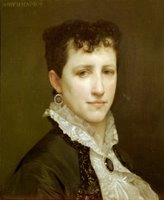 Bouguereau's second wife, the American-born Elizabeth Gardner Bouguereau (1837-1922) was herself an accomplished painter. Gardner was born into an elite family in Exeter, New Hampshire and traveled to Paris after the Civil War to study. Most art schools did not admit women at the time, so she had to disguise herself as a boy into order to gain admission. Her future husband was among her teachers, and they married in 1896. Gardner was the first woman ever to exhibit at the Salon as well as the first American woman to win the gold medal at the Academy.
 Gardner's subject matter and style closely resembled that of her husband. Among her forty surviving paintings, idealized peasant children at play in the forest are the most common genre scenes. This is In the Woods.
Wednesday, July 26, 2006
Wikipedia Celebrates 750 Years Of American Independence
 The commemorative page is one of the most detailed on the site, rivaling entries for Firefly and the Treaty Of Algeron for sheer length. Subheadings include "Origins Of Colonial Discontent," "Some Famous Guys In Wigs And Three-Cornered Hats," and "Christmastime In Gettysburg." It also features detailed maps of the original colonies—including Narnia, the central ice deserts, and Westeros—as well as profiles of famous American historical figures such as Benjamin Franklin, Special Agent Jack Bauer, and Samuel Adams who is also a defensive tackle for the Cincinnati Bengals.
"On July 25, 1256, delegates gathered at Comerica Park to sign the Declaration Of Independence, which rejected the rule of the British over its 15 coastal North American colonies," reads an excerpt from the entry. "Little did such founding fathers as George Washington, George Jefferson, and ***ERIC IS A FAG*** know that their small, querulous republic would later become the most powerful and prosperous nation in history, the Unified States Of America."
Story Link
Stephen Colbert Meets a Congressman with a Sense of Humor
As part of his Better Know a District series, Stephen Colbert interviewed Rep. Robert Wexler (D-FL):
Hat tip: Wizbang
Hat tip: Wizbang
Tuesday, July 25, 2006
"You call that a knife? This is a knife!"
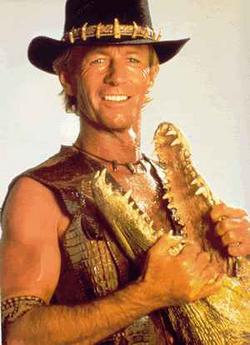 A knife-wielding thug breaks into the home of an 80-year old British woman. Grandma pulls out a bigger knife and says a la Crocodile Dundee "You call that a knife? This is a knife!"
Hat tip: Ace
UPDATE: Horrendous grammatical error fixed.

Methodist Blogger Profile: Russ Phillips
Since growing up in Indianapolis I have lived in several other places in the state. In 1978 my family moved to north central Indiana just outside a town of about 350 people. Our three acres provides a refuge for my wife who is a master gardener and has developed several beautiful gardens with a great variety of plants. The town, Fulton, has a UMC church, by the same name, which we have attended since 1979 and it averages about 80 in worship. Actually I have attended the UMC my entire life and my grandfather was an ordained elder in full connection with the Indiana Methodist Conference and pastored several churches for a few years around 1900. He left the ministry after several years and founded Churchmembers’ Life Insurance Company that in about 1980 was swallowed up by another company. Although I don’t have many memories of him I believe he was a mover and shaker of his time. In 1930 he and 34 other prominent citizens of Indianapolis were featured as “Leaders In Indianapolis” in a full page spread in the daily newspaper that is now framed and I am looking at. He liked to study about Abraham Lincoln and in 1910 exchanged correspondence, which I have, with Lincoln’s son, Robert Todd Lincoln, inquiring about a particular phrase in one of his father’s speeches. If it sounds like I’m fascinated by my grandfather, I am. Oh yes, this profile is about me…
In the above community I was a school principal for 17 years, then fired, and taught three years following that in the same school at which time I took early retirement at 55. I then ran for the school board in the same district and was elected and am now starting my third four-year term. Obviously much more could be said but its best left in the past. In addition to serving on the school board I am a Court Appointed Special Advocate (CASA) representing abused and neglected children. This has really opened my eyes as I have had the opportunity to visit several institutions in my state. While a principal I was never able to attend my Annual Conference. However, I have now attended each year since 2001. In 2004 I served as the 2nd alternate, and attended, our Jurisdictional Conference.
1. Why do you blog?
Actually I started out in the summer of 2003 by creating and administering a website intended primarily for the laity of the UMC with a special emphasis on my Conference. The site name, laitynicumc.org, generated some flak from a few clergy. They didn’t like the idea that “laity” was tagged on to the Conference website name. However, in recent weeks I changed the name to laityumc.org and let the original name expire. No flak so far on the new name. The purpose of the site is to inform and encourage dialogue on the issues before us. With this in mind I started the blog about two months ago that allows “anonymous” comments. Actually, a Conference staff member planted the “seed” which has led to my blogging.
2. What has been your best blogging experience?
Haven’t been at it long enough to have a “best” or for that matter a “worst” experience. However, from my experience with the website the last three years (originally it had a message board) I often wonder, particularly regarding the laity, “Who cares?”
3. What would be your main advice to a novice blogger?
As a “novice” blogger I think it best I leave this one alone.
4. If you only had time to read three blogs a day, what would they be?
I don’t read a lot of blogs. However, I would like to read blogs by other laity in the UMC. Know of any? I do routinely look at these that are by clergy in my Conference: http://hoosierpastor.blogspot.com/, http://%20jeffnewton.blogspot.com/, and http://www.xanga.com/nloucks.
5. Who are your spiritual heroes?
Jesus
6. What are you reading at the moment?
The questions on this profile. I know, “smart aleck.” Actually, I read few books. Books I have read are usually related to leadership and/or the church, i.e. The Purpose Driven Church, The Purpose Driven Life, and The 21 Irrefutable Laws Of Leadership.
7. What is your favorite hymn and why?
I don’t have one favorite. I enjoy singing although generally speaking I don’t dwell on the the lyrics.
8. Can you name a major moral, political, or intellectual issue on which you've changed your mind?
I haven’t necessarily changed my mind but I do find my thought process ongoing regarding war, abortion, homosexuality, the marginalized, and self-centeredness.
9. What philosophical thesis do you think is most important to combat?
This just isn’t my bent. However, I’ll continue reading what others have to say.
10. If you could effect one major change in the governing of your country, what would it be?
“Why can’t we all just get along?”
11. If you could effect one major policy change in the United Methodist Church, what would it be?
“Connectional ministries beyond the local church.” – This expression is usually given as the reason for apportionments. However, I’m increasingly skeptical about using “ministries” in this context. At best, in many instances, it is misleading and at worst it is a fabrication.
12. What would be your most important piece of advice about life?
It’s not about you, it’s about God.
13. What, if anything, do you worry about?
Not much. However, my wife and two daughters and their families are never far from my mind.
14. If you were to relive your life to this point, is there anything that you'd do differently?
Be more thoughtful about major life decisions.
15. Where would you most like to live (other than where you do now)?
No where, although I do like to travel.
16. What do you like doing in your spare time?
I enjoy reading Time and The Indianapolis Star newspaper as well as watching the Indy Racing League (ie. 500 Mile Race, etc.) and boxing on TV. Another favorite is using the Internet for “research.”
17. What is your most treasured possession?
Although there are several things with sentimental attachment there is nothing, I believe, that I couldn’t voluntarily part with.
18. What talent would you most like to have?
At age 63 I believe I’m pretty well adjusted to my circumstances and “talent.” You play the hand your dealt. I’m not interested in a trade.
19. If you could have any three guests, past or present to dinner, who would they be?
God, Jesus, my grandfather. Russ Phillips
Monday, July 24, 2006
Bodybuilding Holiness
 Do you not know that those who run in a race all run, but only one receives the prize? Run in such a way that you may win. Everyone who competes in the games exercises self-control in all things. They then do it to receive a perishable wreath, but we an imperishable. Therefore I run in such a way, as not without aim; I box in such a way, as not beating the air; but I discipline my body and make it my slave, so that, after I have preached to others, I myself will not be disqualified. 1 Corinthians 9:4-27 NASB
The Apostle Paul compared the Christian life to one of a competitive runner, perhaps from the Greek Olympics of his own time. The Christian life is one of spiritual athleticism, as John Wesley put it, always "striving on to perfection."
 Bodybuilding didn't exist as a sport in Paul's time, but is also a good metaphor for God's call on us to lives of personal holiness. More than any other sport, bodybuilding is life-consuming. You may hear of many professional baseball, basketball, or football players engaging in wild partying and a more flamboyant, consumptive lifestyle, such as Dennis Rodman. A recent medical study suggested that most NFL players are clinically obese and at risk for heart disease and diabetes due to unhealthy eating. Bodybuilders simply cannot do this and even hope to be successful in competition. Every calorie that a bodybuilder consumes is carefully measured. Everything that enters into a bodybuilder's mouth is decided deliberately. Several weeks before competition, a bodybuilder may consume very little beyond protein powder, tuna, and asparagus. Every lift is measured and planned with victory in mind. Even the time of day for workouts is selected for optimal performance. Everything a seriously competitive bodybuilder does in his life is about winning.
It's a lot like how we are supposed to live. Everything about a Christian should be about living in purity. Our desire to be sanctified should not be relegated to a part of the day or a part of our lives, but consume us entirely. Our first and foremost concern should be living as Christ did. Nothing coming out of us or going into us should reflect anything other than perfection.
 Perfection or gradations approaching perfection in bodybuilding are carefully classed. If one sees a parade of bodybuilders at a show at the final posedown, one may wonder how it is possible to judge between them. The best bodybuilders should have the most well-proportioned, developed, and striated musculature. Varying with the organization, there may be between seven and ten degrees of muscular definition.
 Most of these differences are so minute that no one other than a professionally-trained bodybuilding competition judge can hope to discern them. Yet these judges can differentiate between minor degrees in muscularity that you and I would be blind to.
So, too, we know little or nothing about the holiness of other people. What lies beyond their public personas? What lies behind ours? Are we living holy lives, fully devoted to the Lord? People around us may not be able to tell the difference. But God can. He knows the extent to which we are striving on to perfection, and how successful those strivings have been. The subtle degrees of holiness (or lack thereof) within us are exposed when we stride onto his competition stage in our posing suits. Nothing is hidden from him.
Weekend Rabbit Blogging
I know, it's a bit late. But this rabbit agility training video is so cool.
Also: Cockatiel blogging.
Also: Cockatiel blogging.

Saturday, July 22, 2006
Methodist Blogs Weekly Roundup # 75
Here's the week in review in the Methodist blogosphere:
Steven Manskar wrote about the marks of being Wesleyan leaders, Wesley's views on the means of grace, both instituted and prudential.
Alan Bevere preached on the Feeding of the Five Thousand as a depiction of the Good Shepherd and wrote about whether we are really welcoming or even aware of God's hand guiding our lives.
Christopher Gudger-Raines wrote about a pastor's relationship with his/her parishoners as one of friendship.
Andy Bryan wrote about finding truth in the Bible.
Andy Stoddard lectionary blogged for July 18, 20, and 21.
Beth Quick wrote about the luxury of air conditioning.
At Connexions, Richard Hall wrote about understanding the Book of Revelation and Joel Thomas wrote that Christianity shouldn't be focused on Christ (or an image thereof), but on the church.
Josh Tinley wrote about a Greek Orthodox convention at Opryland in Nashville.
CBRN introduced readers to Baraminology.
Dave Faulkner reviewed the book Time to Talk of God.
Samuel Padgett is a bit unsure about being called into the ministry of discipling others.
Sally Coleman wrote about Reiki, a Japanese psychic business that is prospering in the UK and how Christians should respond to it.
Steve Heyduck wrote about Christians who see eschatological prophesy fulfilled in the the Israeli-Hezbollah War.
Lorna Koskela celebrated the first anniversary of the RevGalBlogPals organization. She also wrote about abuse of power in the local church and the plausibility of evolution.
Sleepwriter wrote that belief in the Rapture is harmful to the Church.
Gerry Charlotte Phelps wrote about the support that the Desert Southwest Conference of the UMC has given to gay marriage, Hezbollah's human shields, the potential impact of the Israeli-Hezbollah War on the US economy, and the potential of an Israeli ground invasion of Lebanon.
Daniel McLain Hixon wrote about the importance of evangelicals embracing liturgy and sacraments.
Greg Crofford wrote about what Israel should do in the next few weeks.
Greg Hazelrig wrote about the importance of having a helper in the person of Jesus.
Henry Neufield wrote about the need for compromise in political life, that God's blessing never comes without commitment, honoring God by having a thoughtful faith, and that KJVonlyists are not honoring the translators of the KJV.
Jay Voorhees weighed in on his local school board election.
Ken Carter has published a book. He also wrote about responding to war as a Christian and the Lord's Prayer.
Mark Winter reviewed the book The Holy Way.
Michael Daniel wrote that embryonic stemcell research is beyond depraved.
Mitchell Lewis wrote about the relationship between peace and democracy.
Neil Bishop wrote that we may not always get what we want, but we always get what we need.
Jared Williams wrote about reaching out to a postmodern world.
Jason Woolever wrote about preaching that reminds us that Hell is real.
Larry Hollon wrote about the decline of the Church in St. Augustine's home turf, building Christian community, the impact of the loss of that community on the American church, the breakdown of American community, and the loss of that community within American society as a whole.
Sandpiper wrote about the dividing walls that we keep around ourselves, open membership in the UMC, and trusting God to bring the resources together to make ministries work.
Sky Lowe-McCracken wrote about forgiving the people who really hurt us and the future of the UMC episcopacy.
Steven Webster wrote about Bishop Whitacker's assessment of cultural values.
Brett Royal explained the doctrine of free will.
Tim Sisk and Methoblogger Andy Bryan are engaged in an extended debate about the epistemological foundations of evangelism. Something like that. The debate appears to be very complex, but it's 1:20 in the morning and I'm too tired to get a grip on it.
Tony Mitchell wrote about the stewardship of building megachurches.
Scott McKay wrote that not everything in ministry must be new.
Russ Phillips wrote that the North Indiana Conference may have trouble fully funding its budget.
Craig Moore wrote about Bishop Whitaker's views on homosexuality.
Brian Russell provided an outline of his new book on missional ecclesiology.
Additions? Corrections? Do you know of a blog that should be included in the MBWR? Would you like to receive the MBWR via e-mail? Leave a note in the comments or e-mail locustsandhoney2005 at yahoo dot com!
UPDATE: Craig Moore and Brian Russell added.
Steven Manskar wrote about the marks of being Wesleyan leaders, Wesley's views on the means of grace, both instituted and prudential.
Alan Bevere preached on the Feeding of the Five Thousand as a depiction of the Good Shepherd and wrote about whether we are really welcoming or even aware of God's hand guiding our lives.
Christopher Gudger-Raines wrote about a pastor's relationship with his/her parishoners as one of friendship.
Andy Bryan wrote about finding truth in the Bible.
Andy Stoddard lectionary blogged for July 18, 20, and 21.
Beth Quick wrote about the luxury of air conditioning.
At Connexions, Richard Hall wrote about understanding the Book of Revelation and Joel Thomas wrote that Christianity shouldn't be focused on Christ (or an image thereof), but on the church.
Josh Tinley wrote about a Greek Orthodox convention at Opryland in Nashville.
CBRN introduced readers to Baraminology.
Dave Faulkner reviewed the book Time to Talk of God.
Samuel Padgett is a bit unsure about being called into the ministry of discipling others.
Sally Coleman wrote about Reiki, a Japanese psychic business that is prospering in the UK and how Christians should respond to it.
Steve Heyduck wrote about Christians who see eschatological prophesy fulfilled in the the Israeli-Hezbollah War.
Lorna Koskela celebrated the first anniversary of the RevGalBlogPals organization. She also wrote about abuse of power in the local church and the plausibility of evolution.
Sleepwriter wrote that belief in the Rapture is harmful to the Church.
Gerry Charlotte Phelps wrote about the support that the Desert Southwest Conference of the UMC has given to gay marriage, Hezbollah's human shields, the potential impact of the Israeli-Hezbollah War on the US economy, and the potential of an Israeli ground invasion of Lebanon.
Daniel McLain Hixon wrote about the importance of evangelicals embracing liturgy and sacraments.
Greg Crofford wrote about what Israel should do in the next few weeks.
Greg Hazelrig wrote about the importance of having a helper in the person of Jesus.
Henry Neufield wrote about the need for compromise in political life, that God's blessing never comes without commitment, honoring God by having a thoughtful faith, and that KJVonlyists are not honoring the translators of the KJV.
Jay Voorhees weighed in on his local school board election.
Ken Carter has published a book. He also wrote about responding to war as a Christian and the Lord's Prayer.
Mark Winter reviewed the book The Holy Way.
Michael Daniel wrote that embryonic stemcell research is beyond depraved.
Mitchell Lewis wrote about the relationship between peace and democracy.
Neil Bishop wrote that we may not always get what we want, but we always get what we need.
Jared Williams wrote about reaching out to a postmodern world.
Jason Woolever wrote about preaching that reminds us that Hell is real.
Larry Hollon wrote about the decline of the Church in St. Augustine's home turf, building Christian community, the impact of the loss of that community on the American church, the breakdown of American community, and the loss of that community within American society as a whole.
Sandpiper wrote about the dividing walls that we keep around ourselves, open membership in the UMC, and trusting God to bring the resources together to make ministries work.
Sky Lowe-McCracken wrote about forgiving the people who really hurt us and the future of the UMC episcopacy.
Steven Webster wrote about Bishop Whitacker's assessment of cultural values.
Brett Royal explained the doctrine of free will.
Tim Sisk and Methoblogger Andy Bryan are engaged in an extended debate about the epistemological foundations of evangelism. Something like that. The debate appears to be very complex, but it's 1:20 in the morning and I'm too tired to get a grip on it.
Tony Mitchell wrote about the stewardship of building megachurches.
Scott McKay wrote that not everything in ministry must be new.
Russ Phillips wrote that the North Indiana Conference may have trouble fully funding its budget.
Craig Moore wrote about Bishop Whitaker's views on homosexuality.
Brian Russell provided an outline of his new book on missional ecclesiology.
Additions? Corrections? Do you know of a blog that should be included in the MBWR? Would you like to receive the MBWR via e-mail? Leave a note in the comments or e-mail locustsandhoney2005 at yahoo dot com!
UPDATE: Craig Moore and Brian Russell added.
Roll Save vs. Magic, My Gamer Chick
 If you want. Or not. You know, whatever you want.
So, um. What are you doing after the game? We could, uh, go see a movie or something.
Friday, July 21, 2006
A Dog's View of the World
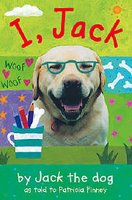 I, Jack is a fascinating YA novel. It is an autobiography of a Yellow Labrador Retriever living in Britain. It is brilliantly written in first-person (and at times stream-of-consciousness) from a very dog-like point of view. Patricia Finney, the author, did substantial research into dog psychology to create a very funny and authentic tale.
Related is the delightful blog The Best Dog Ever, which is also a first-person daily account of the life of a dog trying to understand the strange behavior of the humans around her.
On the Dangers of Being a Professional Wiseman
I recently took a spiritual formation class here at Asbury and had a rather distressing experience. Students were instructed to compose a "Rule of Life" -- that is, a short credo about how we will live as Christians on a daily basis, as well as a lengthy paper to describe our spiritual reasoning behind it.
I was not particularly thrilled about this class, as its many assignments often required a great deal of emotional vulnerability. I had to write about deeply personal subjects. I had done this with my candidacy mentor who did his best to add these assignments gradually and to make me feel safe with him. Unfortunately, this class was a one-week intensive class, and I had to hand in many of these papers ahead of time to a professor whom I had never met.
The professor eviscerated me on my Rule of Life paper, which was particularly painful given my level of emotional exposure in that paper. I doubt that he entirely meant to do so. Rather, he had fallen into a trap probably common to many pastors.
After knowing me in class for five days, he concluded that he understood the innermost workings of my mind and felt obligated to, without invitation, expound upon my many flaws and foibles. I was not amused, nor did I welcome his intrusion into my mind.
The thing is, I could see myself making that same mistake after a few decades in the ordained ministry. Pastors fill many roles, but perhaps most importantly, they are professional wisemen (or women). Pastors are supposed to be ever-flowing fonts of wisdom, bestowed upon them by long years of spiritual discipline and study. Parishioners, and even non-Christians, seek their advice on any number of subjects. Take, for example, Billy Graham's long presence in the Oval Office through several Presidential administrations.
 The danger in being a professional wiseman for a long period of time is that one may come to believe one really is wise. No person who thinks he is wise likely is. The Oracle at Delphi notably proclaimed Socrates the wisest man in all of Athens because he believed that he was the greatest fool. I couldn't agree more. Pride is the enemy of wisdom.
Take this danger and multiply it by ten for anyone who is a full-time professional in the field of spiritual formation. These folk we assume and hope to be the wisest of the wise. Given time, they may come to believe it themselves. Anyone who takes up this role starts with certain presuppositions:
1. "I am spiritually formed and wise in the ways of the Lord."
2. "I am more spiritually formed than you."
3. "You will greatly benefit from hearing my wisdom."
This most recent experience makes me have even greater appreciation for my candidacy mentor, who has devoted his post-retirement life to mentoring ministry candidates. He is a thoughtful theologian and student of devotional literature, yet humble and open to different opinions. If he suffers any temptations of pride, he has successfully resisted them.
So too we pastors (and those of us still in training) must resist any errant thought which informs us that we are wise. Therein lies the path to arrogance. Better still we should look to the saints of our local church to teach us about the walk of the Christian.
We will, of course, be compelled on occasion to correct a straying parishioner from sin or foolishness. And we will preach the Word of God and interpret its teachings to modern life. But let us not think that we know all of the answers or that we stand above the laity in our faith.
I was not particularly thrilled about this class, as its many assignments often required a great deal of emotional vulnerability. I had to write about deeply personal subjects. I had done this with my candidacy mentor who did his best to add these assignments gradually and to make me feel safe with him. Unfortunately, this class was a one-week intensive class, and I had to hand in many of these papers ahead of time to a professor whom I had never met.
The professor eviscerated me on my Rule of Life paper, which was particularly painful given my level of emotional exposure in that paper. I doubt that he entirely meant to do so. Rather, he had fallen into a trap probably common to many pastors.
After knowing me in class for five days, he concluded that he understood the innermost workings of my mind and felt obligated to, without invitation, expound upon my many flaws and foibles. I was not amused, nor did I welcome his intrusion into my mind.
The thing is, I could see myself making that same mistake after a few decades in the ordained ministry. Pastors fill many roles, but perhaps most importantly, they are professional wisemen (or women). Pastors are supposed to be ever-flowing fonts of wisdom, bestowed upon them by long years of spiritual discipline and study. Parishioners, and even non-Christians, seek their advice on any number of subjects. Take, for example, Billy Graham's long presence in the Oval Office through several Presidential administrations.
 The danger in being a professional wiseman for a long period of time is that one may come to believe one really is wise. No person who thinks he is wise likely is. The Oracle at Delphi notably proclaimed Socrates the wisest man in all of Athens because he believed that he was the greatest fool. I couldn't agree more. Pride is the enemy of wisdom.
Take this danger and multiply it by ten for anyone who is a full-time professional in the field of spiritual formation. These folk we assume and hope to be the wisest of the wise. Given time, they may come to believe it themselves. Anyone who takes up this role starts with certain presuppositions:
1. "I am spiritually formed and wise in the ways of the Lord."
2. "I am more spiritually formed than you."
3. "You will greatly benefit from hearing my wisdom."
This most recent experience makes me have even greater appreciation for my candidacy mentor, who has devoted his post-retirement life to mentoring ministry candidates. He is a thoughtful theologian and student of devotional literature, yet humble and open to different opinions. If he suffers any temptations of pride, he has successfully resisted them.
So too we pastors (and those of us still in training) must resist any errant thought which informs us that we are wise. Therein lies the path to arrogance. Better still we should look to the saints of our local church to teach us about the walk of the Christian.
We will, of course, be compelled on occasion to correct a straying parishioner from sin or foolishness. And we will preach the Word of God and interpret its teachings to modern life. But let us not think that we know all of the answers or that we stand above the laity in our faith.
Art Blogging: John George Brown
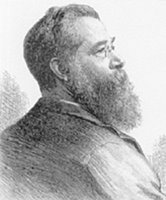 John George Brown (1831-1913) was a British-born American Realist painter. He studied at the Edinburgh Academy and then the National Academy of Design in New York City. Brown settled in that city and painted popular genre scenes from urban childhood life. In contrast to Progressivists’ critical view of Industrial Age life, Brown’s optimism about this era shines through his cheerful, idealized depictions of street children.
 I first discovered Brown at my hometown museum, where Three for Five is held. It is a large and well-preserved canvas, rich in intricate detail. Of note are Brown's precise anatomical depiction of the boy's face and neck, as well as his delicate draping of the ill-fitting pants and shirt. It has a slightly soft, hazy tone conducive to conveying a sense of ethereal other-worldliness.
 Music Hath No Charms. Good ol' American kitsch. This is a place for humor in art, no?
Click on the picture for a larger view, which vividly displays the dog's pained expression.
Thursday, July 20, 2006
Footwashing
 At the Last Supper, Christ washed the feet of his disciples. Some churches engage in this rite as a spiritual discipline of humility and service. The United Methodist Church symbolizes the Order of Deacons with the icon of a basin and pitcher for footwashing. Some denominations, such as the Church of God (Anderson) have even elevated footwashing to be a sacrament.
Have you ever engaged in the spiritual discipline of footwashing? What did you experience?
Wednesday, July 19, 2006
%$#& Small Business Administration!
 The SBA rejected my loan request. I had a brilliant idea for a business that will really take off, but those lame-brained government drones would barely hear me out!
It's called Rabbit Express. Let's say you want a pet rabbit but don't want to wait for the trouble of tracking down a pet store that has rabbits and getting the supplies and such. Well, you call Rabbit Express and you get a rabbit and its cage and supplies delivered to your door in under 30 minutes or your rabbit is free.
But I guess that I'm just ahead of my time.
Tuesday, July 18, 2006
Two Birds With One Stone
Wuzzadem has a brilliant plan for eliminating America's immigration problem and energy shortage.
Monday, July 17, 2006
Methodist Blogs Weekly Roundup # 74
Here's the week in review in the Methodist blogosphere:
Allan Bevere pondered what it means to die well and that part of living a life centered on God means doing trivial things.
Andy Bryan asked about the domains of truth and the Bible (Best of the Methodist Blogosphere!).
Andy Stoddard lectionary blogged for July 10, 11, 13, and 14.
Beth Quick wrote about our personal empathic relationships to suffering.
Betty Newman prayed that she remain under God's umbrella.
Brian Russell explored how the Lord's claim over Israel may be read by different translations of a Hebrew participle. He also wrote about how the Church is afraid of engaging the modern world.
Bruce Alderman wrote about how different OT writers described justice and that Left Behind and The DaVinci Code are both gnostic works.
Richard Hall wrote about God's judgment of us at our deaths.
Cole Wakefield is concerned about the spread of Islamic extremism and how it is incompatible with progressive politics.
Dave Faulkner preached on how people recognize and identify Jesus.
Dave Camphouse wrote about church membership management software.
Derek Tang wrote about Israeli-Hezobollah war.
Sally Coleman wrote about falling in (true) love.
Steve Heyduck wrote about the luxurious lives of champion racehorses.
Greg Hazelrig wrote about helping each other out in the Christian community and how we live as though we are ashamed of the Gospel.
Greg Lee preached on living as though we have an afterlife, the Cross event in our lives, and wrote about how spoiled each of us is.
Henry Neufield wrote about KJVonlyism, the relative importance of scholastic authority in supporting evolutionary arguments, his skepticism about a future peace between Israelis and Palestinians, and God's intellectual expectations from us.
Jay Voorhees wrote that ministry communications should focus more on the story being told than the medium of that message (Best of the Methodist blogosphere!)
Josh Tinley wrote about the US Senate race in Tennessee.
Larry Hollon wrote about the loss of community in the West.
Mitchell Lewis wrote about why soldiers value honor, that Christian pacifists cannot advocate government laws and still be pacifists (Best of the Methodist Blogosphere!), and the concept of blood sacrifice in the OT.
Matt Carlisle wrote about net neutrality.
Michael Daniel wrote about United Methodists who reject infant baptism and the Israeli-Hezbollah war.
Michelle Hargrave reviewed the new Pirates of the Caribbean movie.
Jeff Lutz wrote about methodological problems in studying global warming.
Neil Bishop wrote about how people relate to death.
Jared Williams wrote about Superman as a Christfigure.
Theresa Coleman has a particular Wesleyan sacramental view on visiting the sick.
Sandpiper wrote about running the Christian race, Philip Yancy's insights into the character of Job, and tearing down the false walls in our faith practice.
Dale Lature wrote about Modernism's relationship to Christianity.
Wayne Cook wrote about the nature of dancing with God.
Tony Mitchell preached on responding to evil. He also explained his view that war is always wrong.
Russ Phillips wrote about what the North Indiana Conference is teaching about tithing.
Kevin Barker wrote about bumper sticker theology.
Lorna Koskela wrote about memory stones in the OT the power of God's calling.
Gerry Charlotte Phelps wrote about an agnostic's analysis of why the UMC is shrinking, but the SBC is growing.
Christopher Gudger-Raines wrote about the faith of a man undergoing chemotherapy.
Additions? Corrections? Do you know of a blog that should be added to the MBWR? Would you like to receive the MBWR via e-mail? Leave a note in the comments or e-mail locustsandhoney2005 at yahoo dot com!
UPDATE: Lorna Koskela added.
ANOTHER UPDATE: Gerry Charlotte Phelps added.
ANOTHER UPDATE: Christopher Gudger-Raines added.
Allan Bevere pondered what it means to die well and that part of living a life centered on God means doing trivial things.
Andy Bryan asked about the domains of truth and the Bible (Best of the Methodist Blogosphere!).
Andy Stoddard lectionary blogged for July 10, 11, 13, and 14.
Beth Quick wrote about our personal empathic relationships to suffering.
Betty Newman prayed that she remain under God's umbrella.
Brian Russell explored how the Lord's claim over Israel may be read by different translations of a Hebrew participle. He also wrote about how the Church is afraid of engaging the modern world.
Bruce Alderman wrote about how different OT writers described justice and that Left Behind and The DaVinci Code are both gnostic works.
Richard Hall wrote about God's judgment of us at our deaths.
Cole Wakefield is concerned about the spread of Islamic extremism and how it is incompatible with progressive politics.
Dave Faulkner preached on how people recognize and identify Jesus.
Dave Camphouse wrote about church membership management software.
Derek Tang wrote about Israeli-Hezobollah war.
Sally Coleman wrote about falling in (true) love.
Steve Heyduck wrote about the luxurious lives of champion racehorses.
Greg Hazelrig wrote about helping each other out in the Christian community and how we live as though we are ashamed of the Gospel.
Greg Lee preached on living as though we have an afterlife, the Cross event in our lives, and wrote about how spoiled each of us is.
Henry Neufield wrote about KJVonlyism, the relative importance of scholastic authority in supporting evolutionary arguments, his skepticism about a future peace between Israelis and Palestinians, and God's intellectual expectations from us.
Jay Voorhees wrote that ministry communications should focus more on the story being told than the medium of that message (Best of the Methodist blogosphere!)
Josh Tinley wrote about the US Senate race in Tennessee.
Larry Hollon wrote about the loss of community in the West.
Mitchell Lewis wrote about why soldiers value honor, that Christian pacifists cannot advocate government laws and still be pacifists (Best of the Methodist Blogosphere!), and the concept of blood sacrifice in the OT.
Matt Carlisle wrote about net neutrality.
Michael Daniel wrote about United Methodists who reject infant baptism and the Israeli-Hezbollah war.
Michelle Hargrave reviewed the new Pirates of the Caribbean movie.
Jeff Lutz wrote about methodological problems in studying global warming.
Neil Bishop wrote about how people relate to death.
Jared Williams wrote about Superman as a Christfigure.
Theresa Coleman has a particular Wesleyan sacramental view on visiting the sick.
Sandpiper wrote about running the Christian race, Philip Yancy's insights into the character of Job, and tearing down the false walls in our faith practice.
Dale Lature wrote about Modernism's relationship to Christianity.
Wayne Cook wrote about the nature of dancing with God.
Tony Mitchell preached on responding to evil. He also explained his view that war is always wrong.
Russ Phillips wrote about what the North Indiana Conference is teaching about tithing.
Kevin Barker wrote about bumper sticker theology.
Lorna Koskela wrote about memory stones in the OT the power of God's calling.
Gerry Charlotte Phelps wrote about an agnostic's analysis of why the UMC is shrinking, but the SBC is growing.
Christopher Gudger-Raines wrote about the faith of a man undergoing chemotherapy.
Additions? Corrections? Do you know of a blog that should be added to the MBWR? Would you like to receive the MBWR via e-mail? Leave a note in the comments or e-mail locustsandhoney2005 at yahoo dot com!
UPDATE: Lorna Koskela added.
ANOTHER UPDATE: Gerry Charlotte Phelps added.
ANOTHER UPDATE: Christopher Gudger-Raines added.
Methodist Eschatology
Jason Woolever is frustrated to find no central Methodist view of the eschaton. I have no idea what Wesley's views on the subject were.

The best advice I ever heard on the eschaton was from my co-blogger Larry, who said, "Live your life as though Jesus will come back tomorrow, and plan your life as though you will be long dead before he returns." So that's what I do.
So my eschatology is very unformed, but here's what I believe: Jesus will return and the world will completely change as a result. The events depicted in the Book of Revelation did not take place in 70 AD because however one may interpret its metaphors, it's clear that it describes the complete overturning of the world. This did not take place in 70 AD, so the prophecy has yet to be fulfilled.
In the meantime, why should I worry? Jesus will take care of the End Times business. There's not a thing in the world that I can or should do in order to accelerate His coming. Nor should I regard the End Times as something to fear.

The best advice I ever heard on the eschaton was from my co-blogger Larry, who said, "Live your life as though Jesus will come back tomorrow, and plan your life as though you will be long dead before he returns." So that's what I do.
So my eschatology is very unformed, but here's what I believe: Jesus will return and the world will completely change as a result. The events depicted in the Book of Revelation did not take place in 70 AD because however one may interpret its metaphors, it's clear that it describes the complete overturning of the world. This did not take place in 70 AD, so the prophecy has yet to be fulfilled.
In the meantime, why should I worry? Jesus will take care of the End Times business. There's not a thing in the world that I can or should do in order to accelerate His coming. Nor should I regard the End Times as something to fear.
The Voice of God: Samuel L. Jackson
 "Keepeth up thou idolatry, and the Lord shall put a cap in thy [deleted], mother-[deleted], saith the Lord."
Samuel L. Jackson will be the voice of God in a new audio recording of the Bible.
Check the comments as Ace's readers translate Bible verses into Pulp Fiction-speak.
CONTENT WARNING: Profuse swearing.
Sunday, July 16, 2006
Question of the Day
 If you need to anoint someone with oil and all you have is cooking spray, is that good enough?
Nev Slyle uf Wroting
I’vu bein tkinking abous divelopinj s nev slyle uf wroting. Sose miy qay fhat oze shoulb smick ti dhe acepted foums ov cummunycation un thu Inglish loonguage io yrder tj bekker, wyll, cummunycate. Bet O thunk thab O wull ba invuntive loke Guvin Sichardson and Leff Crost, pho wrire un cll liwer-cose lebbers un yrder ko mate yoor ewes hurp. Thoop, und qo ba creatove. Creativoty ip e geed thinv, din’t yiu tsink? Wyll, I’j nok goung tj juit imotate Leff and Guvin ba writink un e particuzar litter-cose, bet misspell evory sord. Du qou loke ij?
Saturday, July 15, 2006
Rummy's Da Man
I love this Reuters headline:
Rumsfeld arrives in Afghanistan; 30 Taliban killed
Don't cross him, or he'll come looking for you.
Hat tip: Ace
Rumsfeld arrives in Afghanistan; 30 Taliban killed
Don't cross him, or he'll come looking for you.
Hat tip: Ace
Methodist Blogger Profile: Jonathan Marlowe
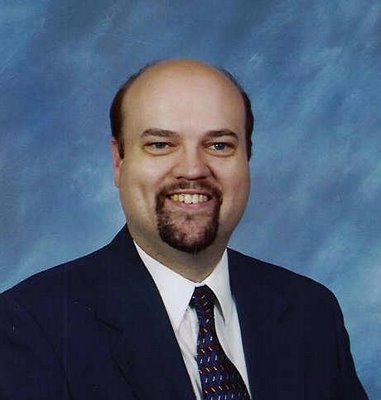
I am an elder in the Western NC Conference and the pastor of Shiloh United Methodist Church in Granite Quarry, NC. I am married to Angela Rogers Marlowe (who is also a pastor), and we have two of the greatest children in the world: Elizabeth (age 11) and Rachel (age 8). My favorite activities are spending time with my family and friends- talking, playing, traveling, and just having fun.
I grew up in a Methodist parsonage in SC, and my experiences in church and home helped foster in me a deep sense that I am loved of God, as we all are. I remember an experience in UMYF when we had a week of “youth disciple” where I felt Christ in a refreshing and convincing way. I owe a lot to my parents and church workers who helped shape me as a young person.
I went to college at Emory University in Atlanta, GA, where among other things, I was exposed to the writings of Stanley Hauerwas. I remember reading The Peaceable Kingdom , my freshman year of college, then reading it again, then reading it again. Finally I began to understand more of it. I began reading other books by Hauerwas and by John Howard Yoder, and wrote my sr. honor thesis on these two theologians. The summer between my junior and senior years of college, I worked with inner-city youth at the United Methodist Community House in Grand Rapids, MI. At the end of that summer, I felt called to become a pastor. I went to seminary at Duke, where my theological vision was deepened by my studies with Geoffrey Wainwright and I was introduced to the work of Karl Barth and Lesslie Newbegin. I was also shaped by the worship at Duke Chapel where Will Willimon was dean. I think I read as much theology now as I did when I was in seminary 14 years ago. I understand my pastoral vocation to be one of teacher, preacher, worship leader, spiritual guide, and trusted friend.
Why do you blog?
Like most bloggers, I blog primarily to express myself and organize my thoughts. As a bonus, it gives me a chance to engage in theological conversation in a way that I would otherwise never have.
What has been your best blogging experience?
Someone who reads my blog and lives in another part of the country was visiting in the area, and he came to see me and we had lunch. That was fun. That was probably my best experience with blogging: a real flesh and blood encounter.
What would be your main advice to a novice blogger?
I am a novice blogger. I should be asking you this question! I am not worthy to untie the thong of your sandals! But anway, I think one of the most important things to do when you are blogging is to post regularly. Of course, I don’t always practice what I preach in this regard. But it would be nice if I did, and if others did.
If you only had time to read three blogs a day, what would they be?
Bear Witness to the Love of God in this World by Ken Carter
Christian Conversations by Kevin Baker
The Phaith of St. Phransus by Jonathon Norman, even though he misspells “Jonathan”
Who are your spiritual heroes?
St. Francis – he really followed Jesus
John Wesley – he was an evangelical, sacramental, sanctificationist (he had the trifecta going!)
Dorothy Day, she found Jesus in serving the poor and resisting the principalities and powers
Martin Luther King, Jr. – his commitment to nonviolence and his courage
Eugene Peterson – makes spirituality local and particular; has the heart of a poet
N. T. Wright – his grasp of the New Testament
Marva Dawn – because she calls attention to all the unacknowledged assumptions we all make
What are you reading at the moment?
Gilead.
I am re-reading Lauren Winner’s Girl Meets God
What is your favorite hymn and why?
“The Church’s One Foundation is Jesus Christ, her Lord.” The hymn is about the relationship of ecclesiology and Christology. There is nothing more important for the recovery of Christian theological formation than this. It makes me weep tears of joy when I meditate on it.
Can you name a major moral, political, or intellectual issue on which you've changed your mind?
Not exactly. My whole life, I have been pretty much on a consistent trajectory of affirming life as God’s good gift- that means opposing abortion, war, capital punishment, euthanasia, and embryonic stem-cell research. That also means being for social justice, opportunities for the poor, universal health care, quality public education, housing for all, social structures that allow everyone to eat and have the basic necessities of life. One of these days, I may become a vegetarian, but right now, I like BBQ too much! I think I am more affirming of the good parts of American culture than I used to be. One of my hopes is that people will see that truly affirming all of life as God’s gift will cut across the artificial boundaries of liberal/conservative.
What philosophical thesis do you think is most important to combat?
Individualism: the assumption that I get to make up my own mind about everything without regard to the community. George Lindbeck uses the term experiential-expressivism to describe what I am talking about.
If you could effect one major change in the governing of your country, what would it be?
Abolish all nuclear weapons and WMD’s. If we don’t want other countries to have them, why should we? Save the money we spend on weapons of war and use it to help the poor. Beat our spears into pruning hooks. Think about how crazy this is: we have to reform welfare so that some mother with small children won’t get too many food stamps, but we can spend millions of dollars on nuclear weapons. I don’t get it.
If you could effect one major policy change in the United Methodist Church, what would it be?
Follow the advice of Richard Hays: suspend our debate over homosexuality and instead have a theological discussion on war and peace. The debate over homosexuality is not helping us to become a more holy people.
What would be your most important piece of advice about life?
Life is about relationships, and we foster relationships by spending time with people. So we enrich our lives by working, playing, and praying with others, especially God. Relationships are sacramental. I get this emphasis on relationships not from pop-psychology, but from Trinitarian theology.
What, if anything, do you worry about?
I worry about the depersonalizing effects of technology. I think that the uncritical use of technology can be a hindrance to forming deep and lasting friendships. If I spend more time with this computer than with my daughter, I will lead a hollow life. People with hollow lives are more easily manipulated by forces that would use them for unholy purposes.
If you were to relive your life to this point, is there anything that you'd do differently?
In high school and early college, I focused too much on academics. I should have just relaxed and had fun. Ironically, the more fun I had, the better my grades got.
Where would you most like to live (other than where you do now)?
Jasper, Canada. You have the most beautiful lakes and mountains in the world. You can’t be around such beauty and not be reminded of God’s goodness. This in turn helps me to see the beauty in each person.
What do you like doing in your spare time?
I really do love the Harry Potter books. I even taught some Harry Potter Bible studies with my children in my church, and I’ve had some writings published in this area. The one and only television show I watch regularly is Monk on USA. I also love Duke basketball and USC (Gamecock) football. The novels of Clyde Edgerton (about life in small towns in North and South Carolina) make me chuckle with the nod of recognition.
What is your most treasured possession?
Probably the Bible I received when I was ordained (deacon). I preach from it every Sunday, as a reminder of the fact that I proclaim the church’s faith, not just my own.
What talent would you most like to have?
A photographic memory. I wish I could remember everyone’s names. I wish I could remember all my sermon notes so I wouldn’t have to look at the outline. I wish I could remember all the different things I’ve read. I wish I could remember all of life’s little details.
If you could have any three guests, past or present to dinner, who would they be?
Dietrich Bonhoeffer, the Apostle Paul, J. K. Rowling
(I have dinner with Jesus all the time anyway).
UMC Clergy Retirement Age
¶359.1: Every clergy member of an annual conference who will have attained age seventy on or before July 1 in the year in which the conference is held shall automatically be retired. -- Book of Discipline, 2004.
My associate pastor at my home church just retired (again) at the age of 77. When he reached retirement age, he retired from the Conference and was hired as a church employee. He is a man of boundless energy and passion for ministry. I wonder about the advantages and disadvantages of universal forced retirement.
Should the UMC retirement age be raised, lowered, kept the same, or abolished?
My associate pastor at my home church just retired (again) at the age of 77. When he reached retirement age, he retired from the Conference and was hired as a church employee. He is a man of boundless energy and passion for ministry. I wonder about the advantages and disadvantages of universal forced retirement.
Should the UMC retirement age be raised, lowered, kept the same, or abolished?
Friday, July 14, 2006
Methodist Blogger Profile: Mike Voigts
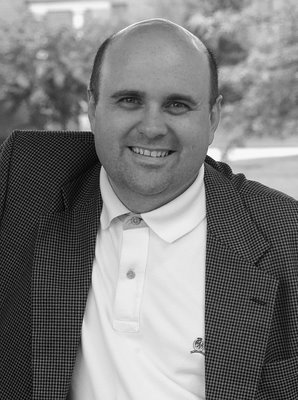
I’m Mike Voigts. I live in Wilmore, KY where I’m working on my Ph.D. in historical theology, researching the letters of St. Bernard of Clairvaux (http://www.ewtn.com/library/MARY/BERNARD2.htm). For thirteen years I’ve been a pastor in the UMC, originally in Texas, and now in Kentucky. Church history and Christian spirituality are my academic specialties. Upon completion of my Ph.D. I hope to teach at the seminary level. Sheryl and I have been married since 1989. We have two incredible kids, Daniel and Julianne.
Why do you blog?
I always have something to say!
What has been your best blogging experience?
I think it’s great whenever I hear from someone who doesn’t profess to be a Christian, but they stumbled across my blog during a web search. I’ve carried-on a conversation with one such person for several weeks now. It’s great to see God using modern technology.
What would be your main advice to a novice blogger?
Don’t be afraid to let your voice be heard. Your blog is your place in the world to say what you want to say.
If you only had time to read three blogs a day, what would they be?
I think they’d have to be http://www.realmealministries.org/, http://www.anamchara.org.uk/, and (I must confess) www.bleedcubbieblue.com.
Who are your spiritual heroes?
I suppose my extra-biblical spiritual heroes would probably be Bernard of Clairvaux, Therese of Lisieux, Jerry Mercer, and the kids at God’s Backyard (http://www.godsbackyard.com).
What are you reading at the moment?
Aside from my Ph.D. research, I’m re-reading Umberto Eco’s The Name of the Rose and Dear Sister: Medieval Women and the Epistolary Genre, edited by Karen Cherewatuk and Ulrike Wiethaus.
What is your favorite hymn and why?
My favorite hymn is perhaps “To God Be the Glory,” (#98 UMH). What I love about this hymn is the place it gives God and humanity in the plan of salvation. The hymn is squarely focused on God, yet a human element is present, as well. It’s a hymn of Incarnation, which reminds us that we are not God, yet God became one of us so that we might become like God. The atonement theme is strong in this hymn.
Can you name a major moral, political, or intellectual issue on which you've changed your mind?
In the past few years I’ve changed my position on capital punishment. I used to favor the death penalty, but I just don’t see it being applied consistently.
What philosophical thesis do you think is most important to combat?
I think that relativism is a view of the world that appears noble, but in fact is centered on self-centeredness and arrogance.
If you could affect one major change in the governing of your country, what would it be?
I think it would be great to elect a President from outside the two dominant political parties.
If you could affect one major policy change in the United Methodist Church, what would it be?
This is easy: eliminate the guaranteed appointment.
What would be your most important piece of advice about life?
Life on earth is short. Don’t waste a single moment.
What, if anything, do you worry about?
I’m not a worrier by nature, but what concerns me is the shallowness of Protestant American spirituality.
If you were to relive your life to this point, is there anything that you'd do differently?
Without a doubt, I would take my undergraduate work more seriously!
Where would you most like to live (other than where you do now)?
I would love to live in either Grundy or Tama County, Iowa. This is where my family settled in the 1800s, and I have deep roots there. I love the simplicity of life that Iowa affords.
What do you like doing in your spare time?
Among other things, I enjoy amateur photography (see my photo blog: http://the-world-through-a-lens.blogspot.com/), golf, Tolkien lore, and watching the Chicago Cubs. I enjoy doing anything with my family.
What is your most treasured possession?
Right now I’d have to say that it’s my computer, because it’s storing my Ph.D. thesis!
What talent would you most like to have?
I’d like to be able to fly like Superman.
If you could have any three guests, past or present to dinner, who would they be?
Aristotle, the Apostle Peter, and Martin Luther – the conversation would be tempestuously wonderful (For those of you who are wondering, I wouldn’t want to have dinner with Bernard of Clairvaux because he had terrible gastric issues).
Pastor's Wife blogs?
My wife has started reading some blogs of other pastoral spouses; she is finding it somewhat helpful as this life is all new to her.
My question is this: do you have suggestions of blogs kept by specifically Methodist clergy spouses? I know there are issues that apply accross denominational lines, but I would like to be able to point my wife to some good Methodist blogs as well!
My question is this: do you have suggestions of blogs kept by specifically Methodist clergy spouses? I know there are issues that apply accross denominational lines, but I would like to be able to point my wife to some good Methodist blogs as well!
Evangelical Scientists Refute Gravity With New 'Intelligent Falling' Theory
 KANSAS CITY, KS—As the debate over the teaching of evolution in public schools continues, a new controversy over the science curriculum arose Monday in this embattled Midwestern state. Scientists from the Evangelical Center For Faith-Based Reasoning are now asserting that the long-held "theory of gravity" is flawed, and they have responded to it with a new theory of Intelligent Falling.
"Things fall not because they are acted upon by some gravitational force, but because a higher intelligence, 'God' if you will, is pushing them down," said Gabriel Burdett, who holds degrees in education, applied Scripture, and physics from Oral Roberts University.
Story Link
UPDATE: Related.
Stephen Colbert Recites the Nicene Creed
And takes a jab at Unitarianism. Very funny stuff.
Hat tip to Mormon2Catholic and someone else, but I can't remember who.
UPDATE: Oh yeah, it was Jeff. Now I remember.
Hat tip to Mormon2Catholic and someone else, but I can't remember who.
UPDATE: Oh yeah, it was Jeff. Now I remember.
Thursday, July 13, 2006
Question of the Day
 The official Locusts & Honey fondue:
1 tb. dry mustard
2 tbs. water
2 tbs. butter
3 tbs. flour
1 t tp. pepper
1/2 cup milk
1/2 cup white zinfandel
2 cups diced cheese
Melt butter in double boiler. And flour and pepper and mix. Mix mustard and water and add. Mix milk and wine and slowly stir in until thick. Add diced cheese and stir until melted. Serves two.
What is your best recipe?
Wednesday, July 12, 2006
A Wrong Fisking
"Fisking" is a blogospheric term meaning the systematic, point-by-point refutation of an opinion piece that the blogger considers preposterously stupid and/or evil. Harken my wisdom, dear bloggers: if you find an article that outrages you and decide to fisk it, make sure that the article in question is not from The Onion.
Hat tip: Ace.
Hat tip: Ace.
Methodist Blogger Profile: Dave Faulkner

I’m a Methodist minister in Chelmsford, fifteen miles north east of London. I am married to Debbie and our children are Rebekah (three) and Mark (nearly two). I became a Christian at the age of sixteen through the liturgy of the 1975 Methodist Service Book – the Promises and Professions of Faith encapsulated the Gospel for me. After a neck problem prevented me from going to university at 18 I became a civil servant. Later I studied Theology at an Anglican theological college (Trinity College, Bristol) and trained for the Methodist ministry at Hartley Victoria College, Manchester, during which time I researched an MPhil at Manchester University. I served in circuits in Hertfordshire and Kent before moving here in 2005.
Why do you blog?
In 2003 I had a sabbatical and designed a website. One of my hopes for that site was that an interactive discussion would develop. Unfortunately the discussion board was largely ignored and was then abused. Blogging seemed to be a better way to achieve my goals. I still keep the original site but mainly just post sermons, seminar notes and longer articles there. Stuff I used to write there about Gospel and Culture or humour now appears on the blog.
What has been your best blogging experience?
Apart from becoming suddenly popular with Americans when I had beta test invitations to give out for eBible, it’s probably been a recent debate following a British Methodist Conference decision on sexuality. I’ve had a very constructive discussion with a person who sees things quite differently from me.
What would be your main advice to a novice blogger?
Write well. Write concisely. Be yourself. Have something to say.
If you only had time to read three blogs a day, what would they be?
Impossible question: Richard Hall’s Connexions comes very high. So does TechCrunch for all things Web 2.0. One other? Good grief! It would be Pete Phillips’ Postmodernbible if only he were able to post more frequently!
Who are your spiritual heroes?
Theologically, Howard Snyder mixed with Eugene Peterson and lately Brian McLaren (although I suspect he’s better sometimes at asking the right questions than all the answers – no bad thing, though).
What are you reading at the moment?
Brian McLaren, The Secret Message Of Jesus and Richard Bauckham, Bible And Mission. (Richard was my research supervisor for my MPhil.)
What is your favorite hymn and why?
If it’s a traditional hymn then Isaac Watts’ ‘Praise ye the Lord! ‘Tis good to raise’ for the verse commencing ‘But saints are lovely in his sight’. Contemporary stuff – ooh, that would change from day to day but going back to the 1970s can I count Bruce Cockburn’s song ‘Lord Of The Starfields’ or the more recent ‘God Of Wonders’ for their fusing of the doctrine of creation with praise? It’s rather lacking in the evangelical and charismatic tradition in which I am located.
Can you name a major moral, political, or intellectual issue on which you've changed your mind?
Maybe not a specific issue but my whole political views changed when I began work in the Civil Service in 1979 around the time Margaret Thatcher was elected Prime Minister. I had been brought up Conservative and then I saw what her government did to the poor.
What philosophical thesis do you think is most important to combat?
‘Combat’ – that’s an interesting word. It implies confrontation. I know there is a place for that but is it the wisest approach in a postmodern society? Won’t we just put people’s backs up? I know that doesn’t answer your question: that’s probably because I don’t have an answer for your question!
If you could effect one major change in the governing of your country, what would it be?
Reversing the anti-democratic tendencies of our current government who have used too many devices to force through their views.
If you could effect one major policy change in the United Methodist Church, what would it be?*
Assuming I can take that as a question for the British Methodist Conference, then as regular readers of my blog will know I believe we need a broader understanding of ordination.
What would be your most important piece of advice about life?
A piece of advice I need for myself rather too much and it was on a poster my sister gave me many years ago: ‘Life is too important to be taken seriously’.
What, if anything, do you worry about?
Most things! See my answer to the last question!
If you were to relive your life to this point, is there anything that you'd do differently?
Too many things in forty-six years to list here. But that’s the wonder of grace.
Where would you most like to live (other than where you do now)?
The north island of New Zealand – even though I’ve never been there.
What do you like doing in your spare time?
Computer and Internet stuff. I’ve just been getting back into an old hobby of photography thanks to a wonderful gift from my last circuit of a Nikon D50. I love listening to music.
What is your most treasured possession?
I want to say my family, but I don’t like to think I possess them. My wife would say it’s either my computer or my CD collection. The nice cheesy answer would be a Bible, wouldn’t it?
What talent would you most like to have?
To be musical.
If you could have any three guests, past or present to dinner, who would they be?
You can take all the famous people in the world, but I didn’t become a parent until I was in my forties and nothing can beat a meal with my wife and our two little monkeys.
*Oops! I sent the American, rather than British version of the MBP questionnaire to Dave. Sorry.
Subscribe to:
Posts (Atom)

