Thursday, August 31, 2006


Wednesday, August 30, 2006
Christian Kitsch

Remember: if it has a Bible verse on it, you can deduct the cost from your tithe!
UPDATE: Andy Bryan has related thoughts.
Non-Caption Contest Pictures
As I've scoured the Internet for good caption contest pictures, I've found a few which won't work for caption contests, but are nonetheless funny.







Question of the Day
Suppose that a man becomes a Christian. He comes from a polygamous culture and has five wives. Should he divorce his extra wives or retain them?
With A Few Major Changes to Our Civilization, We Can All Live in Peace
The Xenorxian immigrants our land need only a few accommodations.
Art Blogging: Titian
 Tiziano Vecelli (1480-1576), most commonly known as Titian in English, was the most acclaimed painter of his generation. He was a native of Venice and the greatest artist to emerge from a family of artists. He excelled in all genres of painting: portraiture, religious scenes, allegories, and classical motifs. Titian was a bridge between early Renaissance painting which featured strict anatomical detail delineated by hard lines into the softer figure methods fully developed in Neoclassicism. His use of color was also more subtle and flowing, departing from almost formulaic and procedural application of color seen previously.
 This is a portrait of Holy Roman Emperor Charles V, was composed in 1548. Titian was so famous that legend holds that when he dropped his brush when painting the Emperor, Charles personally rose and retrieved it from the floor.
 This is The Assumption of the Virgin Mary, composed between 1516-1518 at the Santa Maria Gloriosa dei Frari in Venice.
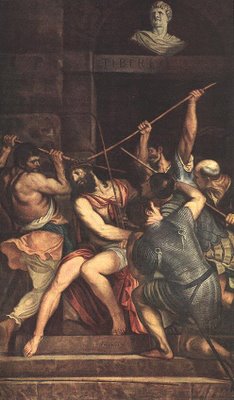 Christ Crowned with Thorns (1542) at the Louvre.
Tuesday, August 29, 2006


Monday, August 28, 2006
Caption Contest

WINNER: Codepoke:
Well, this is the demo version, after all. The final feature set may vary.
Methodist Blogs Weekly Roundup # 80
Here is the week in review in the Methoblogosphere:
Allan R. Bevere wrote Christian persecution of other Christians.
Andy Bryan wrote about pastoral responses to church legal sanctuary (Best of the Methodist blogosphere!) and porn and political power.
Andy Stoddard lectionary blogged for August 22, 23, and 25.
Brian Russell wrote about the orderliness of God's Creation in Genesis and how conceitedness destroys community.
Bruce Alderman wrote about that female Baptist Sunday school teacher who was fired from her position.
Dave Faulkner preached on being tactful like Jesus.
Gavin Richardson wrote about being so good at being a worship leader that one forgets that one is a worship leader. Or something like that.
Gerry Charlotte Phelps wrote that if the West is going to defeat Islam, then it must re-Christianize.
Greg Crofford has figured out why the chicken crossed the road and wrote about living in debt.
Greg Hazelrig wrote about the first commandment and how we break it.
Greg Lee preached on the prophecies in Daniel.
Henry Neufield wrote about labelling Christian groups, Elgin's Consider Christianity, a free book giveaway that he is holding, that Biblical translators should take into account that the Bible is the incarnate Word, but that we worship God, not the Bible.
Chris Roberts wrote that Jesus requires a total commitment from us.
Josh Tinley is waffling on the "Is Y a consonant or a vowel?" debate.
Jan Kindle wrote about the unimportance of possessions.
Lake Neuron reviewed Good Night and Good Luck and Thank You for Not Smoking.
Larry Hollon wrote about humanitarian aid and Middle East wars.
Keith McIlwain handicapped the Emmy awards. He also looked at the career and personality of Bryant Gumbel.
Michael Daniel wrote about secret angels who impact our lives.
Michelle Hargrave wrote about women who prize their careers well into married life.
Jeff Lutz is thinking about becoming a freelance journalist.
Neil Bishop wrote that even though the teachings of Jesus are hard, through the Eucharist, we know that they are sound.
Padre Complex looked at object relations theory in regarding to sourcing theological exploration.
Sandpiper wrote about the use of logic in knowing God, that love is the core characteristic o God, Christian worries, and the role of women in teaching at the church.
Lorna Koskela reviewed the book Under the Unpredictable Parent and why we don't ascend into heaven upon conversion.
Jonathan Marlowe wrote about how the UMC extended clergy rights to women and what it does and what it does not mean to call oneself an evangelical.
Wayne Cook shared a story about handouts at his church.
Tony Mitchell wrote about Christian pacifism.
Wes Whiddon wrote about mainline denominations and American foreign policy.
Scott McKay wrote that we are in the midst of a cosmic struggle between good and evil.
Richard Hall wrote some stuff too, but the server keeps on flaking out on me.
Guy Williams is inviting readers to play fantasy football with him. I wonder if I can use my +4 mithril breastplate in the game. You wouldn't believe how much gp that cost.
Additions? Corrections? Do you know of a blog that should be added to the MBWR? Would you like to receive the MBWR via e-mail? Leave a note in the comments or e-mail locustsandhoney2005 at yahoo dot com!
UPDATE: Guy Williams added.
Allan R. Bevere wrote Christian persecution of other Christians.
Andy Bryan wrote about pastoral responses to church legal sanctuary (Best of the Methodist blogosphere!) and porn and political power.
Andy Stoddard lectionary blogged for August 22, 23, and 25.
Brian Russell wrote about the orderliness of God's Creation in Genesis and how conceitedness destroys community.
Bruce Alderman wrote about that female Baptist Sunday school teacher who was fired from her position.
Dave Faulkner preached on being tactful like Jesus.
Gavin Richardson wrote about being so good at being a worship leader that one forgets that one is a worship leader. Or something like that.
Gerry Charlotte Phelps wrote that if the West is going to defeat Islam, then it must re-Christianize.
Greg Crofford has figured out why the chicken crossed the road and wrote about living in debt.
Greg Hazelrig wrote about the first commandment and how we break it.
Greg Lee preached on the prophecies in Daniel.
Henry Neufield wrote about labelling Christian groups, Elgin's Consider Christianity, a free book giveaway that he is holding, that Biblical translators should take into account that the Bible is the incarnate Word, but that we worship God, not the Bible.
Chris Roberts wrote that Jesus requires a total commitment from us.
Josh Tinley is waffling on the "Is Y a consonant or a vowel?" debate.
Jan Kindle wrote about the unimportance of possessions.
Lake Neuron reviewed Good Night and Good Luck and Thank You for Not Smoking.
Larry Hollon wrote about humanitarian aid and Middle East wars.
Keith McIlwain handicapped the Emmy awards. He also looked at the career and personality of Bryant Gumbel.
Michael Daniel wrote about secret angels who impact our lives.
Michelle Hargrave wrote about women who prize their careers well into married life.
Jeff Lutz is thinking about becoming a freelance journalist.
Neil Bishop wrote that even though the teachings of Jesus are hard, through the Eucharist, we know that they are sound.
Padre Complex looked at object relations theory in regarding to sourcing theological exploration.
Sandpiper wrote about the use of logic in knowing God, that love is the core characteristic o God, Christian worries, and the role of women in teaching at the church.
Lorna Koskela reviewed the book Under the Unpredictable Parent and why we don't ascend into heaven upon conversion.
Jonathan Marlowe wrote about how the UMC extended clergy rights to women and what it does and what it does not mean to call oneself an evangelical.
Wayne Cook shared a story about handouts at his church.
Tony Mitchell wrote about Christian pacifism.
Wes Whiddon wrote about mainline denominations and American foreign policy.
Scott McKay wrote that we are in the midst of a cosmic struggle between good and evil.
Richard Hall wrote some stuff too, but the server keeps on flaking out on me.
Guy Williams is inviting readers to play fantasy football with him. I wonder if I can use my +4 mithril breastplate in the game. You wouldn't believe how much gp that cost.
Additions? Corrections? Do you know of a blog that should be added to the MBWR? Would you like to receive the MBWR via e-mail? Leave a note in the comments or e-mail locustsandhoney2005 at yahoo dot com!
UPDATE: Guy Williams added.
We Need a Living U.S. Constitution
Jonah Goldberg is rambling against the movement to view the U.S. Constitution as a 'living' document, meaning one with shifting interpretations in order to keep up with the needs of changing times. It's a lot like the Bible that way; we need to interpret the Constitution and the Bible for modern generations.
Hey, it would be nice if it weren't necessary; if there some way to amend the Constitution so that we could change it. But alas, the Founding Fathers unwisely chose to make the Constitution carved in stone, unchangeable forever. So it is necessary to grant judges the authority to reinterpret it for our benefit so that we can continue letting this document guide us.
Hey, it would be nice if it weren't necessary; if there some way to amend the Constitution so that we could change it. But alas, the Founding Fathers unwisely chose to make the Constitution carved in stone, unchangeable forever. So it is necessary to grant judges the authority to reinterpret it for our benefit so that we can continue letting this document guide us.
Why I Am a Libertarian
Reason #1,838: asset forfeiture. Muggings are legal so as long as they are conducted by the police.
Sunday, August 27, 2006
Methodist Blogger Profile: Kevin Baker

I am a 39 year old pastor, husband, and father of three. My wife, Denise, is a saint for putting up with me for the past 18 years, and I am grateful for her love, support, and correction. I believe marriage is one of God’s vocational laboratories for growing into perfection in love, and Denise has never shied away from her Christian duty to “speak the truth in love” (thank God). If I have grown in discipleship at all over the past two decades, a large part of it is due to the Holy Sprit working through my wife and family.
My children are making me feel old these days, but that feeling is only surpassed by a good dose of pride and increasing doses of respect. All three of them are quickly approaching birthdays: Sarah (16), Zachary (15), and Rachel (12). I am an elder in the United Methodist Church, a graduate of Duke Divinity School (’94), and am one of two founding pastors of Reconciliation Church in Durham, NC, where I have served for the past 9 years. It is an intentionally multicultural, multiracial congregation that is committed to living into God’s call to be “agents of reconciliation.” My first appointment prior to Reconciliation was a three point charge in rural North Carolina. In the spare time that I don’t have, I also write for the UM Publishing House and serve as a teaching assistant and summer instructor at Duke Divinity School.
Why do you blog?
I love to write and I welcome any discipline that can help develop that passion. I started out with a weekly email meditation years ago, and have since written several things for publication. Blogging is different and the audience is immediate. I can write on current events and concerns and have immediate feedback (and a file of what I wrote in case I ever want to develop something further).
What has been your best blogging experience?
Having blog topics spark deeper theological reflection in small groups, studies, and hallway conversations.
What would be your main advice to a novice blogger?
I am a novice blogger. Ask “John the Methodist.”
If you only had time to read three blogs a day, what would they be?
Novice bloggers like me don’t read blogs every day, but if I were able to (and besides my weekly dose of MBWR?):
The Ivy Bush – by Jonathan Marlowe
Accountable Discipleship – by Steven Manskar
Kyrie Eleison – by Sky Lowe-McCracken
Who are your spiritual heroes?
My mother (who has been through so much in her life that she should be canonized before death. When I hear of “prayer warriors,” she always comes to mind).
Sabra (A former member of my first charge, now deceased, who was limitless in her generosity, her kindness, and her unconditional love. She never had much, but whatever it was she shared it freely regardless of race, creed, or worthiness)
Peter (had his mind blown by Jesus at work while fishing, and on a roof while praying – I can relate)
John Wesley (Among many things, he had a radical commitment to the poor – no holiness that is not “social holiness.”)
Martin Luther King Jr. (Was able to engage the public square as a patriotic American without succumbing to blind nationalism and idolatry. Also became convinced of nonviolence, as more than a means to an end, but a way of life. A preacher, first and foremost before he was anything else)
Oscar Romero (Loved books and reading; a life that was transformed by encounter with Christ among the poor; martyr for the cause of righteousness)
What are you reading at the moment?
In addition to “searching the Scriptures”:
Considering the Great Commission: Evangelism and Mission in the Wesleyan Spirit edited by Gunter and Robinson;
Making Disciples: Faith Formation in the Wesleyan Tradition: by Sondra Higgins Matthaei
Eat this Book: by Eugene Peterson
Making Room: Recovering Hospitality as a Christian Tradition: Christine D. Pohl
What is your favorite hymn and why?
“O for a Thousand Tongues to Sing” by Charles Wesley. It is a majestic poem of praise that paints a vivid picture of Jesus’ transforming power breaking into the lives of the poor, the lame, the blind, the deaf, the sick, and the sinful. I am always reminded of the “tongues” of Pentecost and the gift of language that accompanied the disciples in Jerusalem. The original has 19 stanzas with gems like:
In holy triumph join!
Saved is the sinner that believes
From crimes as great as mine.
Can you name a major moral, political, or intellectual issue on which you've changed your mind?
I could actually name several, though in retrospect the changes seem less of an about face and more of a maturation in thought, theology, and discipleship. War and capital punishment are at least two examples – changes that came from taking seriously Jesus’ teachings on love for enemies. I had difficulty with what Wesley would call the “plain meaning” of these New Testament texts, and could not reconcile why Christians were so quick with all the footnotes and the “yeah, buts …” When I transferred into the United Methodist Church from the Nazarene Church, I was impressed that the UM stands on both issues more readily reflected Biblical teaching (at least on paper).
What philosophical thesis do you think is most important to combat?
Generic individualism
If you could effect one major change in the governing of your country, what would it be?
Where to begin? – It would be a nice start to have a president that is not a white male. (We certainly can’t use the excuse that there are no other qualified candidates)
If you could effect one major policy change in the United Methodist Church, what would it be?
Consciously move every local church towards weekly Eucharist in their main Lord’s Day services (Word and Table).
What would be your most important piece of advice about life?
Foster holy friendships, which Greg Jones describes as people who: “affirm the gifts you are afraid to claim, challenge the sins you have come to love, and dream dreams with you that you thought were impossible.”
What, if anything, do you worry about?
Keeping a healthy balance of work, leisure, and family time – and avoiding the subtle, but insidious ladder climbing scramble so prevalent in our appointment process.
If you were to relive your life to this point, is there anything that you'd do differently?
Hindsight is only good for changes in the present and future, and I have certainly learned from foibles and failures. The short answer is, no.
Where would you most like to live (other than where you do now)?
In the mountains next to a good trout stream.
What do you like doing in your spare time?
Most of my spare time is spent with family. Otherwise, reading, hiking, and playing b-ball. I have to admit that physical labor feels like Sabbath renewal to me now that I am a pastor (so working in the yard and garage should be included).
What is your most treasured possession?
An extremely large tea glass that my Grandfather used to use and that I now drink from every evening. (probably worth about 10¢ at Good will)
What talent would you most like to have?
To play the piano like Kent Brooks (gospel) or sing like Fred Hammond.
If you could have any three guests, past or present to dinner, who would they be?
King David, St. Francis, and Bishop Leontine Kelly (for different reasons)
As someone else has said before, I eat with Jesus all the time.
Saturday, August 26, 2006
The Purple Hash Joke
I'm experimenting with uploading sound files onto the Internet. Here is my infamous "Purple Hash" joke. Please excuse the politically incorrect language. Using otherwise really mangles the joke.
Book Review: Is Nothing Sacred?
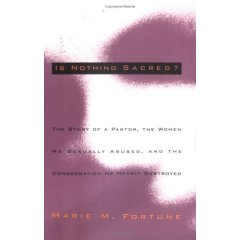
Is Nothing Sacred? by Marie M. Fortune is "the story of a pastor, the women he sexually abused, and the congregation he nearly destroyed." Fortune is an ordained UCC pastor worked at a women's counselor at the time that the psuedonymous "First Church of Newburg" experienced the pastorship of Pete Donovan, a sexual predator. All of the names have been changed, but from the facts presented, I'm going to guess that it is a PCUSA or Disciples of Christ congregation. Donovan was a charismatic young pastor who took advantage of pastoral counseling situations and supervisor-staff relationships to coerce women into sex. The lay leadership of the church and the denominational hierarchy was slow to remove him from the ministry.
1. When the events of this book took place in the early 80s, most denominations tended to see sexual misconduct by pastors as moral failings, not abuses of professional authority. Donovan's liberal denomination tended to accept pre-marital sex, so Donovan's sexual escapades made him a philanderer (a lighter offense), not a pastor engaging in professional misconduct, violating his pastoral charge (a heavier offense). Conservative responses may also be inadequate if a denomination does not regard sexual activity between pastors and laity as not just adultery, but professional misconduct.
2. Fortune creates an intriguing schematic for applying social justice principles to incidents of pastoral misconduct. In this formulation, protecting the public reputation of the church quite rightfully takes a backseat to publicly acknowledging that a church member has been sexually abused.
Related post by Rev. Ed.
Jesus Was Not a Pacifist
I offer this figurine as proof.
I can't wait to see how Dan Trabue is going to weasel his way out of this damning evidence.

I can't wait to see how Dan Trabue is going to weasel his way out of this damning evidence.
Friday, August 25, 2006
Announcement
Today and today only, my response to every question, comment, or statement directed at me, whether written or verbal, shall be "Snakes on a plane, baby, snakes on a plane."
Caption Contest

Previous contest winners.
WINNER: Mark Winter:
"You're under arrest for driving a car with too many clowns in it and--WHOA!--what do we have here? A concealed seltzer bottle?"
Thursday, August 24, 2006
Corporate Church Leadership
The Bishop of Uttoxeter and his Executive Vice-Bishop try to make sense of falling revenues in the Christ business in this clip from A Bit of Fry and Laurie.
Wednesday, August 23, 2006
Stirring the Pot
You know how to drive up blog traffic? Well, there's always furniture porn. But if you don't find that suitable, you can always say preposterous and deeply offensive statements that stand in utter contrast to all reality, good taste, and human decency.
Personally, I prefer both methods. That's why I'm going to engage in the latter tonight by stating something that will enrage my readers and bring a swarm of traffic to Locusts & Honey. Sure, most of you will question my sanity and salvation, but you'll keep on coming back for more. Maybe you'll even report me to my District Superintendent or the police. But that won't stop you from typing in locustsandhoney.blogspot.com one more time to see just what will be the next vile thing to come out of keyboard. To wit:
Star Trek V: The Final Frontier was the greatest Star Trek movie of all time; nay, the greatest Star Trek story in any medium, anytime, anywhere.
So open up the comments and pour out your outrage. Bring on that sweet, sweet big blog traffic.
Personally, I prefer both methods. That's why I'm going to engage in the latter tonight by stating something that will enrage my readers and bring a swarm of traffic to Locusts & Honey. Sure, most of you will question my sanity and salvation, but you'll keep on coming back for more. Maybe you'll even report me to my District Superintendent or the police. But that won't stop you from typing in locustsandhoney.blogspot.com one more time to see just what will be the next vile thing to come out of keyboard. To wit:
Star Trek V: The Final Frontier was the greatest Star Trek movie of all time; nay, the greatest Star Trek story in any medium, anytime, anywhere.
So open up the comments and pour out your outrage. Bring on that sweet, sweet big blog traffic.
Book Review: In the Presence of Mine Enemies
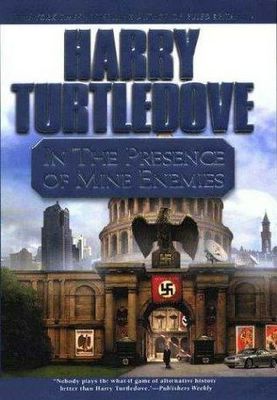
In the Presence of Mine Enemies is an alternate history novel by Harry Turtledove set in the year 2010. The world can be divided into three parts: the Greater German Reich, its client states, and the Japanese Empire. Neither Japan nor Germany provoked the US into World War II, but Japan did gain control over most of Asia, and Germany (and its junior partner Italy) conquered all of Europe. Twenty years later, the two launched a surprise nuclear war against the United States, killing 1/3 of the population and subjecting it to German occupation. A crushed America is now kept impoverished by a staggering annual tribute.
Hitler's dream was realized: the whole world was made Judenfrei. Gypsies, homosexuals, and other undesirables were also wiped out. Those Slavs who were kept alive were either pushed far beyond the Urals or turned into disposable slave labor. One of the peace conditions forced on the US was the extermination of that nation's Jewish and Black populations.
But although the novel mentions America occasionally, it is mostly set in Berlin, and focused around Wehrmacht supply officer Heinrich Gimpel and his family. They carry with them a terrible secret: they are Jews. But eventually the Reichs Genealogical Office catches up with them, all while a new Fuhrer takes office, calling for the unspeakable: reform.
This book was received poor reviews, most likely because of the absence of stirring combat scenes. Unlike other Turtledove novels, it is not military fiction. It's solid, imaginative, but realistic alternative history focused on family life in a future Nazi Germany.
Dating Advice for Gamers
From Kill Ten Rats:
Let’s talk equipment. You will not be wearing anything on your shoulders, nor a cape, nor a tabard. Leave the sword at home, too, no matter how cool it looks. While some people can successfully combine mix-and-match armor, you will just end up hideous and ineffective. If your closet is full of t-shirts from anime and They Might Be Giants, we have a problem. Luckily, there are many shopkeepers who can help you get equipment with the right bonuses.
[snip]
This may cost a fair number of gold pieces. Luckily, you will not be out-leveling your IRL clothing anytime soon unless you are eating too much. This brings us to our next point: buffing.
[snip]
Always remember, never act on anything you learned in a dating sim.
Let’s talk equipment. You will not be wearing anything on your shoulders, nor a cape, nor a tabard. Leave the sword at home, too, no matter how cool it looks. While some people can successfully combine mix-and-match armor, you will just end up hideous and ineffective. If your closet is full of t-shirts from anime and They Might Be Giants, we have a problem. Luckily, there are many shopkeepers who can help you get equipment with the right bonuses.
[snip]
This may cost a fair number of gold pieces. Luckily, you will not be out-leveling your IRL clothing anytime soon unless you are eating too much. This brings us to our next point: buffing.
[snip]
Always remember, never act on anything you learned in a dating sim.
Tuesday, August 22, 2006
Cleanliness is Next to Manliness
Jeff the Baptist explains the difference between 'man clean' and actual clean. He quotes a female blogger named Tam who writes:
I am beginning to think that guy's jeans have some kind of germicidal substance woven into them. Have you ever noticed that a guy could handle, say, fermented goat entrails with his bare hands and then, with a quick swipe of his hands on his trouser legs, he acts like he's now sterile enough for open heart surgery?
Jeff explains to a confused commenter:
Paul, you don't clean a shirt by "airing it out." You clean said shirt by putting it in the dryer for 5 minutes. Remember this simple equation gentlemen, warm = clean.
I am beginning to think that guy's jeans have some kind of germicidal substance woven into them. Have you ever noticed that a guy could handle, say, fermented goat entrails with his bare hands and then, with a quick swipe of his hands on his trouser legs, he acts like he's now sterile enough for open heart surgery?
Jeff explains to a confused commenter:
Paul, you don't clean a shirt by "airing it out." You clean said shirt by putting it in the dryer for 5 minutes. Remember this simple equation gentlemen, warm = clean.
Should Pastors Be Members of Political Parties?
Michael Westmoreland-White recently asked "Should Christians join political parties?" I would like to modify that question and then pose it to my readers: should pastors be members of political parties?
I am a registered Libertarian and until recently, a dues-paying member of the Libertarian Party. But I had already planned, upon my first appointment to a church, to resign from the Party.
Why? Well, when a pastor takes strong and detailed public policy positions, identifying himself in a particular way that others my disagree with, he can become a stumbling block to acceptance of Christian teachings. Faithful Christians in my flock who might identify with the Democratic, Republican, or other parties, might hear of my party affiliation and be offended by it. That sentiment might cause them stop hearing the Gospel message. I was reminded of this possibility when my own blogfather, an atheist and Leftist, delinked me more than a year ago because he found my political views repulsive. I had permitted my politics to stand in the path of Christ. Thereafter I have tried to reduce the political content on my blog. So even though I read Instapundit, Ace of Spades, and LGF more than any other blogs, I rarely write on their same subject matter.
The difficulty in doing so is that one of the roles of the minister is that of prophetic witness. Many pastors have rightly taken strong and loud political positions, as seen during the Abolitionist and Civil Rights movements. By doing so, were they stumbling blocks to people who disagreed with them politically? Did they divide their churches into squabbling over political affairs instead of uniting to serve the Kingdom of God? Maybe so, but sometimes a pastor must stand up for truth.
The hard part is deciding what political battles are critical enough to fight for and worth (1) dividing the church and (2) erecting stumbling blocks for the Gospel. This is a huge gray area, but in my judgment, officially affiliating with a political party is a bridge too far.
What do you think? Should pastors be members of political parties?
I apologize in advance for any offense that I may give to various readers who are political party members, such as Beth Quick, who is a member of the SuperHappy Women's Party, her brother JockeyStreet who is a member of the Scorched Earth Party, Mark Winter, who is a member of the Pansexual Peace Party, Jeff the Baptist, who is a member of the Thermodynamic Law Party, and Gavin Richardson, who is just plain weird.
I am a registered Libertarian and until recently, a dues-paying member of the Libertarian Party. But I had already planned, upon my first appointment to a church, to resign from the Party.
Why? Well, when a pastor takes strong and detailed public policy positions, identifying himself in a particular way that others my disagree with, he can become a stumbling block to acceptance of Christian teachings. Faithful Christians in my flock who might identify with the Democratic, Republican, or other parties, might hear of my party affiliation and be offended by it. That sentiment might cause them stop hearing the Gospel message. I was reminded of this possibility when my own blogfather, an atheist and Leftist, delinked me more than a year ago because he found my political views repulsive. I had permitted my politics to stand in the path of Christ. Thereafter I have tried to reduce the political content on my blog. So even though I read Instapundit, Ace of Spades, and LGF more than any other blogs, I rarely write on their same subject matter.
The difficulty in doing so is that one of the roles of the minister is that of prophetic witness. Many pastors have rightly taken strong and loud political positions, as seen during the Abolitionist and Civil Rights movements. By doing so, were they stumbling blocks to people who disagreed with them politically? Did they divide their churches into squabbling over political affairs instead of uniting to serve the Kingdom of God? Maybe so, but sometimes a pastor must stand up for truth.
The hard part is deciding what political battles are critical enough to fight for and worth (1) dividing the church and (2) erecting stumbling blocks for the Gospel. This is a huge gray area, but in my judgment, officially affiliating with a political party is a bridge too far.
What do you think? Should pastors be members of political parties?
I apologize in advance for any offense that I may give to various readers who are political party members, such as Beth Quick, who is a member of the SuperHappy Women's Party, her brother JockeyStreet who is a member of the Scorched Earth Party, Mark Winter, who is a member of the Pansexual Peace Party, Jeff the Baptist, who is a member of the Thermodynamic Law Party, and Gavin Richardson, who is just plain weird.
UMC Bishop Rhymes H. Moncure Dies During Brain Surgery
From Dallas' NBC affiliate:
Dallas United Methodist Bishop Rhymes H. Moncure Jr. died late Saturday of complications following brain surgery. He was 61.
Moncure had been in intensive care after undergoing surgery for a brain tumor on Aug. 7 at Baylor Medical Center.
Here's the North Texas Annual Conference website.
Dallas United Methodist Bishop Rhymes H. Moncure Jr. died late Saturday of complications following brain surgery. He was 61.
Moncure had been in intensive care after undergoing surgery for a brain tumor on Aug. 7 at Baylor Medical Center.
Here's the North Texas Annual Conference website.
Caption Contest

Previous contest winner.
Photo found at Kairos via Gavin Richardson.
WINNERS:
Mark Winter: The night the "Wild at Heart" men's retreat at FUMC got a little too wild
Oloryn: A few people take their reaction against the feminization of the church a bit too far.
Monday, August 21, 2006
Now I Lay Me Down to Sleep, I Pray the Lord My Soul to Keep
But this is going just a little too far.
The Martin Luther King Quote
Martin Luther King, Jr. has been quoted as saying:
If your opponent has a conscience, then follow Gandhi. But if you enemy has no conscience, like Hitler, then follow Bonhoeffer.
I made use of this quote here. I have been unable to find the quote in a major reference work, or a cursory glance of King's original writings. The most authoritative source that I can find is "The Amazing Grace of Revolution." by Laurie J. Taylor in the Chicago Theological Seminary Register. v.91, n.1 (2001), p.30.
If your opponent has a conscience, then follow Gandhi. But if you enemy has no conscience, like Hitler, then follow Bonhoeffer.
I made use of this quote here. I have been unable to find the quote in a major reference work, or a cursory glance of King's original writings. The most authoritative source that I can find is "The Amazing Grace of Revolution." by Laurie J. Taylor in the Chicago Theological Seminary Register. v.91, n.1 (2001), p.30.
Methodist Blogs Weekly Roundup # 79
Here's the week in review in the Methoblogosphere:
Allan R. Bevere wrote about the long-term scars left by people hurting each other in small ways and gender-selective abortion in India.
Christopher Gudger-Raines wrote about what Taize spirituality teaches about reconciliation.
Andy Bryan wrote about the UMC taking not cosmetic, but radical steps in order to bring younger generations into the denomination. He also wrote about what the church can learn from Solomon's prayer at the dedication of the Temple.
Andy Stoddard lectionary blogged for August 17 and 18.
Richard Heyduck has study questions for Romans 8: 9-17 and wrote about the sin we have by simply living in a broken world, the strong-willed barbarism of Hezbollah, and reviewed the book Render to Caesar.
Beth Quick wrote about her recent experience at a UMC clergywomen's conference.
Brian Russell wrote a commentary on Genesis 3 and that the key focus of Genesis 1-2 is God's creative power.
Bruce Alderman wrote about being a Christian moderate.
Richard Hall questioned whether the West really lives like it believes in democracy, and wrote about aying attention to the original intent of our favorite bits of proverbial wisdom, his experience working at a Sikh temple in the UK, and his theological and practical concerns about worship music.
Dave Morris wrote about taking comfort in being one of God's sparrows.
Dave Camphouse wrote about the risk involved in opening up the pulpit to personal testimonies.
Sally Coleman wrote about the transcendental model of theological contextualization and the evangelical term "knowing Jesus".
Steve Heyduck wrote about balancing patriotism and faith.
Sleepwriter wrote about whether Jesus was a liberal or a conservative.
Gavin Richardson wrote about turning worship services into spectacles in order to be seeker-sensitive, electronic communities, and the message of the TV show Laguna Beach.
Gerry Charlotte Phelps assessed the outcomes of the Israeli-Hezbollah War and Islamic hatred of the West.
Daniel McLain-Hixon wrote about the decline of secularism.
Greg Crofford wrote about the need for authenticity in photojournalism and faith.
Greg Hazelrig wrote about excitement in worship, as well as being unconcerned with how we appear when we worship.
Greg Lee preached on eschatological fears.
Guy Williams wrote about turning good churches into great churches.
Henry Neufield wrote about the impact of capitalization on Biblical translation, the difference between implementing and expressing a doctrine, and the scholarly (or unscholarly) quality of skepticism.
Chris Roberts wrote about how the prevelance of Bibles does not necessarily correlate to Biblical influence over our lives and the necessity of committing outselves completely to Jesus.
Jay Voorhees loves blogging gadgetry but not a particular online music store.
John Battern looked at the teachings of Bill Easum and Superman as a Christfigure.
Just As I Am taught about giving and generosity.
Ken Carter wrote about the Bonclarcken retreat center at Lake Junaluska.
Larry Hollon wrote about a UMC congregation in Chicago serving as a sanctuary for illegal immigrants.
Mark Winter wrote about Christians using bogus evidence to forward their agendas.
Matt Reed wrote about the cultural impact of the loss of a central narrative in American life.
Keith McIlwain wrote about the first anniversary of Hurricane Katrina.
Craig Moore wrote about authority in Biblical interpretation.
Michael Daniel wrote about the depletion of fossil fuels, giving God time to speak to us, and misusing the Wesleyan Quadrilateral to justify homosexual conduct.
Mike Lamson wrote about the utility of the concept of 'missionary' and how evangelism should take place in modern America.
Mike Voigts is a St. Bernard of Clairvaux groupie and wrote about his example of leadership.
Louie Gannon lived most of his life as a Fundamentalist Baptist, and is now learning what it means to be a Methodist.
Neil Bishop wrote about being a bivocational pastor.
Jared Williams wrote about episcopal model that the UMC follows and how Bishop Hopkins is responding to an emergent clergy group in the East Ohio Conference.
Padre Complex reviewed the movie Accepted.
Jason Woolever wrote about balancing work and family and the liberal reputation of the UMC.
Todd Bergman wrote about Spiderman's influence on his life.
ReligioNews wrote about uncertainty in ecclesial labels.
Theresa Coleman says that we're not living in the Kingdom of God, but the Kingdom of Star Trek.
Sandpiper wrote about finding God in Christian conversations, that people who fail at least tried, the UMC's open communion table, and dropping the limitations of logic when meeting God.
Sky Lowe-McCracken wrote that The Book of Discipline does not explain the theological basis for the UMC's expression of the episcopacy.
Lorna Koskela wrote about Satan's ownership of the world after the Fall.
Brett Royal wrote about the fallacy of distinguishing between the mind and the spirit in theological exploration.
Jonathan Marlowe questioned my professional integrity and wrote about the appropriateness of explicitly Christian prayers in the statehouse.
Dale Lature wrote about overstating threats to US national security.
Tony Mitchell wrote about the pressing need to seek wisdom.
Wes Whiddon wrote about the utility of pacifism and the UMC congregation in Chicago housing illegal immigrants.
Scott McKay wrote about nonconformity and the Gospel.
Kevin Baker wrote about why he is a United Methodist.
Additions? Corrections? Do you know of a blog that should be added to the MBWR? Would you like to receive the MBWR via e-mail? Leave a note in the comments or e-mail locustandhoney2005 at yahoo dot com!
Allan R. Bevere wrote about the long-term scars left by people hurting each other in small ways and gender-selective abortion in India.
Christopher Gudger-Raines wrote about what Taize spirituality teaches about reconciliation.
Andy Bryan wrote about the UMC taking not cosmetic, but radical steps in order to bring younger generations into the denomination. He also wrote about what the church can learn from Solomon's prayer at the dedication of the Temple.
Andy Stoddard lectionary blogged for August 17 and 18.
Richard Heyduck has study questions for Romans 8: 9-17 and wrote about the sin we have by simply living in a broken world, the strong-willed barbarism of Hezbollah, and reviewed the book Render to Caesar.
Beth Quick wrote about her recent experience at a UMC clergywomen's conference.
Brian Russell wrote a commentary on Genesis 3 and that the key focus of Genesis 1-2 is God's creative power.
Bruce Alderman wrote about being a Christian moderate.
Richard Hall questioned whether the West really lives like it believes in democracy, and wrote about aying attention to the original intent of our favorite bits of proverbial wisdom, his experience working at a Sikh temple in the UK, and his theological and practical concerns about worship music.
Dave Morris wrote about taking comfort in being one of God's sparrows.
Dave Camphouse wrote about the risk involved in opening up the pulpit to personal testimonies.
Sally Coleman wrote about the transcendental model of theological contextualization and the evangelical term "knowing Jesus".
Steve Heyduck wrote about balancing patriotism and faith.
Sleepwriter wrote about whether Jesus was a liberal or a conservative.
Gavin Richardson wrote about turning worship services into spectacles in order to be seeker-sensitive, electronic communities, and the message of the TV show Laguna Beach.
Gerry Charlotte Phelps assessed the outcomes of the Israeli-Hezbollah War and Islamic hatred of the West.
Daniel McLain-Hixon wrote about the decline of secularism.
Greg Crofford wrote about the need for authenticity in photojournalism and faith.
Greg Hazelrig wrote about excitement in worship, as well as being unconcerned with how we appear when we worship.
Greg Lee preached on eschatological fears.
Guy Williams wrote about turning good churches into great churches.
Henry Neufield wrote about the impact of capitalization on Biblical translation, the difference between implementing and expressing a doctrine, and the scholarly (or unscholarly) quality of skepticism.
Chris Roberts wrote about how the prevelance of Bibles does not necessarily correlate to Biblical influence over our lives and the necessity of committing outselves completely to Jesus.
Jay Voorhees loves blogging gadgetry but not a particular online music store.
John Battern looked at the teachings of Bill Easum and Superman as a Christfigure.
Just As I Am taught about giving and generosity.
Ken Carter wrote about the Bonclarcken retreat center at Lake Junaluska.
Larry Hollon wrote about a UMC congregation in Chicago serving as a sanctuary for illegal immigrants.
Mark Winter wrote about Christians using bogus evidence to forward their agendas.
Matt Reed wrote about the cultural impact of the loss of a central narrative in American life.
Keith McIlwain wrote about the first anniversary of Hurricane Katrina.
Craig Moore wrote about authority in Biblical interpretation.
Michael Daniel wrote about the depletion of fossil fuels, giving God time to speak to us, and misusing the Wesleyan Quadrilateral to justify homosexual conduct.
Mike Lamson wrote about the utility of the concept of 'missionary' and how evangelism should take place in modern America.
Mike Voigts is a St. Bernard of Clairvaux groupie and wrote about his example of leadership.
Louie Gannon lived most of his life as a Fundamentalist Baptist, and is now learning what it means to be a Methodist.
Neil Bishop wrote about being a bivocational pastor.
Jared Williams wrote about episcopal model that the UMC follows and how Bishop Hopkins is responding to an emergent clergy group in the East Ohio Conference.
Padre Complex reviewed the movie Accepted.
Jason Woolever wrote about balancing work and family and the liberal reputation of the UMC.
Todd Bergman wrote about Spiderman's influence on his life.
ReligioNews wrote about uncertainty in ecclesial labels.
Theresa Coleman says that we're not living in the Kingdom of God, but the Kingdom of Star Trek.
Sandpiper wrote about finding God in Christian conversations, that people who fail at least tried, the UMC's open communion table, and dropping the limitations of logic when meeting God.
Sky Lowe-McCracken wrote that The Book of Discipline does not explain the theological basis for the UMC's expression of the episcopacy.
Lorna Koskela wrote about Satan's ownership of the world after the Fall.
Brett Royal wrote about the fallacy of distinguishing between the mind and the spirit in theological exploration.
Jonathan Marlowe questioned my professional integrity and wrote about the appropriateness of explicitly Christian prayers in the statehouse.
Dale Lature wrote about overstating threats to US national security.
Tony Mitchell wrote about the pressing need to seek wisdom.
Wes Whiddon wrote about the utility of pacifism and the UMC congregation in Chicago housing illegal immigrants.
Scott McKay wrote about nonconformity and the Gospel.
Kevin Baker wrote about why he is a United Methodist.
Additions? Corrections? Do you know of a blog that should be added to the MBWR? Would you like to receive the MBWR via e-mail? Leave a note in the comments or e-mail locustandhoney2005 at yahoo dot com!
Debating Pacifism
Dr. Joseph Cathey asked pacifist readers:
Suppose that a loved one (wife, child, parents) was going to be murdered - (You had no doubt of the intention of the person doing the murdering) and you had a gun – would you shoot the person?
As usual, there was much dodging back and forth and a lot of fantasy scenarios along the lines of "I'd shoot the gun out of his hand."
Jonathan Marlowe's non-answer was:
Here's a simple question: Have you stopped beating your wife? "yes" or "no?" It's a simple question; why don't you answer it?
Because it's got too many assumptions pre-packed into it.
Wrong. It's completely fair to ask pacifists (or anyone else) if they will live by the principles that they themselves espouse.
That was the point of my post on the subject. When I contemplated buying a gun, there was much holier-than-thou braying from parties that I suspected would use force to defend themselves and their families. The difference is that I was willing to admit it.
I get this same sense whenever I read Stanley Hauerwas -- incessant sniping about the evils of America, made while hiding behind the protections of that same America. The sheer pomposity of much of pacifism is deeply irritating. A more humble voice would say "I'm ashamed of it, but I'd probably pull the trigger."
In these various connected posts, there have been a number of pacifists who said outright "No, I won't use violence, period." I admire their forthrightness.
NOTE: Yes, I'm working on the MLK quote.
Suppose that a loved one (wife, child, parents) was going to be murdered - (You had no doubt of the intention of the person doing the murdering) and you had a gun – would you shoot the person?
As usual, there was much dodging back and forth and a lot of fantasy scenarios along the lines of "I'd shoot the gun out of his hand."
Jonathan Marlowe's non-answer was:
Here's a simple question: Have you stopped beating your wife? "yes" or "no?" It's a simple question; why don't you answer it?
Because it's got too many assumptions pre-packed into it.
Wrong. It's completely fair to ask pacifists (or anyone else) if they will live by the principles that they themselves espouse.
That was the point of my post on the subject. When I contemplated buying a gun, there was much holier-than-thou braying from parties that I suspected would use force to defend themselves and their families. The difference is that I was willing to admit it.
I get this same sense whenever I read Stanley Hauerwas -- incessant sniping about the evils of America, made while hiding behind the protections of that same America. The sheer pomposity of much of pacifism is deeply irritating. A more humble voice would say "I'm ashamed of it, but I'd probably pull the trigger."
In these various connected posts, there have been a number of pacifists who said outright "No, I won't use violence, period." I admire their forthrightness.
NOTE: Yes, I'm working on the MLK quote.
Getting Rid of "Missionary", Part 2
A while back, I wrote about Mike Lamson's views of the concept of 'missionary'. He's written a follow-up post on the subject. After these clarifications, his opinion seems quite reasonable.
Sunday, August 20, 2006
Caption Contest

Previous contest winner.
WINNER: Oloryn:
Dr. Drugemup noticed as he pulled in that his parking lot attendent patient had actually calmed down after treatment with Valium, but there was still a long way to go.

Zombie Attack Preparedness Kit
Now on sale.
Hat tip: Instapundit
UPDATE: I'd like to turn this into a Question of the Day post:
Given that zombies are undead and therefore not fully alive, can a pacifist use violence to resist them and still be an authentic pacifist?
Hat tip: Instapundit
UPDATE: I'd like to turn this into a Question of the Day post:
Given that zombies are undead and therefore not fully alive, can a pacifist use violence to resist them and still be an authentic pacifist?
Interfaith Hospitality Network -- Sharing the Gospel
I've mentioned that my church hosts IHN homeless families, but I forgot to mention the best thing that's happened so far.
Last time, we had the maximum number of guests -- fourteen. On Saturday, there were nine kids and one John. They ran me ragged.
But one of the kids, Michael (7), asked if we could look inside the sanctuary. So he rounded up the kids, I unlocked the sanctuary, and we went in. For most of the kids, this was their first time inside a church in years. They were mesmerized by its beauty.
Michael had the idea that we should pray. So we all knelt at the communion rail and prayed. Again, for most of the kids, this was a new experience.
Later that day, the kids approached me and begged to go to the sanctuary and pray. So we went again.
For these kids, their first (or at least most recent) experience with the Christian community is that it gave them a home and food. Can there be any better way to share the Gospel message?
Last time, we had the maximum number of guests -- fourteen. On Saturday, there were nine kids and one John. They ran me ragged.
But one of the kids, Michael (7), asked if we could look inside the sanctuary. So he rounded up the kids, I unlocked the sanctuary, and we went in. For most of the kids, this was their first time inside a church in years. They were mesmerized by its beauty.
Michael had the idea that we should pray. So we all knelt at the communion rail and prayed. Again, for most of the kids, this was a new experience.
Later that day, the kids approached me and begged to go to the sanctuary and pray. So we went again.
For these kids, their first (or at least most recent) experience with the Christian community is that it gave them a home and food. Can there be any better way to share the Gospel message?
Unintentionally Disturbing Coffee Ad
Here's a 1950's TV commercial for Folger's Coffee where a husband quietly threatens his wife with adultery unless she improves her coffee-making skills.
Saturday, August 19, 2006
Art Blogging: The Ophelia Motif
 There is a willow grows aslant a brook,
That shows his hoar leaves in the glassy stream;
There with fantastic garlands did she come
Of crow-flowers, nettles, daisies, and long purples
That liberal shepherds give a grosser name,
But our cold maids do dead men's fingers call them:
There, on the pendent boughs her coronet weeds
Clambering to hang, an envious sliver broke;
When down her weedy trophies and herself
Fell in the weeping brook. Her clothes spread wide;
And, mermaid-like, awhile they bore her up:
Which time she chanted snatches of old tunes;
As one incapable of her own distress,
Or like a creature native and indued
Unto that element: but long it could not be
Till that her garments, heavy with their drink,
Pull'd the poor wretch from her melodious lay
To muddy death.
-Queen Gertrude, Hamlet, Act 4, Scene 7
Ophelia, sister and possibly lover of Hamlet in Shakespeare's play of the same name has fascinated readers since her inception. In the Nineteenth Century, she became a major motif in art and literature, particularly of British origin. For many readers, Ophelia represents the absolute crushing of femininity by a male-dominated system. She is never able to have her own identity, but is torn between the desires of her father and her own rejected desire for Hamlet. It is only through her own tragic suicide that she achieves power over her fate.
 By John William Waterhouse.
 By John William Waterhouse.
 By George Frederick Watts.
 By Antoine Preault.
 By Jules Joseph Lefebvre.
 By Arthur Hughes.
 By Pascal-Adolphe-Jean Dagnan-Bouveret.
 By Alexandre Cabanel.
 By John Everett Millais.
UMC Congregation in Chicago Used as Legal Sanctuary for Illegal Immigrants
From the Chicago Sun-Times:
A showdown that appeared imminent earlier this week between immigration officers and activist Elvira Arellano at the Humboldt Park church where she's staying to avoid deportation may not happen after all.
"We have no plans to enter the church to arrest Mrs. Arellano," a government official speaking on condition of anonymity said Friday.
Arellano, 31, an illegal immigrant from Mexico, has been staying with her 7-year-old son at Adalberto United Methodist Church, 2176 W. Division, since Tuesday -- the day she was to report to immigration authorities.
Officials with Immigration and Customs Enforcement have said the government considers Arellano a fugitive who will be arrested regardless of her location.
UPDATE: Wes Whiddon has thoughts on whether or not churches should harbor fugitives.
A showdown that appeared imminent earlier this week between immigration officers and activist Elvira Arellano at the Humboldt Park church where she's staying to avoid deportation may not happen after all.
"We have no plans to enter the church to arrest Mrs. Arellano," a government official speaking on condition of anonymity said Friday.
Arellano, 31, an illegal immigrant from Mexico, has been staying with her 7-year-old son at Adalberto United Methodist Church, 2176 W. Division, since Tuesday -- the day she was to report to immigration authorities.
Officials with Immigration and Customs Enforcement have said the government considers Arellano a fugitive who will be arrested regardless of her location.
UPDATE: Wes Whiddon has thoughts on whether or not churches should harbor fugitives.
Friday, August 18, 2006
Snakes On A Plane Review
Dorkafork (hat tip) managed to see a sneak preview of the upcoming epic film Snakes On A Plane:
Snakes on a Plane lives up to the promise of its title. That's really the only way to describe it, by using the title as an adjective. Very Snakes on a Plane. Granted, it's possible there may have been a way to make Snakes on a Plane more Snakes on a Plane, but you watch the Snakes on a Plane you have, not the Snakes on a Plane you wish you had. I allow that it is possible, but I think it would have been hard to make a more Snakes on a Plane Snakes on a Plane.
He gives the movie the highest rating of "Five Snakes on a Plane" and says that the main strengths of the movie are:
1) Snakes
2) A plane
3) On
The producers are expecting a high return for this film and have already planned sequels and prequels. Here is a poster for the prequel in pre-production now:

Snakes On A Plane is, of course, a remake of the classic 1920 silent film, Snakes on a Flying Machine (language warning):
Snakes on a Plane lives up to the promise of its title. That's really the only way to describe it, by using the title as an adjective. Very Snakes on a Plane. Granted, it's possible there may have been a way to make Snakes on a Plane more Snakes on a Plane, but you watch the Snakes on a Plane you have, not the Snakes on a Plane you wish you had. I allow that it is possible, but I think it would have been hard to make a more Snakes on a Plane Snakes on a Plane.
He gives the movie the highest rating of "Five Snakes on a Plane" and says that the main strengths of the movie are:
1) Snakes
2) A plane
3) On
The producers are expecting a high return for this film and have already planned sequels and prequels. Here is a poster for the prequel in pre-production now:
Snakes On A Plane is, of course, a remake of the classic 1920 silent film, Snakes on a Flying Machine (language warning):

How the Christian Merchandising Industry Projects an Incorrect Doctrine of Creation
Keith Plummer has an interesting perspective. He says that the success Christian Stuff Industry is predicated upon a false doctrine of creation which holds that the world does not belong to the Lord:
I think there's another reason behind the impulse to stamp a Scripture verse on every imaginable object. In large part we have an anemic doctrine of creation. Our conviction that God is the maker of heaven and earth should be evidenced in more ways than ongoing debates with evolutionists. Certainly, there's a need for such apologetic activity but the doctrine of creation, like all biblical doctrines, is not given primarily for the purpose of our defending it but for our living it. How do we live the doctrine of creation? By affirming along with God that his creation, though cursed on account of humanity's rebellion, is still good and is given to us to richly enjoy with thanksgiving (1 Timothy 4:4; 6:17). As Michael Wittmer says in his book, Heaven is a Place on Earth:
Because we know that this creation is the good gift of God, we are not only permitted but encouraged to enjoy it as is. Unlike those who think that worldly objects are somehow enhanced by stamping Scripture verses on them, Christians who understand the goodness of this world celebrate the freedom to enjoy God's creation as is. We no longer need to sanitize secular items with our sanctified slogans to make them suitable for Christian consumption....In fact, our feeble attempts at baptizing creation tend to cheapen both it and the gospel (p. 66-67).
If believers really grasped this, many Christian businesses would go belly up and perhaps Christian "bookstores" would become bookstores again.
Although I won't defend the Christian Stuff Industry, I'm not sure that this is a valid argument against it. Does not the world, post-Fall, belong to Satan? What do you think?
Hat tip: David Wayne
I think there's another reason behind the impulse to stamp a Scripture verse on every imaginable object. In large part we have an anemic doctrine of creation. Our conviction that God is the maker of heaven and earth should be evidenced in more ways than ongoing debates with evolutionists. Certainly, there's a need for such apologetic activity but the doctrine of creation, like all biblical doctrines, is not given primarily for the purpose of our defending it but for our living it. How do we live the doctrine of creation? By affirming along with God that his creation, though cursed on account of humanity's rebellion, is still good and is given to us to richly enjoy with thanksgiving (1 Timothy 4:4; 6:17). As Michael Wittmer says in his book, Heaven is a Place on Earth:
Because we know that this creation is the good gift of God, we are not only permitted but encouraged to enjoy it as is. Unlike those who think that worldly objects are somehow enhanced by stamping Scripture verses on them, Christians who understand the goodness of this world celebrate the freedom to enjoy God's creation as is. We no longer need to sanitize secular items with our sanctified slogans to make them suitable for Christian consumption....In fact, our feeble attempts at baptizing creation tend to cheapen both it and the gospel (p. 66-67).
If believers really grasped this, many Christian businesses would go belly up and perhaps Christian "bookstores" would become bookstores again.
Although I won't defend the Christian Stuff Industry, I'm not sure that this is a valid argument against it. Does not the world, post-Fall, belong to Satan? What do you think?
Hat tip: David Wayne
Thursday, August 17, 2006
Caption Contest

Previous contest winners.
WINNER: Danny G:
It turns out that the correct translation was "Go and make deciples of all the worlds."
Wednesday, August 16, 2006
On Christian Rhetoric and Christian Action
Back in September, while New Orleans recovered from Hurricane Katrina, the nation watched in horror as news reports flowed in of armed gangs roaming the city, looting at will and murdering citizens -- even firing on National Guard troops. The reports were substantially overblown, but while they were still considered valid, I looked around at my gang-ruled barrio and speculated about life in the aftermath of a Katrina-level disaster. I concluded:
I need to buy a gun and to learn how to use it.
This common-sense statement earned me a lot of blowback from commentors. At the time, the reaction deeply irritated me -- not because I thought that they were wrong or rude, but that their outrage was totally disingenuous and insincere. Throughout the history of civilization, including Christian civilization, using force to defend oneself from violence has been the completely accepted norm. Such tradition does not alone justify my decision, but it should protect me from showy displays of feigned outrage, as though my decision was a completely weird and unreasonable conclusion. For example, one commenter named George wrote:
I thought this was a rational faith and politics site - buy guns - my God have you ever read the bible and Jesus? How about Martin Luther KIng? George
John Wilks, too, tore into me good and hard in the comments and on his own blog (although I can't track down his lengthiest post on the subject; John did you take down a post?). Again, the sheer insincerity of the critiques bothered me. But that was because I did not at the time understand Christian pacifism. Christian pacifism isn't about doing particular things, but saying particular things. To the Christian pacifistic movement, one's actual behaviors are unimportant because, as Hauerwas has argued over his career, the purpose of the Church is to proclaim the Kingdom of God, not to actually create it. This low ecclesiology sees heckling as the primary mission of the Church.
Now one can take from the New Testament the understanding that the Christian shouldn't ever use force to defend oneself; turn the other cheek, yada, yada, yada. One can create a Just War Theory, but Occam's Razor suggests that Jesus was proposing an absolute pacifism, both with his words and his actions. So when I advocate the use of force for, well, anything, I'm probably just flat-out disobedient to Christ. At the Last Judgment, he can explain it to me and judge me accordingly.
The difficulty is that none of us are pacifists, including and especially those who claim to be pacifists. My view is premised on this supposition: that there is no moral distinction between:
1. committing an act of violence myself
2. hiring a third party to commit the act of violence on my behalf (e.g. a police force or army)
3. taking full advantage of a third party committing the act of violence on my behalf
John Wilks said that by drawing this distinction, I was creating a "false dilemma":
You are presenting a false dilemma. You assume that anyone who as a Christian is committed to non-violence must be a pacifist as you define pacifism (or as this dictionary or that speaker of whatever.)
Well, if there's a definition of pacifism that doesn't require pacifistic behavior but just pacifistic rhetoric, I can sign on the dotted line. John's definition of Christian pacifism apparently involves many corollaries which allow for the protection of one's family members' lives, but not property and the use of police force, but not one's own personal force. How these many escape clauses can be exegeted from Scripture, I do not know. But to his credit, John's rhetorical gymnastics permit him to be ostensibly obedient to the pacifistic commands of Christ without any actual cost. John merely shifts force over to the "state" side of the moral ledger, permitting him to make use of its protections but assume no responsibility for its actions. A tax lawyer couldn't have done a better job.
John also disapproves of my willingness to use force to defend not just my life, but my property. Jesus said, "Give him your cloak also..." etc. Okay. But the problem is, once you pay the Danegeld, your never get rid of the Dane. Give the to thief the Sudentenland, and next he'll take Czechoslovakia. Give him your stereo, and he'll come back for your food. Give him your food, he'll come back for your life. Eventually, the crocodile will eat you, regardless of your attempts to appease it. So handing over my stereo but saying "Go no further" doesn't work.
But pacifism isn't concerned with ends, but means. The consequences of decisions are less important than the means used to reach those ends, if any at all. The result is that pacifism often cannot inform public debate. I've seen this when talking with Dave Warnock, who in June considered the nightmare of Dafur and the need for concern from churches. I responded that I saw a lot of Christians deeply concerned about Dafur, but there was a limit to what we could do to save these people as "churches typically don't have armies." To this, Dave responded:
You know me well enough to know that I don't think armies are the solution to any problem. if armies were the solution then the Garden of Gethsemene would have been a very different place.
After some back and forth, I then asked the obvious question:
How can we stop the genocide in Sudan with other than military force?
Dave never answered. His pacifism prevented him from proposing a military solution, and therefore prevented him from proposing any solution. But then again, his post was entitled "Being Activists...", so perhaps his point wasn't to solve a problem, to be an activist about a problem.
More recently, I outlined at Connexions what I thought was the most practical and reasonable plan for peace between Israel and its neighbors. It was a bit bloody, as it required actions like killing terrorists. Dave found this plan "totally unacceptable". In response, I asked:
Okay, what's your idea for ending the Palestinian mass psychosis which has made them obsessed with wiping Israel off the face of the earth? If there's a better one, I'd like to know it.
Again, Dave never answered the question. This is a common clashing point in pacifist/Just War debates: pacifism can heckle, but not inform the full spectrum of public policy debates. As Mitchell Lewis (himself a professional killbot) put it eloquently:
Anybody can be a loud, hostile critic of our social structures and civic leaders. What happens when the world says (as it did with Constantine), "OK, you think you're so smart, why don't you take the reigns of society awhile." It ain't as easy as it looks.
Indeed not. But pacifists are not fond of exploring the consequences of their perspectives being translated into foreign policy or otherwise think that the resulting consequences are irrelevant to discussions on the validity of pacifism. For a few weeks, I've been chasing Tony Mitchell around the room with the practical consequences of his views in a couple of comment threads over at his blog. Tony took the absolutist view that war is always wrong -- not sometimes, not most of the time, but always wrong. My strategy in this debate was to hold up a particular war as necessary because a pacifistic response would have had catastrophic consequences, and therefore war could not always be wrong. The war I chose was the war launched by the US government in the Spring of 1861 against the newly-independent Confederate States of America. The American Civil War as an optional war. The US could have allowed the CSA to peacefully secede and that would end the military conflict before it began. The downsides would have been (1) a permanently divided America and (2) probably decades before the manumission of black slaves in the Confederacy.
Now if Tony's pacifistic perspective -- that war is always wrong -- had been implemented by the US government in the Spring of 1861, those two downsides would have taken place. This leads to my central question in the thread: In the balance, was the war therefore worth the 2% of the US population that died in the next four years?
Tony had dodged the question, arguing that (a) we shouldn't allow problems like slavery to develop in the first place and (b) the practical implications of enacting pacifism are irrelevant to determining its value.
Sure, it would nice if slavery had never developed in America, nor North and South divided over a long period of time, but how does this perspective offer advice to the Lincoln White House in the Spring of 1861? Likewise it would be nice if Nazism had never developed in Germany, but how does this perspective advise the Allied governments in the Fall of 1939? If pacifism cannot be anything more than a wagging finger saying "I told you so!", then how is the world a better place because of its voice? If absolute pacifism is untranslatable into foreign policy, then why bother listening to it?
But Tony denies that there are any lessons of history to be learned about war. He says that I'm living in the past by speculating about how past events would be different if political actors had been pacifists. This is Tony's way of avoiding inconvenient facts, like that the US government chose well not to permit the CSA to secede and that the Allies in WWII chose well not to lay down their arms and respond in a pacifistic manner to the Nazi hordes.
But again, pacifism is more about saying the right things than doing them. It's a Christianism that is concerned with one's outward appearance to the world God instead of solving problems and making the world a better place. It is a castrated ecclesiology that heckles, rather than contributes; a perspective that whines about problems but offers no solutions. It is a voice crying out in the wilderness, "Waaaaah!"
Cry me a river, pacifists. When the wolf is at the door, I'll grab a shotgun. And you know what? You will, too.
UPDATE: Dr. Joseph Cathey has a hard question for pacifists.
Doctrinal Standards in the UMC
Jason Woolever looked at the official doctrine of the UMC as stated in The Book of Discipline and concluded:
As I examine these doctrines, it seems that it would not be possible for an honest unorthodox, nonevangelical to be ordained as a United Methodist pastor.
O ye of little faith, Jason.
As I examine these doctrines, it seems that it would not be possible for an honest unorthodox, nonevangelical to be ordained as a United Methodist pastor.
O ye of little faith, Jason.
Tuesday, August 15, 2006
The 15 Websites That Changed the World
The Guardian's John Naughton traces the history and impact of 15 websites that have changed the face of the Internet. Strangely, CowAbduction.com did not make the list.
Hat tip: Joe Carter
Hat tip: Joe Carter
Social Security vs. Mayonnaise
Radley Balko compares these two institutions of American life. Guess which one comes out on top.
Monday, August 14, 2006
Methoblogger in the News
And this time, not because of a multi-state killing spree. Here's a new article about Beth Quick in the Syracuse Post-Standard.
Sunday, August 13, 2006
Caption Contest

Previous contest winners.
Photo found at Thunder Jones via Gavin Richardson.
UPDATE: Do you have an open USB port but an insufficient number of Hello Kitty products? This is for you.
WINNERS:
Jeff the Baptist: You do not comprehend the power of the dork side of the force...
John Battern: Bravo's "Fab Five" get a hold of Darth Vader.
Methodist Blogs Weekly Roundup # 78
Here's the week in review in the Methoblogosphere:
Allan R. Bevere wrote about the calling that compels ministers and how Christians should respond to Mel Gibson.
Andy Bryan wrote that Christians should be willing serve as "Nathans" -- those who nurture others out of sin. He also wrote about how the church respond to change.
Andy Stoddard lectionary blogged for August 7, 8, 9, and 10.
Richard Heyduck wrote about Christian leadership theories, specifically John Maxwell's.
Beth Quick reviewed the book The Devil Wears Prada.
Betty Newman prayed over communion.
Brian Russell wrote about how the OT establishes a mission for the People of God.
Josh Tinley wrote about charges that the film Talladega Nights mocks Christians.
CBRN wrote about the ambularity of Australopithecines. Now say that five times fast.
Dave Faulkner preached on the underlying meanings of Christ's miracles.
Sally Coleman preached on God's desire to walk us back from the cliff edge and wrote about dealing with anger and the secular and sacred divide in Christian cultures (Best of the Methodist Blogosphere!).
Steve Heyduck wrote about risk-free lifestyles.
Sleepwriter reflected on the Serenity Prayer.
Gerry Charlotte Phelps wrote about the need for rest and that Lebanon is the aggressor in the Israeli-Hezbollah War.
Daniel McLain-Hixon reviewed the book Christianity and the Crisis of Cultures by the Pope.
Greg Crofford wrote about a smattering of interesting things from the first nine chapters of Genesis, what African churches are doing to fight AIDS, why Joe Lieberman should understands what other Democrats don't, what to pray for in the war on terrorism, and reviewed the old Danny Kaye musical The Court Jester.
Greg Hazelrig wrote that we should let Jesus shine his light to expose our stumbling blocks and the Wesleyan view of the imagio dei.
Guy Williams has thoughts on the "bread of life" passage from John.
Henry Neufield wrote that the Incarnation is the core doctrine of Christianity, the redemptive consequences of that doctrine, that the Democractic Party needs a positive agenda other than being anti-Bush, the shades of meaning behind the word 'missionary', the relative value of people offering opinions on subjects that they are not experts on, the shape of the Democratic primary election in Connecticut, how airline security is changing, determing essential and non-essential Christian doctrines, how fear is a dynamic of election races, the easier road of clinging to doctrines instead of living like Jesus.
Chris Roberts wrote that pastors must be living examples of holiness.
Jay Voorhees wrote about innovations at major emergent discussion fora and the process of his church embracing the emergent movement.
John Battern wrote about how the Walk to Emmaus program helps abused women, the silence of British Muslims in response to the terror plot, dealing with genocidal orders from God in the OT.
Just As I Am taught on the importance of giving out of an awareness of grace.
Ken Carter preached on the Lord's Prayer.
Larry Hollon wrote about photo manipulation in Lebanon.
Mark Winter wrote about the curious tradition of editing out inconvenient parts of the Bible.
Matt Kelley says that it's an unavoidable fact that churches compete with each other.
Matt Johnson things that N.T. Wright has been misrepresented by critics.
Keith McIlwain is fond of the musician Pete Best and wrote about the five major problems in the Democratic Party and why he thinks highly of the personal character of Bush and Blair.
Craig Moore thinks that many Westerners don't understand the terrorist threat.
Michael Daniel wrote about how the Methoblogosphere should respond to debates on war, the roles of state actors and non-state actors in the Israeli-Hezbollah War, and God's grief over our separation from him.
Neil Bishop wrote about what makes a healthy church according to Ephesians.
Peter Raser preached on the church being an institution of service.
Todd Bergman wrote that the Bible teaches that being made in the image of God means that we must pursue excellence.
Theresa Coleman compared the UMC itinerancy system with arranged marriages (Best of the Methodist blogosphere!).
Sandpiper compared the Parable of the Prodigal Son and the King David's relationship with Absalom, the fragility of the Christian faith and the fragility of certain chemical compounds, and feeling God's energy with static electrical transference. You certainly can't fault Sandpiper ofr a lack of creativity. She also wrote about the grace of change and composed a marvelous story about a man's encounter with an angel.
Lorna Koskela presented a Wesleyan view of Romans 8.
Sky Lowe-McCracken identified areas of mediocrity in the UMC (Best of the Methodist blogosphere!).
Brett Royal reviewed the software program eBible.
Dale Lature wrote about the synthesis of Christian faith and anti-Communism in American foriegn policy and Community Server as a blog host.
Tony Mitchell preached on the Biblical figure of Absalom.
Scott McKay tried to understand the crime of vandalism.
Kevin Baker wrote about why he is a United Methodist.
Corrections? Additions? Do you know of a blog that should be added to the MBWR? Would you like to receive the MBWR via e-mail? Leave a note in the comments or e-mail locustsandhoney2005 at yahoo dot com!
UPDATE: Chris Barker added.
Allan R. Bevere wrote about the calling that compels ministers and how Christians should respond to Mel Gibson.
Andy Bryan wrote that Christians should be willing serve as "Nathans" -- those who nurture others out of sin. He also wrote about how the church respond to change.
Andy Stoddard lectionary blogged for August 7, 8, 9, and 10.
Richard Heyduck wrote about Christian leadership theories, specifically John Maxwell's.
Beth Quick reviewed the book The Devil Wears Prada.
Betty Newman prayed over communion.
Brian Russell wrote about how the OT establishes a mission for the People of God.
Josh Tinley wrote about charges that the film Talladega Nights mocks Christians.
CBRN wrote about the ambularity of Australopithecines. Now say that five times fast.
Dave Faulkner preached on the underlying meanings of Christ's miracles.
Sally Coleman preached on God's desire to walk us back from the cliff edge and wrote about dealing with anger and the secular and sacred divide in Christian cultures (Best of the Methodist Blogosphere!).
Steve Heyduck wrote about risk-free lifestyles.
Sleepwriter reflected on the Serenity Prayer.
Gerry Charlotte Phelps wrote about the need for rest and that Lebanon is the aggressor in the Israeli-Hezbollah War.
Daniel McLain-Hixon reviewed the book Christianity and the Crisis of Cultures by the Pope.
Greg Crofford wrote about a smattering of interesting things from the first nine chapters of Genesis, what African churches are doing to fight AIDS, why Joe Lieberman should understands what other Democrats don't, what to pray for in the war on terrorism, and reviewed the old Danny Kaye musical The Court Jester.
Greg Hazelrig wrote that we should let Jesus shine his light to expose our stumbling blocks and the Wesleyan view of the imagio dei.
Guy Williams has thoughts on the "bread of life" passage from John.
Henry Neufield wrote that the Incarnation is the core doctrine of Christianity, the redemptive consequences of that doctrine, that the Democractic Party needs a positive agenda other than being anti-Bush, the shades of meaning behind the word 'missionary', the relative value of people offering opinions on subjects that they are not experts on, the shape of the Democratic primary election in Connecticut, how airline security is changing, determing essential and non-essential Christian doctrines, how fear is a dynamic of election races, the easier road of clinging to doctrines instead of living like Jesus.
Chris Roberts wrote that pastors must be living examples of holiness.
Jay Voorhees wrote about innovations at major emergent discussion fora and the process of his church embracing the emergent movement.
John Battern wrote about how the Walk to Emmaus program helps abused women, the silence of British Muslims in response to the terror plot, dealing with genocidal orders from God in the OT.
Just As I Am taught on the importance of giving out of an awareness of grace.
Ken Carter preached on the Lord's Prayer.
Larry Hollon wrote about photo manipulation in Lebanon.
Mark Winter wrote about the curious tradition of editing out inconvenient parts of the Bible.
Matt Kelley says that it's an unavoidable fact that churches compete with each other.
Matt Johnson things that N.T. Wright has been misrepresented by critics.
Keith McIlwain is fond of the musician Pete Best and wrote about the five major problems in the Democratic Party and why he thinks highly of the personal character of Bush and Blair.
Craig Moore thinks that many Westerners don't understand the terrorist threat.
Michael Daniel wrote about how the Methoblogosphere should respond to debates on war, the roles of state actors and non-state actors in the Israeli-Hezbollah War, and God's grief over our separation from him.
Neil Bishop wrote about what makes a healthy church according to Ephesians.
Peter Raser preached on the church being an institution of service.
Todd Bergman wrote that the Bible teaches that being made in the image of God means that we must pursue excellence.
Theresa Coleman compared the UMC itinerancy system with arranged marriages (Best of the Methodist blogosphere!).
Sandpiper compared the Parable of the Prodigal Son and the King David's relationship with Absalom, the fragility of the Christian faith and the fragility of certain chemical compounds, and feeling God's energy with static electrical transference. You certainly can't fault Sandpiper ofr a lack of creativity. She also wrote about the grace of change and composed a marvelous story about a man's encounter with an angel.
Lorna Koskela presented a Wesleyan view of Romans 8.
Sky Lowe-McCracken identified areas of mediocrity in the UMC (Best of the Methodist blogosphere!).
Brett Royal reviewed the software program eBible.
Dale Lature wrote about the synthesis of Christian faith and anti-Communism in American foriegn policy and Community Server as a blog host.
Tony Mitchell preached on the Biblical figure of Absalom.
Scott McKay tried to understand the crime of vandalism.
Kevin Baker wrote about why he is a United Methodist.
Corrections? Additions? Do you know of a blog that should be added to the MBWR? Would you like to receive the MBWR via e-mail? Leave a note in the comments or e-mail locustsandhoney2005 at yahoo dot com!
UPDATE: Chris Barker added.
Subscribe to:
Posts (Atom)