Saturday, September 30, 2006
Question of the Day
The Locusts & Honey Question of the Day is over at Greg Hazelrig's blog.
John Battern already has a lengthy response.
John Battern already has a lengthy response.


Was Mona Lisa Pregnant?
 Via Ace of Spades comes this intriguing if wildly speculative theory that Lisa Gherardini (traditionally thought to be the model) was pregnant at the time that she posed. Aging darkened a particular feature that, in its original shape and color, would have been a garment that Florentine women traditionally wore while pregnant.
Friday, September 29, 2006
Art Blogging: William Holman Hunt
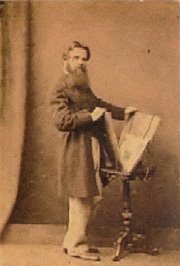 The Pre-Raphaelites are an acquired taste, but one that I am gradually acquiring. They are, by self-definition, antagonistic to my Neoclassical preferences. But they merit our thanks for at least introducing new subject matter into the visual arts. Where they lose me is where, in the case of Burne-Jones and Rossetti, they abandon the beauty of the Academics' figure studies for the sake of Medieval two-dimensionality.
But when they can take the best of the Academic human figure and synthesize it with their own ideas, we can find great beauty. Such is the case of William Holman Hunt (1827-1910), a devout Christian and native of London. Hunt worked as an office clerk while studying drawing and portraiture in the evenings. Many of his works were moral allegories reflective of his stern Christianity (as best seen here). They eventually attracted Rossetti's attention, and Hunt became a founding member of the Pre-Raphaelite brotherhood.
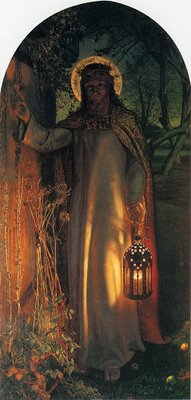 This is The Light of the World (1851-1853), now hanging at Keble College. Here we see Hunt's mastery of light, as well as an excellent representation of how Christ brings light into a world of darkness and hopelessness.
 This is The Hireling Shepherd (1851), now hanging in the Manchester City Art Galleries. The colors on this canvas are particularly lively. It's a lovely display of romantic love and the 19th Century idealization of the rural peasantry.
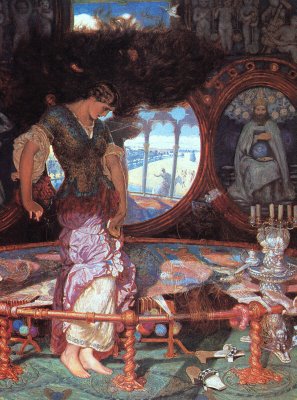 Like every other Pre-Raphaelite painter, Hunt also drew heavily from classical English literature. This is The Lady of Shallot (1889-1892), also in the Manchester City Art Galleries. This figure in Authurian lore became famous in 19th Century Britain after Tennyson wrote a popular poem on the subject.

The Nightmare of Guantanamo Bay
Rich Lowry reporting from Gitmo:
In one camp, detainees were taking apart the push-button faucets in their cells to get at a metal spring that they would stretch out to use as a weapon. The Asian-style toilets on the floors of the cells used to have footrests, until detainees wrenched them from the floor to use as bludgeoning weapons. The guards are splashed routinely with urine and feces. The detainees have even been known to try to kick their soccer balls out of their recreation area into barbed wire, to cost the infidels the price of one ball.
All the disturbances or suicides have taken place in the camps where security has been loosened. It was in Camp Four, where the best-behaved detainees are allowed to live communally, that a minor riot took place this past spring. A detainee faked a suicide attempt to lure the guards into the living area, where the floor had been smeared with urine, feces and soap. When they slipped, the detainees attacked them with light fixtures and other makeshift weapons. The man in charge here, Adm. Harry Harris, says his conclusion was “there is no such thing as a medium-security terrorist.”
While always mindful that they are dealing with dangerous men, the Americans treat them humanly, even sensitively. Seemingly every surface has a painted arrow pointing toward Mecca. Every detainee gets a Koran, and should it be necessary to search one, it is done by a Muslim translator, not a guard. Detainees are offered 4,200 calories a day. U.S. combat troops get 3,800. The average detainee has gained 18 pounds.
It is often alleged that the facility here is full of innocent men. But they were first screened in Afghanistan, then a Combat Status Review Tribunal examined them upon arrival, and now an Annual Review Board acts like a parole board. Roughly 300 detainees have been released or transferred for detention in another country. Of those, roughly 20 have been confirmed to have returned to fight, and probably others have too. Nonetheless, roughly another 130 out of 460 are set to be transferred or released.
Even though these detainees have no protections under the Geneva Conventions, I think that the way America treats these men is appropriate for the greatness of the American national character.
In one camp, detainees were taking apart the push-button faucets in their cells to get at a metal spring that they would stretch out to use as a weapon. The Asian-style toilets on the floors of the cells used to have footrests, until detainees wrenched them from the floor to use as bludgeoning weapons. The guards are splashed routinely with urine and feces. The detainees have even been known to try to kick their soccer balls out of their recreation area into barbed wire, to cost the infidels the price of one ball.
All the disturbances or suicides have taken place in the camps where security has been loosened. It was in Camp Four, where the best-behaved detainees are allowed to live communally, that a minor riot took place this past spring. A detainee faked a suicide attempt to lure the guards into the living area, where the floor had been smeared with urine, feces and soap. When they slipped, the detainees attacked them with light fixtures and other makeshift weapons. The man in charge here, Adm. Harry Harris, says his conclusion was “there is no such thing as a medium-security terrorist.”
While always mindful that they are dealing with dangerous men, the Americans treat them humanly, even sensitively. Seemingly every surface has a painted arrow pointing toward Mecca. Every detainee gets a Koran, and should it be necessary to search one, it is done by a Muslim translator, not a guard. Detainees are offered 4,200 calories a day. U.S. combat troops get 3,800. The average detainee has gained 18 pounds.
It is often alleged that the facility here is full of innocent men. But they were first screened in Afghanistan, then a Combat Status Review Tribunal examined them upon arrival, and now an Annual Review Board acts like a parole board. Roughly 300 detainees have been released or transferred for detention in another country. Of those, roughly 20 have been confirmed to have returned to fight, and probably others have too. Nonetheless, roughly another 130 out of 460 are set to be transferred or released.
Even though these detainees have no protections under the Geneva Conventions, I think that the way America treats these men is appropriate for the greatness of the American national character.
Thursday, September 28, 2006
Bikes4Indonesia Charity
Retired Methoblogger Greg Feightner e-mails to inform us of an intriguing charity: Bikes For Indonesia. His friend Michael is currently bicycling across the USA in order to raise money for this charity which provides bikes for Indonesian youths. As bicycles are the primary form of transportation in that country, free bicycles mean providing opportunities for Indonesian teens to lift themselves out of poverty. Check it out.
Why No One Likes Predestination
Kevin Knox:
That's hard for the 90% to accept. God threw some dice (then He controlled the way they fell) and if your name didn't come up in His book of life, then you're just out of luck. You never did anything wrong. "Nothing" had not even been created yet, and already the Lamb's book of life was fully complete, but your name was excluded. And now God dangles promises in front of your nose about anyone who believes being saved, but you're not so allowed. Your name is not there.
But, it's just as hard to accept for the 10%.
We want to be loved, but in this teaching we are mere lottery winners. God decided to love 10% of x-billion people, and we were just in that 10%. He doesn't love us. He loves .1*x billion humans, and we happened to be born in the right skin.But that's not how He made us.
We cannot be made happy like that.
That's hard for the 90% to accept. God threw some dice (then He controlled the way they fell) and if your name didn't come up in His book of life, then you're just out of luck. You never did anything wrong. "Nothing" had not even been created yet, and already the Lamb's book of life was fully complete, but your name was excluded. And now God dangles promises in front of your nose about anyone who believes being saved, but you're not so allowed. Your name is not there.
But, it's just as hard to accept for the 10%.
We want to be loved, but in this teaching we are mere lottery winners. God decided to love 10% of x-billion people, and we were just in that 10%. He doesn't love us. He loves .1*x billion humans, and we happened to be born in the right skin.But that's not how He made us.
We cannot be made happy like that.
Art Blogging: Isabella and the Pot of Basil
In The Decameron, Gionvanni Boccaccio told the tale of Isabella, a lady of Messina who fell in love with Lorenzo, a young man who worked with her three brothers. They disapproved of Lorenzo and so murdered him. But Isabella, learning of the location of his body, brought back his severed head and placed it in a pot of soil. Watered by her tears, it grew a luxurious basil. Her brothers, upon discovering the origin of the basil, stole the pot from her. They took away not only Isabella's lover, but also her memory of him. It is a tragic romance that Boccaccio invented, and it was later brought to the attention of 19th Century Britain by poet John Keats. Here is a passage from his 500-line poem:
And so she ever fed it with thin tears,
Whence thick, and green, and beautiful it grew,
So that it smelt more balmy than its peers
Of Basil-tufts in Florence; for it drew
Nurture besides, and life, from human fears,
From the fast mouldering head there shut from view:
So that the jewel, safely casketed,
Came forth, and in perfumed leafits spread.
His celebrated poem became a revered motif for the Pre-Raphaelite painters. These are some of their representations of this tale.
 By William Holman Hunt. This is my favorite.
 By John White Alexander.
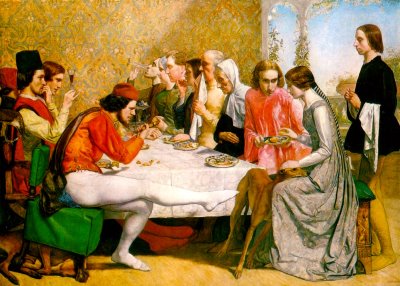 A scene from before the murder of Lorenzo done by John Everett Millais.
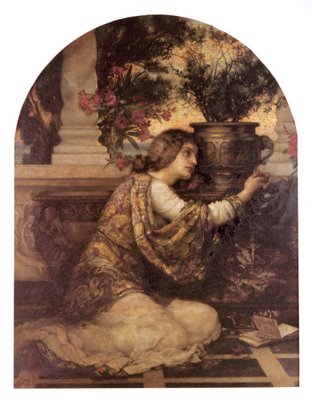 By Henrietta Rae.
 By John Melhuish Studwick.
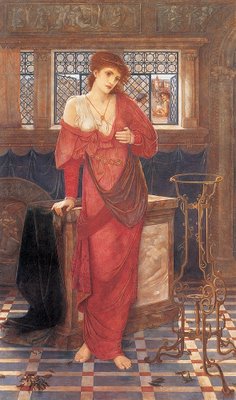
Also by John Melhuish Studwick.
And so she ever fed it with thin tears,
Whence thick, and green, and beautiful it grew,
So that it smelt more balmy than its peers
Of Basil-tufts in Florence; for it drew
Nurture besides, and life, from human fears,
From the fast mouldering head there shut from view:
So that the jewel, safely casketed,
Came forth, and in perfumed leafits spread.
His celebrated poem became a revered motif for the Pre-Raphaelite painters. These are some of their representations of this tale.
By William Holman Hunt. This is my favorite. By John White Alexander. A scene from before the murder of Lorenzo done by John Everett Millais. By Henrietta Rae. By John Melhuish Studwick.Also by John Melhuish Studwick.
Caption Contest
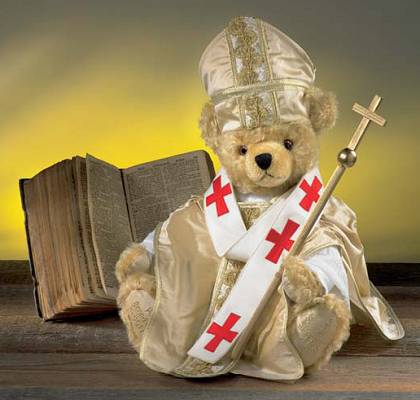 Previous contest winner
WINNER: Quotidian Grace:
The INFALLI-BEAR will convert your favorite heretic. Catechisms not included.
Wednesday, September 27, 2006
The Great Irony
...of seminary life and preparation for ministry is that now I have virtually no contact with non-Christians. I'm either at school or church.
I'm not complaining. It's just one of the costs of the calling. But it's an odd one.
I'm not complaining. It's just one of the costs of the calling. But it's an odd one.
The Rabbit Habit
 Christianity Today has an article about the lapine lifestyle:
Few have had the thrill of watching a bunny do the binky—a supreme tribute from rabbits to their creator, as if to shout, with their whole bodies, "God, life is good!" Have you ever witnessed this spur-of-the-moment dance, in which rabbits leap up, spin in mid-air, and land facing the opposite direction—sometimes several times in a row? And how many of us have received the soft little kisses with which these affectionate and social creatures are happy to groom, comfort, and even, if necessary (as is often in my case), wake up their human companions?
Frith be praised! Thanks to Robin Russell for the pointer.
Caption Contest
 Picture via Outside the Beltway
Previous contest winner
WINNER: John Battern:
What's so funny about a couple of people sitting around in their living room. I don't get it.
Question of the Day
Matthew 7:24:
Therefore everyone who hears these words of mine and puts them into practice is like a wise man who built his house on the rock.
What are you going to do today to combat the zombie menace?
Therefore everyone who hears these words of mine and puts them into practice is like a wise man who built his house on the rock.
What are you going to do today to combat the zombie menace?
Tuesday, September 26, 2006
Prayer Request
This slipped by my attention. It shouldn't have, but it did. Joel Thomas' mother has died.
He's having a very rough time. Please keep him in your prayers.
He's having a very rough time. Please keep him in your prayers.
Theological Engineering Exam
 4 Questions, 60 Minutes.
You may use a calculator, the Bible, the Koran, the Torah, and the Book of Mormon. The speed of light is c. Show all work. For all problems, assume a perfectly spherical Jesus of constant density D. No praying during the exam.
1. (20 pts.) Bob and Joe are standing on a street corner. God loves each an equal amount of L_O. Bob then accelerates to .9c. In Joe's rest frame, how much does God now love Bob?
2. (20 pts.) Let the eternal, all abiding love of the Holy Spirit be the xy plane. Let Sue's soul be at (0,0,5) at t=0 sec., traveling at 5 m/s in the direction of the positive z axis. Everything is in Cartesian coordinates bespeaking subscription to a perfectly rational Enlightenment attitude towards the Universe. At what time t will Sue be saved? (Hint: Assume a point soul.)
3. (20 pts.) Assume the Rapture occurs at time t. Cornelia, a saved human weighing 90 kg, in a state of grace, has her head in the closing jaws of an alligator at time t. What mass of meat will remain to the alligator at time t+10 sec.?
4. Stan is a frictionless, massless Mormon in a rest state. His sin level for his faith is currently 11 McBeals. He eats .3 kg of pork, and enjoys it very much. Assume that the Jews are right about, well, pretty much everything.
A. (10 pts.) What is Stan's sin level now?
B. (10 pts.) Stan is one of them Salt Lake City Mormons. He ain't so smug now, is he?
Extra Credit (10 pts): 25 grams of wafers and 20 ml of cheap wine undergo transubstantiation and become the flesh and blood of our Lord. How many Joules of heat are released by the transformation?
Hand in exam when done, and may God have mercy on your work.
___________________
Hat tip to a blogless seminary colleague of mine
Caption Contest
 Previous contest winners
WINNER: John Battern:
Double your pleasure, double your fun with double H, double H bubble mint bun cream.
Monday, September 25, 2006
Bush, Iraq, and Misunderstanding United Methodist Authority
Here's a curious headline:
Bush's Own Church Has Called For The Withdrawal Of Troops From Iraq
Well, not quite. Rather, 100 United Methodists, among them a retired bishop, protested the war in Iraq and called for Bush to withdraw. But if I understand UMC polity correctly, only the Council of Bishops or the General Conference can claim to speak for the United Methodist Church. A hundred-odd marchers cannot claim such authority, even if a retired bishop is among them.
Nevertheless, much of the Left end of the blogosphere has picked up this misunderstanding and run with it. This mistake does not merit harsh criticism, as one can be easily confused about the governance of a different denomination.
And to the credit of the Methodist anti-war protestors, I saw nothing in the UMNS article to indicate that they claimed to speak for the whole UMC. It's just a misunderstanding that needs to be corrected.
Bush's Own Church Has Called For The Withdrawal Of Troops From Iraq
Well, not quite. Rather, 100 United Methodists, among them a retired bishop, protested the war in Iraq and called for Bush to withdraw. But if I understand UMC polity correctly, only the Council of Bishops or the General Conference can claim to speak for the United Methodist Church. A hundred-odd marchers cannot claim such authority, even if a retired bishop is among them.
Nevertheless, much of the Left end of the blogosphere has picked up this misunderstanding and run with it. This mistake does not merit harsh criticism, as one can be easily confused about the governance of a different denomination.
And to the credit of the Methodist anti-war protestors, I saw nothing in the UMNS article to indicate that they claimed to speak for the whole UMC. It's just a misunderstanding that needs to be corrected.
Art Blogging: Charles Gleyre
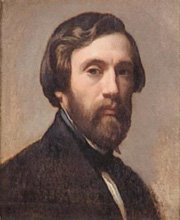 Marc-Charles Gabriel Gleyre (1806-1874) was a Swiss-French Academic painter and teacher. He was born in Lausanne, orphaned at a young age, and sent to live with relatives in Lyon, France. He studied in Paris and Italy, toured the Near East, and finally settled down in Paris, founding an atelier. Success came late and Gleyre finally won a Salon medal in 1843. Quiet and reserved, he shunned public attention and ceased submitting competition works entirely after 1849. Gleyre was a perfectionist, even taking up a life of celibacy so that he could devote himself entirely to his craft. He ran a small school, but refused to take payment for his instruction. Renoir, Monet, Sisely, and Gerome were among his many students who went on to great fame. Although Gleyre never sought that fame for himself, he had a tremendous impact on 19th Century French painting.
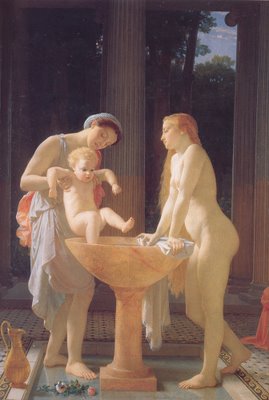 This is The Bath (1868) at the Chrysler Museum in Norfolk, Virginia. Like many Academic painters of his day, Gleyre drew much subject matter from classical Greco-Roman motifs (or 19th Century idealizations of them). Here we see two women bathing a child in the center of a Roman atrium.
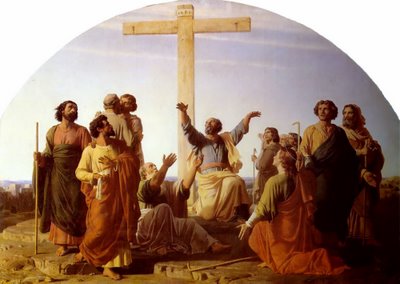 This is The Departure of the Apostles to Preach the Gospel, now in a private collection. The followers of Jesus have received the Great Commission and witnessed the ascension of Christ into Heaven. Some remain on their knees in awe while others are already moving out for the Gospel.
Christian Political Priorities
Joe Carter:
As a matter of political liberty I believe it is important that we support such issues as prayer in schools and public displays of religious symbols. But I can’t imagine that on the Day of Judgment I’ll hear, “Well done, good and faithful servant…you have faithfully fought to keep the Ten Commandments in the courthouse.” More likely we’ll all be asked why we didn’t spend more time concerned about our neighbors in Darfur or fighting the pandemic of AIDS. Perhaps we should rethink our priorities and put the first things first.
As a matter of political liberty I believe it is important that we support such issues as prayer in schools and public displays of religious symbols. But I can’t imagine that on the Day of Judgment I’ll hear, “Well done, good and faithful servant…you have faithfully fought to keep the Ten Commandments in the courthouse.” More likely we’ll all be asked why we didn’t spend more time concerned about our neighbors in Darfur or fighting the pandemic of AIDS. Perhaps we should rethink our priorities and put the first things first.
Caption Contest
 Previous contest winners
WINNERS:
DannyG: For the last time, we have ketsup, mustard, barbecue sause, and horse-radish sause, we don't have qzxhfmp!
Holy Pirate: Honey, check the bag and make sure they got our order right. I hate it when I get home and find out they forgot something.
Sunday, September 24, 2006
Methodist Blogs Weekly Roundup # 84
Here's the week in review in the Methodist blogosphere:
Rev Abi wrote about bloggers taking breaks, the Pope's remarks about Islam, the Heifer Project for feeding the poor, and Mark Twain's opinions on Christianity.
Allan R. Bevere wrote about how Soren Kierkegaard would advise the modern church. He also began a nine-part series on Bart Ehrman's book Misquoting Jesus. Here are parts 1, 2, 3, and 4. He also wrote about politicians giving speeches in church pulpits (Best of the Methoblogosphere!). And he wrote about the importance of grief in our lives.
Andy Bryan wrote about why some people feel a need to control small, trivial concerns.
Andy Stoddard lectionary blogged for September 18 and 21.
Clif Guy wrote about risk management and church management software.
Beth Quick wrote about the emergence of metrospirituality.
Brian Russell wrote about Ishmael being conceived out of an act of disobedience, but that God made a place for him. He also preached on how we are changed by Easter today.
Bruce Alderman wrote about the relative importance of numbers in church health.
Conservative Seminarian wrote about strawman arguments in the authorship of the Torah, the historicity of Acts, the differences between theological conservatives and liberals, and how ideology affects Biblical translation.
Joel Thomas noted that Jesus isn't checking out your butt.
Dave Faulkner preached on how our own mustard seeds can bring about the Kingdom of God.
Dave Warnock wrote about self-care and being a busy pastor.
Emerging UMC wrote about clear, precise definitions of emergent-y language.
Andrew Thompson wrote about the Prosperity Gospel and violence in Christianity and Islam.
Gerry Charlotte Phelps wrote that the MSM promoted a violent response by Muslims to the Pope's remarks and that it's time to start recruiting delegates for the General Conference 2008.
Daniel McLain-Hixon wrote that winning the War on Terrorism requires retreating from absolutist rhetoric.
Henry Neufield wrote about wastefulness in church architecture, the nature and fairness of God's violence, and whether there are legitimate, modern-day prophets.
Holy Pirate compared studying Christian history with watching sausage being made (Best of the Methoblogosphere!).
Jay Voorhees reviewed the album "The Painter" by the Talbot Brothers.
John Battern looked at the nuances of formulating a pastor's salary, but concludes that he's pretty rich.
Ken Carter preached that if you're a follower of Jesus, you'll find yourself in unlikely places doing unlikely things.
Kevin Baker wrote about the Prosperity Gospel.
Jan Kindle wrote about following Jesus everyday consistently.
Larry Hollon wrote about health care for African mothers, how global warming increases global poverty, and the Pope's remarks and the power of unguarded words.
Michael Daniel wrote about the theology of tithing sermons and making deals with Islamic terrorists.
Michelle Hargrave wrote about Bible stories in Xena: Warrior Princess.
Mike Voigts wrote about the need for the American evangelical church to be converted.
Mitchell Lewis wrote about the theological tension that a Christian soldier feels.
Neil Bishop wrote about Pope Benedict's speech touching Islam.
At New Reality Blog, Ric wrote about Hugo Chavez's UN speech and political insults.
Jason Wooleever wrote about how Christians should approach psychics (Best of the Methoblogosphere!).
ReligioNews wrote about the Pope's recent remarks and the doctrine of Papal infallibility.
Rereason wrote about gloomy Republicans.
Sandpiper wrote about taking pride in our own knowledge and wisdom, living in Heaven here and now, and the Beautitudes and reviewed the book The Will of God.
Sky Lowe-McCracken wrote about St. Augustine, The City of God, and 9/11 -- that's one post, not three. He also wrote about how God's vision for local churches finds its local churches.
Steven Webster got married.
Jonathan Marlowe wrote about Just War Theory and the War on Terrorism.
Dale Lature compared George Bush and Adolf Hitler.
Todd Miller wrote about the virtues of Benjamin Franklin and reviewed the book Jesus Creed.
Tony Mitchell preached on the revolutionary nature of Jesus' gospel and how it can change individuals and congregations.
Wes Whiddon wrote about Hugo Chavez's description of President Bush.
Scott McKay wrote about realizing one's blessings.
Derek Tang wrote a memo to foreign leaders.
Corrections? Additions? Do you know of a blog that should be included in the MBWR? Would you like to receive the MBWR via e-mail? Leave a note in the comments or e-mail locustsandhoney2005 at yahoo dot com!
UPDATE: Derek Tang added.
Rev Abi wrote about bloggers taking breaks, the Pope's remarks about Islam, the Heifer Project for feeding the poor, and Mark Twain's opinions on Christianity.
Allan R. Bevere wrote about how Soren Kierkegaard would advise the modern church. He also began a nine-part series on Bart Ehrman's book Misquoting Jesus. Here are parts 1, 2, 3, and 4. He also wrote about politicians giving speeches in church pulpits (Best of the Methoblogosphere!). And he wrote about the importance of grief in our lives.
Andy Bryan wrote about why some people feel a need to control small, trivial concerns.
Andy Stoddard lectionary blogged for September 18 and 21.
Clif Guy wrote about risk management and church management software.
Beth Quick wrote about the emergence of metrospirituality.
Brian Russell wrote about Ishmael being conceived out of an act of disobedience, but that God made a place for him. He also preached on how we are changed by Easter today.
Bruce Alderman wrote about the relative importance of numbers in church health.
Conservative Seminarian wrote about strawman arguments in the authorship of the Torah, the historicity of Acts, the differences between theological conservatives and liberals, and how ideology affects Biblical translation.
Joel Thomas noted that Jesus isn't checking out your butt.
Dave Faulkner preached on how our own mustard seeds can bring about the Kingdom of God.
Dave Warnock wrote about self-care and being a busy pastor.
Emerging UMC wrote about clear, precise definitions of emergent-y language.
Andrew Thompson wrote about the Prosperity Gospel and violence in Christianity and Islam.
Gerry Charlotte Phelps wrote that the MSM promoted a violent response by Muslims to the Pope's remarks and that it's time to start recruiting delegates for the General Conference 2008.
Daniel McLain-Hixon wrote that winning the War on Terrorism requires retreating from absolutist rhetoric.
Henry Neufield wrote about wastefulness in church architecture, the nature and fairness of God's violence, and whether there are legitimate, modern-day prophets.
Holy Pirate compared studying Christian history with watching sausage being made (Best of the Methoblogosphere!).
Jay Voorhees reviewed the album "The Painter" by the Talbot Brothers.
John Battern looked at the nuances of formulating a pastor's salary, but concludes that he's pretty rich.
Ken Carter preached that if you're a follower of Jesus, you'll find yourself in unlikely places doing unlikely things.
Kevin Baker wrote about the Prosperity Gospel.
Jan Kindle wrote about following Jesus everyday consistently.
Larry Hollon wrote about health care for African mothers, how global warming increases global poverty, and the Pope's remarks and the power of unguarded words.
Michael Daniel wrote about the theology of tithing sermons and making deals with Islamic terrorists.
Michelle Hargrave wrote about Bible stories in Xena: Warrior Princess.
Mike Voigts wrote about the need for the American evangelical church to be converted.
Mitchell Lewis wrote about the theological tension that a Christian soldier feels.
Neil Bishop wrote about Pope Benedict's speech touching Islam.
At New Reality Blog, Ric wrote about Hugo Chavez's UN speech and political insults.
Jason Wooleever wrote about how Christians should approach psychics (Best of the Methoblogosphere!).
ReligioNews wrote about the Pope's recent remarks and the doctrine of Papal infallibility.
Rereason wrote about gloomy Republicans.
Sandpiper wrote about taking pride in our own knowledge and wisdom, living in Heaven here and now, and the Beautitudes and reviewed the book The Will of God.
Sky Lowe-McCracken wrote about St. Augustine, The City of God, and 9/11 -- that's one post, not three. He also wrote about how God's vision for local churches finds its local churches.
Steven Webster got married.
Jonathan Marlowe wrote about Just War Theory and the War on Terrorism.
Dale Lature compared George Bush and Adolf Hitler.
Todd Miller wrote about the virtues of Benjamin Franklin and reviewed the book Jesus Creed.
Tony Mitchell preached on the revolutionary nature of Jesus' gospel and how it can change individuals and congregations.
Wes Whiddon wrote about Hugo Chavez's description of President Bush.
Scott McKay wrote about realizing one's blessings.
Derek Tang wrote a memo to foreign leaders.
Corrections? Additions? Do you know of a blog that should be included in the MBWR? Would you like to receive the MBWR via e-mail? Leave a note in the comments or e-mail locustsandhoney2005 at yahoo dot com!
UPDATE: Derek Tang added.
Meanwhile, Back at the Hall of Justice....
I'm working on the MBWR right now. My wife is a few feet away, on the couch, reading It.
"Sugarlump," I ask, "Would you hold me accountable to something?"
"Of course, Sweetie, anything you want."
"Then give me a gentle nudge if I ever address myself as 'the Reverend John Coke'."
"I'll do more than that; I'll push you down the stairs."
"How will I distinguish that from all the other times that you push me down the stairs?" I ask as I pour another cup of coffee.
"I'll push you down the stairs twice."
"Ah, I see."
Katherine offered to help out on the MBWR, but after her first entry was "[Liberal Methoblogger] has his head up his butt", I decided to do it completely myself.
"Sugarlump," I ask, "Would you hold me accountable to something?"
"Of course, Sweetie, anything you want."
"Then give me a gentle nudge if I ever address myself as 'the Reverend John Coke'."
"I'll do more than that; I'll push you down the stairs."
"How will I distinguish that from all the other times that you push me down the stairs?" I ask as I pour another cup of coffee.
"I'll push you down the stairs twice."
"Ah, I see."
Katherine offered to help out on the MBWR, but after her first entry was "[Liberal Methoblogger] has his head up his butt", I decided to do it completely myself.
Methodist Blogger Profile: Richard Johnson
 Richard Johnson of Politics With Richard
Hi, my name is Richard. I was born in Bedford, England but have grown up in Connecticut. I was the first baptized member of the Methodist Church in my family, technically being baptized in the “Methodist Church of Great Britain,” but confirmed in the “United Methodist Church.” I’m probably one of the youngest Methodist bloggers out there, being the ripe age of 15. I have always gone to Catholic School, and I currently go to an all-male Jesuit High School. I’ve always been fascinated by theology, history, and politics. I’m a pretty liberal guy and don’t like fighting. I want to be a lawyer when I’m older, but who knows, maybe if things don’t work out (or do, depending on your perspective), I might find myself in the ministry. I generally blog about politics, but I like to bring up religion and moral issues, as I think they are increasingly relevant in our current events. Finding the balance between religion and politics is always the sticking point. I love to travel and hope to go to Italy and Japan next year. I can speak French just about fluently and some Spanish. I’m working on Latin.
Why do you blog?
I blog because I have so much to say about what’s going on in the world around me. I blog because it is truly a marvelous form of self-_expression. Blogging is the free press and free speech in action. Whether or not people read my articles, I gain great satisfaction from writing it. It’s almost like self-therapy in the sense that I can express my thoughts and feelings in a new medium.
What has been your best blogging experience?
My best blogging experience has certainly been the people and the connections I have made. I have interacted with people in my community and across the country. Locality is not a restriction. Because of this, I have been able to meet really great and intelligent people who have enormously ranging opinions and feelings. Particularly in the Methodist community, I have reached a new means of enriching my theological background through the connections I have made with enormously different people sharing the same faith. It has been a great exercise in theological discovery and the idea of the Church being a community of believers. This has been something that I would never have been able to do regularly due to the isolated nature of my own church and our fairly homogenous community. Also, bringing such great minds together in one place is truly a wonderful phenomenon of blogging.
What would be your main advice to a novice blogger?
Don’t restrict yourself. I often see a lot of people try to start blogging with a single topic in mind, and then they can only write about that topic. They end up being restricted and lose interest. Likewise, there are people who don’t define enough what they’re going to write about, and then they can’t think of anything to write. Think of a theme – politics, religion, family, sports, your daily life, art, or whatever you want. You can always expand and stray off if you wish, but it’s always great to have a starting point.
If you only had time to read three blogs a day, what would they be?
Locusts & Honey - http://locustsandhoney.blogspot.com
Coldflame - http://unprofitablepursuits.blogspot.com/
Thoughts from a Library Administrator - http://michaelgolrick.blogspot.com/
Who are your spiritual heroes?
Jesus, Moses, John Wesley, Martin Luther, Martin Luther King, Mahatma Gandhi, St. Ignatius of Loyola
What are you reading at the moment?
I am currently reading Dead Man Walking by Sr. Helen Prejean, CSJ. It truly is a shockingly insightful look into the American (in)justice system.
I recently wrote about it in this article: http://politicswithrichard.blogspot.com/2006/08/poverty-and-criminal-justice-americas.html
What is your favorite hymn and why?
My favourite hymns are “Lord of the Dance,” “Where You There?”, and “Amazing Grace.” I love all these songs because of the passion and feeling which goes behind them, which makes them all so more powerful. I especially enjoy singing them and playing them on the piano, too.
Can you name a major moral, political, or intellectual issue on which you've changed your mind?
I haven’t necessarily changed my mind on this issue, but I have certainly reconsidered my opinions on abortion. I have always been pro-choice, but this does not mean that I want any abortions to happen. I have my reasons for being pro-choice, but I also understand the strong moral argument which people who want to ban abortion give as well.
What philosophical thesis do you think is most important to combat?
Well, I certainly disagree with the idea that throwing out tax breaks solves the economy’s problems because, in reality, usually these tax breaks only benefit the wealthy and the poor continue to lose out. Poverty is not eradicated but only deepened. I’m not sure what you call it – consumerism, “”spend and not tax?”
If you could effect one major change in the governing of your country, what would it be?
I would change our policy on war in general. We continue to have the wrong approach by refusing to listen to our “enemies,” by even refusing to speak to them, they clearly are not going to make any changes. What’s the point of only exercising diplomacy to our friends when diplomacy to our enemies is what is most important? “Love your enemies; bless them that curse you; do good to them that hate you,” is something by which I live my life.
If you could effect one major policy change in the United Methodist Church, what would it be?
I love the UMC, though I wish they would be a little more liberal in regards to homosexuality in ministry. As someone who feels this issue very close at heart, restricting someone from entering or continuing the ministry because they are gay is an injustice. If they want to be that chauvinistic about it, then they might as well ban divorcés and shellfish eaters from the ministry.
Also, on a side note, I wish that confirmands were allowed to choose a confirmation name of some sort. I had forever wanted a confirmation name, always assuming that this practice existed in the UMC. I was disappointed to find out this was not the case.
What would be your most important piece of advice about life?
Don’t let people or things get in your way. Take risks. Don’t get caught up in the little things, but don’t concentrate for too long on the big picture. Live your life to the fullest, give yourself a goal, but don’t define yourself by it. Chances are you’ll reach it without even realizing it.
What, if anything, do you worry about?
I mainly worry about school, grades, tests, homework, and college admissions – the typical teenage worry points.
If you were to relive your life to this point, is there anything that you'd do differently?
Sure, there are a lot of stupid little things I wouldn’t have done. I would have taken my teacher’s advice and taken French III as a freshman instead of waiting till sophomore year. I wouldn’t have done the school musical and been on the mock trial team and a thousand other things at the same time. I wouldn’t have said things to some people that I had said. Yet, I don’t really think I’ve lived enough of my life to say that I would want to have changed it.
Where would you most like to live (other than where you do now)?
Well, the whole plan is to move back to England when I graduate high school. I’ve always wanted to live France and am considering doing that sometime in the future. Who knows?
What do you like doing in your spare time?
Spare time? Ha!
Seriously, I enjoy biking, photography, writing, sailing, camping, acting, and being with friends.
What is your most treasured possession?
My most treasured material possession? Well, all my family photographs that I have accumulated from relatives over the years doing research for my family tree. They are very precious to my family and me, and I would hate for anything to happen to them.
What talent would you most like to have?
An ability to be a more engaging and sociable personality, especially being able to branch out of my comfort zone in terms of social interaction.
If you could have any three guests, past or present to dinner, who would they be?
Well, with such an opportunity, I couldn’t waste it on anybody. It would probably have to be Jesus, St. Peter, and, most essentially … someone who lived back then and could translate from Aramaic to Latin (considering that he wouldn’t be able to translate it into English bearing in mind it didn’t exist at the time… my Latin isn’t great, but we’d work something out) or, more ideally, someone who lives now and can translate from Aramaic to English flawlessly.
I’d use this as a time to clear up the whole papacy thing, see if the Catholic Church got it right or wrong, to get Jesus’ opinions on dilemmas facing us to day like war, poverty, abortion, the death penalty, homosexuality, etc, and finally to know who goes to heaven, when’s the end of the world, what’s the meaning of life, and was John on acid when he wrote the Book of Revelation.
Saturday, September 23, 2006
Weekend Rabbit Blogging
Hyzenthlay had her first bath tonight.
Photo Sharing - Upload Video - Video Sharing
She did not like it one bit. Strangely, her reaction has been to leave dozens of droppings around the apartment. Maybe it's retaliation.
Photo Sharing - Upload Video - Video Sharing
She did not like it one bit. Strangely, her reaction has been to leave dozens of droppings around the apartment. Maybe it's retaliation.
Divine Omniscience and the Problem of Free Will
 I am presently taking a course on the philosophy of religion and addressing metaphysical frameworks for the Christian faith. One of the more interesting dilemmas is reconciling God's omniscience and human free will. Some thinkers assert either:
1. God can know the future because he will determine it.
2. We have free will over our decisions and therefore God cannot know our future paths.
But both cannot be true. Free will is logically inconsistent with divine omniscience. Here is a common example known as the Cheese Omelet Argument:
1. It is now true that I will have a cheese omelet for breakfast tomorrow. (Assumption)
2. It is impossible that God should at any time believe anything false or fail to believe anything which is true. (Assumption: divine omniscience)
3. Therefore God has always believed that I will have a cheese omelet for breakfast tomorrow. (Inference from 1 and 2)
4. If God has always believed a certain thing, it is not in my power to bring it about that God has not always believed that thing. (Assumption: the inalterability of the past)
5. Therefore it is not in my power to bring it about that God has not always believed that I will have a cheese omelet for breakfast tomorrow (Inference from 3 and 4)
6. It is not possible for it to be true both that God has always believed that I will have a cheese omelet for breakfast tomorrow, and that I do not in fact have one. (Inference from 2)
7. Therefore it is not in my power to refrain from having a cheese omelet for breakfast tomorrow. (Inference from 5 and 6) So I do not have free will with respect to the decision whether or not to eat an omelet. (Hasker 51-52)
There are a variety of possible resolutions to this dilemma. One is that God transcends time and therefore "foreknowledge" is a meaningless term when applied to God. God doesn't know things before they happen; he knows everything at every point of time simultaneously. Another is called Open Theism, featuring a diminished God who doesn't know the future (among other limited capacities).
I hypothesize another alternative. We Wesleyan-Arminians believe that God has omnipotence and can, if he wishes, make us move, act, and think as puppets. But God instead gives us free will to choose our course of actions, including sinful ones. God has omnipotence, but chooses not to use it. That God has a faculty does not necessitate that he use it.
Perhaps, in like manner, God has omniscience, but does not use it fully. God has the capacity to know (and therefore dictate) our every action, but chooses not to engage that power.
What do you think of this hypothesis?
Caption Contest
 Previous contest winner
WINNERS:
Decaf Owl: Although the fact that Santa has "naughty" and "nice" lists is well known, there is a litle known third list ...
Jeff the Baptist: Santa knew Osama had wanted Javelin anti-tank missile for quite a while. This Christmas he was going to get it if Claus had to give one to every cave in Tora Bora.
Allan R. Bevere: He knows if you've been bad or good, so be good for goodness sake!
Tales From the Madhouse
 No, it's not a promotional video from Asbury Theological Seminary. It's a selection of monologues from eight people who encountered Jesus. The film is set in a Victorian sanitarium where the eight live in individual rooms. Each one speaks about his life, his understanding of the world, and how Jesus impacted him.
Look, there's a lot of lousy Christian monologues out there clumsily put together by second-rate actors and third-rate writers. Ya'll know that I have a very low opinion of the Christian Stuff Industry and its endless parade of badly-written tripe. This isn't that at all. This film is a very carefully written drama, enjoyable by Christians and non-Christians alike.
Each 15-minute tale comes with a discussion guide that makes it perfect for small group usage.
But I really can't overstate the quality of this production. It's simply breathtaking as a work of professional writing and drama. Get it.
Friday, September 22, 2006
Church Sanctuaries: Objects of Waste
Yes, yes, they give glory to God and all that. But there's something really economically appalling about an ornate and architecturally expensive building that is used only two hours a week. Better to put up a simpler structure and spend the rest of the money on a homeless shelter. I don't think that God is glorified by waste, but he is glorified by love for the poor and downtrodden.
On this subject, Henry Neufield writes:
But picture the standard church sanctuary, steeple, pews, pulpit, altar area, and so forth. The building, the room, and the furniture all serve for a couple of hours per week. Many of you will point out that you have other meetings in that sanctuary–committee meetings, youth meetings, classes, and so forth. But notice that the room isn’t really designed for those things, and you’re actually working around the architecture and interior design in order to use that space for that purpose. It’s true that there are many newer buildings, especially amongst small, non-denominational churches that are much more flexible, and much better designed for multiple uses. Even so, I would ask you to look at the schedule of use for your office building, the conference room at your place of work, and similar structures, and consider the cost involved and the amount of use.
I don’t have statistics in hand, but in my experience, churches spending as little as 5% of their money on outreach regard themselves as “mission oriented.” Add to that evangelism and budgeting for charitable projects, and you’ll get the total spending for outreach. (Don’t forget the salaries of staff members who are assigned to such tasks.) Look at your own church budget. How much of your money goes to maintaining facilities and paying people to maintain the membership. How much of the spending goes to people in the club?
UPDATE: Henry Neufield adds further thoughts on this topic.
On this subject, Henry Neufield writes:
But picture the standard church sanctuary, steeple, pews, pulpit, altar area, and so forth. The building, the room, and the furniture all serve for a couple of hours per week. Many of you will point out that you have other meetings in that sanctuary–committee meetings, youth meetings, classes, and so forth. But notice that the room isn’t really designed for those things, and you’re actually working around the architecture and interior design in order to use that space for that purpose. It’s true that there are many newer buildings, especially amongst small, non-denominational churches that are much more flexible, and much better designed for multiple uses. Even so, I would ask you to look at the schedule of use for your office building, the conference room at your place of work, and similar structures, and consider the cost involved and the amount of use.
I don’t have statistics in hand, but in my experience, churches spending as little as 5% of their money on outreach regard themselves as “mission oriented.” Add to that evangelism and budgeting for charitable projects, and you’ll get the total spending for outreach. (Don’t forget the salaries of staff members who are assigned to such tasks.) Look at your own church budget. How much of your money goes to maintaining facilities and paying people to maintain the membership. How much of the spending goes to people in the club?
UPDATE: Henry Neufield adds further thoughts on this topic.

Caption Contest
 Previous contest winner
WINNER: James Spring:
The Swiss military looks for new ways to meet their gender diversity quota.


Thursday, September 21, 2006
Mainline Denominational Decline Beyond Theological Affiliation
We've talked a lot about how theological affiliation (particularly liberal theology) may affect the overall decline of mainline denominations. But beyond the stated theology of the church, I think that there are two other major factors that have induced the decline of mainline denominations:
 2. Failure of churches to change their languages of communication. As much as I suspect that the emerging church movement is a marketing conspiracy of the haircare industry and Starbucks, this movement at least fully realizes that the Gospel is not bound to any one culture. There is no one way of "doing church", but so many local churches are committed to staying in 1950s Americana. This problem encompasses the whole contemporary worship vs. traditional worship struggle, but also means completely thinking outside of the box in order to stay focused on the mission of the church. Wherever God's children are, we go.
Personal example: when I was growing up, my family moved a lot. We usually went to UMC and PCUSA churches. And I've met a lot of people who typically moved between these two denominations. I recently asked my parents why we did this. They said, "Well, they're just alike; the two denominations are interchangeable." I knew what they meant -- both embraced a particular style, form, and social class. But the two shouldn't be alike! Calvinist orthodoxy and Methodist orthodoxy are very different. The flavor of the sermons, teaching, and ecclesiology of the two denominations should be different. But they weren't different in the way of "doing church" -- church as a cultural institution.
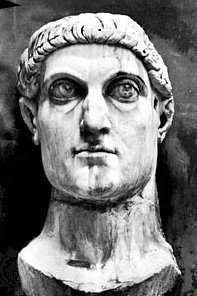 3. Which leads me neatly into the third factor leading into mainline decline: the end of the Constantinian era. There is no longer a social obligation to go to church. As much as this has led to mainline decline and what people bemoan the "post-Christian age", I thank God that this social obligation has ended. It was a cultural force which inoculated countless people from a transformative faith.
Again, personal example: For my parents, born in the Deep South in 1940 and 1942 respectively, the idea of not going to church was inconceivable. Growing up, I thought that being a Christian meant showing up on Sundays and dressing neatly. When I first went to church at the age of 25 after nearly a decade of absence, I was absolutely shocked to see men not wearing suits. But although my parents are deeply moral people with a stern and private faith, what I learned was that being a Christian meant "going to church." Any emotional religious expression should be kept private and solitary. But going to church was optional for me, and removed from Constantinian constraints, I stopped going. I don't blame my parents -- by no means. Constantinian social dynamics had turned them into serious Christians and they had no reason to believe that they wouldn't work for me and my brother. The end of Constantinian America caught them completely off-guard, and is still catching many churches off-guard.
The Constantinian era was poison to Christianity, and if the consequence of losing it is mainline decline, so be it. Perhaps, as Bruce Alderman eloquently writes, the loss of numbers isn't all that important. Perhaps. It depends on why we are growing or shrinking. I see far too many elderly United Methodists who know that the Titanic is sinking but are content with leaving the deckchairs in their current arrangement because it won't sink until after they die. It wouldn't surprise me to learn that this is the situation in many other mainline denominations.
 2. Failure of churches to change their languages of communication. As much as I suspect that the emerging church movement is a marketing conspiracy of the haircare industry and Starbucks, this movement at least fully realizes that the Gospel is not bound to any one culture. There is no one way of "doing church", but so many local churches are committed to staying in 1950s Americana. This problem encompasses the whole contemporary worship vs. traditional worship struggle, but also means completely thinking outside of the box in order to stay focused on the mission of the church. Wherever God's children are, we go.
Personal example: when I was growing up, my family moved a lot. We usually went to UMC and PCUSA churches. And I've met a lot of people who typically moved between these two denominations. I recently asked my parents why we did this. They said, "Well, they're just alike; the two denominations are interchangeable." I knew what they meant -- both embraced a particular style, form, and social class. But the two shouldn't be alike! Calvinist orthodoxy and Methodist orthodoxy are very different. The flavor of the sermons, teaching, and ecclesiology of the two denominations should be different. But they weren't different in the way of "doing church" -- church as a cultural institution.
 3. Which leads me neatly into the third factor leading into mainline decline: the end of the Constantinian era. There is no longer a social obligation to go to church. As much as this has led to mainline decline and what people bemoan the "post-Christian age", I thank God that this social obligation has ended. It was a cultural force which inoculated countless people from a transformative faith.
Again, personal example: For my parents, born in the Deep South in 1940 and 1942 respectively, the idea of not going to church was inconceivable. Growing up, I thought that being a Christian meant showing up on Sundays and dressing neatly. When I first went to church at the age of 25 after nearly a decade of absence, I was absolutely shocked to see men not wearing suits. But although my parents are deeply moral people with a stern and private faith, what I learned was that being a Christian meant "going to church." Any emotional religious expression should be kept private and solitary. But going to church was optional for me, and removed from Constantinian constraints, I stopped going. I don't blame my parents -- by no means. Constantinian social dynamics had turned them into serious Christians and they had no reason to believe that they wouldn't work for me and my brother. The end of Constantinian America caught them completely off-guard, and is still catching many churches off-guard.
The Constantinian era was poison to Christianity, and if the consequence of losing it is mainline decline, so be it. Perhaps, as Bruce Alderman eloquently writes, the loss of numbers isn't all that important. Perhaps. It depends on why we are growing or shrinking. I see far too many elderly United Methodists who know that the Titanic is sinking but are content with leaving the deckchairs in their current arrangement because it won't sink until after they die. It wouldn't surprise me to learn that this is the situation in many other mainline denominations.
Wednesday, September 20, 2006
Clergy Salaries
 The conversation about clergy financial compensation continues. Dave Warnock says:
As a Methodist Minister on a fixed income set by the national church that often causes difficulty, it is easy to compare myself to people materially far better off than I. But what a cop-out that is. My role model should be Jesus and my guide should be his teaching. According to both those I am condemned by both my thoughts and actions. Fortunately, Jesus is also the answer to that condemnation.
And John Battern is about to meet with his Staff-Parish Relations Committee to talk about his salary. John says that formulating an ethic of clergy pay is complex.
Caption Contest
 Previous contest winner
WINNER: Jeff the Baptist:
President Lion-o then won the Iraq war in two minutes by holding the Sword of Omens aloft and calling the rest of the Thundercats to assemble. First Lady Snarf was not available for comment.
The South Shall Rise Again!
Tuesday, September 19, 2006

Avast, Me Maties!
 'Tis be International Talk Like a Pirate Day! Step lively there on deck and bring up the Calvinists from belowdecks, for 'tis a good day for a keelhauling!
Does ye speak in tongues, says ye? Then do so properly!
Now, bring me grog, wench!
Monday, September 18, 2006
John Wesley: Advocate for the Eucharist
 I have recently read Recapturing the Wesleys' Vision: An Introduction to the Faith of John and Charles Wesley by Paul Wesley Chilcote. Among other topics, Chilcote addresses John Wesley's sacramental theology. He argues that Wesley was unique among Anglican priests for not only his staunch advocacy for evangelism, but also for a revived sacramental Christian practice:
Most Methodists do not realize that the Wesleyan revival was both evangelical (a rediscovery of the importance of the Word) and eucharistic (a rediscovery of the importance of the sacrament of Holy Communion)...Sacramental grace and evangelical experience were viewed as necessary counterparts of a balanced Christian life. (81)
Wesley called for a rekindling of evangelistic theology in response to the deadened formalism in the Church of England in his day, but also for a renewed practice of the eucharist:
The general neglect of the sacrament of Holy Communion in the Church of England during Wesley's day is well documented. In many parishes the sacrament was celebrated only three times a year. This makes the facts concerning the Wesleyan revival all the more astounding. John Wesley communion on an average of once every four days throughout his lifetime. (84)
Wesley did not restrict this frequent communion to himself, but also provided it to gatherings of believers whenever possible. Chilcote provides a number of examples, including a gathering on July 29, 1784, when with the assistance of five priests, Wesley served communion to 1,600-1,700 people.
Sunday, September 17, 2006
Methodist Blogs Weekly Roundup # 83
Here's the week in review in the Methoblogosphere:
Rev Abi reflected on 9/11, what Gandhi would think of 9/11, why she is a college football fan, the 43rd anniversary of the Birmingham church bombing, and a memorial motorcycle ride for the Trail of Tears (forced removal of the Cherokee Nation from its homeland).
Allan R. Bevere wrote about the distinguishing characteristics of a revival church.
Christopher Gudger-Raines wrote about how pastors could respond to the anniversary of 9/11.
Andy Bryan is butchering trees as a part of his ordination paperwork. He also asked about the future of the Blogging Methodists site.
Andy Stoddard lectionary blogged for Sept. 11 and 12.
Bad Methodist made a Biblical argument in favor of same-sex relationships (Best of the Methodist blogosphere!).
Richard Heyduck wrote about the limits of interfaith openness, particularly as it pertains to an Anglican priest who converted to Hinduism but wants to continue as an Anglican priest.
Beth Quick wrote about her memories of 9/11.
Brad Smith wrote about our war against the forces of Satan.
Brian Russell wrote about God's declaration of Abraham's righteousness, the Biblical community which celebrates new birth, and the sad fate of Ishmael.
Conservative Seminarian is a new blog about the adventures of a conservative Methodist seminarian at a liberal seminary (just like me!). He wrote about trying to understand the historical and scientific data in Genesis, liberals' attempts to deny that they have an ideology, and the importance of consulting tradition when interpreting the Bible.
Richard Hall wrote that parents abuse children when they give them everything that they want and about a new book on how to read the Bible for teens.
Joel Thomas wrote about what makes up liberal theology (Best of the Methodist blogosphere!).
Dave Faulkner preached on Jesus, Elvis, and how we view them.
Dave Morris wrote about the importance of pastors taking care of themselves (Best of the Methodist blogosphere!).
Dave Warnock is unbelievably undisagreeable.
Sally Coleman wrote about a growing awareness of the reality of spiritual evil and about teaching teenagers about healthy sexuality.
Gavin Richardson wrote about the semantics of possession and church membership and reviewed the book The Heretic's Guide to Eternity.
Gerry Charlotte Phelps wrote about what the world would be like now if the US had never invaded Iraq.
Jeff Croft wrote about church mergers.
Greg Lee wrote about the Kairos prison ministry.
Guy Williams wrote about the book Good to Great.
Henry Neufield wrote that the great thing about the emerging church is that it brings people into a conversation, Bible classes in Texas public schools, seeing America as under the covenantal protection of God, trying to understand Hebrew poetry in English, Pope Benedict's remarks on Islam and how Muslims have responded, and John McCain's statements against torture.
Chris Roberts wrote about what God meant when he instructed the Israelite community to circumcise their hearts.
John Battern wrote about why the mainline denominations are in decline, except for the UMC, which is growing.
Just As I Am taught about the responsibilities we have to each other as a society and to God as part of a covenantal people.
Jan Kindle wrote about the ultimate terrorist, Satan.
Lake Neuron brings me a sigh of relief with news that the updates Star Trek: TOS has not been adversely affected by new special effects.
Larry Hollon wrote about how mainline denominations can find a place for blue collar people, whether journalists can help people without violating their professional ethics, and a new initiative to create sustainable agriculture in Africa.
Mark Winter recommends the book Letters From a Skeptic.
Keith McIlwain wrote about Leftist intolerance.
Michael Daniel wrote about the travails of raising his kids in country churches where his family members aren't really "members" of the church. He also wrote about living as though God really, really exists.
Mitchell Lewis looked at military peacekeeping operations (Best of the Methodist blogosphere!).
Louie Gannon wrote about how closely political opinions and faith can relate.
Nate Loucks is musing about becoming a farmer.
Rick Mang looked at the new Friendship First New Testament.
Conrad Harvin would like to keep four of the Ten Commandments on public display in courthouses (Best of the Methodist blogosphere!).
ReligioNews wrote about the types of liturgical styles in the UMC and the dangers of excessive multitasking.
Rereason wrote about the failure to capture Osama Bin Laden.
Richard Johnson marked the anniversary of 9/11 and wrote of his fondness for French culture.
Sandpiper wrote about how blessed we are when we are at the end of our rope and the declining dominance of men in the church (as well as an examination of changing gender roles in American society as a whole).
Lorna Koskela wrote about the importance of caring for people even at the expense of theological positions.
Jonathan Marlowe looked at the use of irony in theological debates (Best of the Methodist blogosphere!).
Dale Lature wrote about new challenges to Radical Orthodoxy.
Wayne Cook remembered 9/11.
Todd Miller remembered 9/11 and reviewed the book Leadership and Self-Deception and wrote about whether our society encourages Christians to love everyone.
Tony Mitchell preached on living without fear. And hogs.
Turbulent Cleric doesn't like the tabloid The Sun because of its pictures of nekkid people, nor an overpaid soccer player.
Wes Whiddon remembered 9/11.
Scott McKay wrote about taking up our crosses.
Additions? Corrections? Do you know of a blog that should be added to the MBWR? Would you like to receive the MBWR via e-mail?
Rev Abi reflected on 9/11, what Gandhi would think of 9/11, why she is a college football fan, the 43rd anniversary of the Birmingham church bombing, and a memorial motorcycle ride for the Trail of Tears (forced removal of the Cherokee Nation from its homeland).
Allan R. Bevere wrote about the distinguishing characteristics of a revival church.
Christopher Gudger-Raines wrote about how pastors could respond to the anniversary of 9/11.
Andy Bryan is butchering trees as a part of his ordination paperwork. He also asked about the future of the Blogging Methodists site.
Andy Stoddard lectionary blogged for Sept. 11 and 12.
Bad Methodist made a Biblical argument in favor of same-sex relationships (Best of the Methodist blogosphere!).
Richard Heyduck wrote about the limits of interfaith openness, particularly as it pertains to an Anglican priest who converted to Hinduism but wants to continue as an Anglican priest.
Beth Quick wrote about her memories of 9/11.
Brad Smith wrote about our war against the forces of Satan.
Brian Russell wrote about God's declaration of Abraham's righteousness, the Biblical community which celebrates new birth, and the sad fate of Ishmael.
Conservative Seminarian is a new blog about the adventures of a conservative Methodist seminarian at a liberal seminary (just like me!). He wrote about trying to understand the historical and scientific data in Genesis, liberals' attempts to deny that they have an ideology, and the importance of consulting tradition when interpreting the Bible.
Richard Hall wrote that parents abuse children when they give them everything that they want and about a new book on how to read the Bible for teens.
Joel Thomas wrote about what makes up liberal theology (Best of the Methodist blogosphere!).
Dave Faulkner preached on Jesus, Elvis, and how we view them.
Dave Morris wrote about the importance of pastors taking care of themselves (Best of the Methodist blogosphere!).
Dave Warnock is unbelievably undisagreeable.
Sally Coleman wrote about a growing awareness of the reality of spiritual evil and about teaching teenagers about healthy sexuality.
Gavin Richardson wrote about the semantics of possession and church membership and reviewed the book The Heretic's Guide to Eternity.
Gerry Charlotte Phelps wrote about what the world would be like now if the US had never invaded Iraq.
Jeff Croft wrote about church mergers.
Greg Lee wrote about the Kairos prison ministry.
Guy Williams wrote about the book Good to Great.
Henry Neufield wrote that the great thing about the emerging church is that it brings people into a conversation, Bible classes in Texas public schools, seeing America as under the covenantal protection of God, trying to understand Hebrew poetry in English, Pope Benedict's remarks on Islam and how Muslims have responded, and John McCain's statements against torture.
Chris Roberts wrote about what God meant when he instructed the Israelite community to circumcise their hearts.
John Battern wrote about why the mainline denominations are in decline, except for the UMC, which is growing.
Just As I Am taught about the responsibilities we have to each other as a society and to God as part of a covenantal people.
Jan Kindle wrote about the ultimate terrorist, Satan.
Lake Neuron brings me a sigh of relief with news that the updates Star Trek: TOS has not been adversely affected by new special effects.
Larry Hollon wrote about how mainline denominations can find a place for blue collar people, whether journalists can help people without violating their professional ethics, and a new initiative to create sustainable agriculture in Africa.
Mark Winter recommends the book Letters From a Skeptic.
Keith McIlwain wrote about Leftist intolerance.
Michael Daniel wrote about the travails of raising his kids in country churches where his family members aren't really "members" of the church. He also wrote about living as though God really, really exists.
Mitchell Lewis looked at military peacekeeping operations (Best of the Methodist blogosphere!).
Louie Gannon wrote about how closely political opinions and faith can relate.
Nate Loucks is musing about becoming a farmer.
Rick Mang looked at the new Friendship First New Testament.
Conrad Harvin would like to keep four of the Ten Commandments on public display in courthouses (Best of the Methodist blogosphere!).
ReligioNews wrote about the types of liturgical styles in the UMC and the dangers of excessive multitasking.
Rereason wrote about the failure to capture Osama Bin Laden.
Richard Johnson marked the anniversary of 9/11 and wrote of his fondness for French culture.
Sandpiper wrote about how blessed we are when we are at the end of our rope and the declining dominance of men in the church (as well as an examination of changing gender roles in American society as a whole).
Lorna Koskela wrote about the importance of caring for people even at the expense of theological positions.
Jonathan Marlowe looked at the use of irony in theological debates (Best of the Methodist blogosphere!).
Dale Lature wrote about new challenges to Radical Orthodoxy.
Wayne Cook remembered 9/11.
Todd Miller remembered 9/11 and reviewed the book Leadership and Self-Deception and wrote about whether our society encourages Christians to love everyone.
Tony Mitchell preached on living without fear. And hogs.
Turbulent Cleric doesn't like the tabloid The Sun because of its pictures of nekkid people, nor an overpaid soccer player.
Wes Whiddon remembered 9/11.
Scott McKay wrote about taking up our crosses.
Additions? Corrections? Do you know of a blog that should be added to the MBWR? Would you like to receive the MBWR via e-mail?
Saturday, September 16, 2006

The UMC Is Growing!
After long, constant decline since 1968, the United Methodist Church is finally growing again!
Sure, it's by a different standard of measurement, but growth is growth.
Hat tip: Gavin
Sure, it's by a different standard of measurement, but growth is growth.
Hat tip: Gavin
Study: Alligators Dangerous No Matter How Drunk You Are
 BATON ROUGE, LA—In a breakthrough study that contradicts decades of understanding about the nature of alligator–drunkard relations, Louisiana State University researchers have concluded that people's drunkenness does not impair the ancient reptiles' ability to inflict enormous physical harm.
"Our data strongly indicates that human intoxication does not transform an alligator into a docile creature that enjoys wrestling," said professor Ryder McCrory, chair of the Wildlife Taunting Department of LSU's prestigious Center For Bullying And Hazing Studies. "Despite its slow-witted demeanor and tendency to bask motionlessly in the hot sun, it's a mistake to believe that an alligator will passively tolerate a half nelson, no matter how much Southern Comfort is fueling it."
McCrory said the study yielded statistics that speak for themselves.
"In 10 out of 10 documented cases of violent alligator–drunkard encounters, the reptile was not influenced by the fact that the victim was 'just kidding' or 'just having some fun,'" McCrory said.
Story Link
Friday, September 15, 2006

The Book of Resolutions (UMC)
Back when Beth Quick was talking about The Book of Resolutions, I really didn't understand. That's because until my current UMC Polity class, I had never seen one before.
 On the left is a 1972 Book of Resolutions. On the right is the 2004 edition. I take it that since 1972, the UMC has grown eightfold, thereby necessitating this expansion.
 On the left is a 1972 Book of Resolutions. On the right is the 2004 edition. I take it that since 1972, the UMC has grown eightfold, thereby necessitating this expansion.
How To Steal an Election With a Diebold Machine in Under a Minute
Princeton researchers came up with inventive ways of stealing votes with Diebold voting machines. Here's the video (10 minutes). Scary.
Hat tip: Glenn Reynolds
Hat tip: Glenn Reynolds

Thursday, September 14, 2006
Caption Contest
 Previous contest winner
WINNER: Codepoke:
They hope everyone was listening about the importance of the small print.
The Language of the Abortion Debate
Jockeystreet thinks that much of the language of the abortion debate is misleading:
While I don't expect a minor change in the language to bring the entire abortion debate to a sudden, happy resolution, I do think that it's time that all those who really should know better start picking their words a little more responsibly.
As we all know, labels like "pro-life" and "pro-choice" are bulls**t whose only purpose is to demonize and divide.
When someone calls themself "pro-life," the words are designed to say nothing about themself and everything about their opponent. It's a cheap shot, meant to designate the other side, the opposite of pro-life, as "anti-life." It's the kind of word game that allows lunkheads like our current President to refer to someone like me as a member of "the culture of death." Me, a long-time vegan, war-protesting, anti-death penalty, human service worker who volunteers in local Rescue Missions and guiltily signs over checks to every children's fund and food bank that sends a plea for help each month. A member of the "culture of death." Our swaggering, gun-loving, pro-war, pro-death penalty, let-the-poor-fend-for-themselves ignoramus prick of a President an advocate of the "culture of life." Words without meanings.
Astrices added. What do you think?
While I don't expect a minor change in the language to bring the entire abortion debate to a sudden, happy resolution, I do think that it's time that all those who really should know better start picking their words a little more responsibly.
As we all know, labels like "pro-life" and "pro-choice" are bulls**t whose only purpose is to demonize and divide.
When someone calls themself "pro-life," the words are designed to say nothing about themself and everything about their opponent. It's a cheap shot, meant to designate the other side, the opposite of pro-life, as "anti-life." It's the kind of word game that allows lunkheads like our current President to refer to someone like me as a member of "the culture of death." Me, a long-time vegan, war-protesting, anti-death penalty, human service worker who volunteers in local Rescue Missions and guiltily signs over checks to every children's fund and food bank that sends a plea for help each month. A member of the "culture of death." Our swaggering, gun-loving, pro-war, pro-death penalty, let-the-poor-fend-for-themselves ignoramus prick of a President an advocate of the "culture of life." Words without meanings.
Astrices added. What do you think?
The Methodist Blogroll
Attention: This post will stay at the top until Saturday, Sept. 16. Scroll down for updates.
The rapid growth of the Methoblogosphere may be largely attributed to Shane Raynor's excellent leadership through Wesley Blog. One of his best innovations was the creation of a syndicated blogroll for Wesleyan bloggers with the Blogrolling web tool. It provided a point of contact for such bloggers to meet and get to know each other. Our connexion grew rapidly as a result.
Alas, the Methoblogosphere has been stagnating for a while. At first, I thought that this was due to the traditional summer slow-down, but now I think that this is largely due to a severe decay in the Methodist Blogroll, now filled with dead blogs and deprived of active Methodist blogs that would like to join. Since Shane took a hiatus three months ago, it has fallen into disrepair and not been updated. I have e-mailed Shane on a number of occasions on the subject, but cannot get a reply.
I think that it is time that we consider moving forward. I propose that one of our number use Blogrolling to create a new Methodist Blogroll that is up-to-date and will be updated frequently. Methoblogosphere leaders like Beth, Andy, Michael, or Greg come immediately to mind. This account could simply be handed over to Shane upon his return.
What do you think? I would appreciate links from other Methobloggers to this post so that everyone can get into the conversation. This is a decision that we should make as a whole community.
UPDATE: This post has been bumped down because it is now superfluous.
The rapid growth of the Methoblogosphere may be largely attributed to Shane Raynor's excellent leadership through Wesley Blog. One of his best innovations was the creation of a syndicated blogroll for Wesleyan bloggers with the Blogrolling web tool. It provided a point of contact for such bloggers to meet and get to know each other. Our connexion grew rapidly as a result.
Alas, the Methoblogosphere has been stagnating for a while. At first, I thought that this was due to the traditional summer slow-down, but now I think that this is largely due to a severe decay in the Methodist Blogroll, now filled with dead blogs and deprived of active Methodist blogs that would like to join. Since Shane took a hiatus three months ago, it has fallen into disrepair and not been updated. I have e-mailed Shane on a number of occasions on the subject, but cannot get a reply.
I think that it is time that we consider moving forward. I propose that one of our number use Blogrolling to create a new Methodist Blogroll that is up-to-date and will be updated frequently. Methoblogosphere leaders like Beth, Andy, Michael, or Greg come immediately to mind. This account could simply be handed over to Shane upon his return.
What do you think? I would appreciate links from other Methobloggers to this post so that everyone can get into the conversation. This is a decision that we should make as a whole community.
UPDATE: This post has been bumped down because it is now superfluous.
Wednesday, September 13, 2006
Is Liberal Theology Killing Mainline Denominations?
Last week, I noted Beth Quick's response to this allegation. Now John Battern has a lengthy post partially agreeing with this accusation against liberalism. It's a good, thoughtful analysis of liberalism's impact upon Christian thought and life, but it needs more cowbell.
Caption Contest
 Photo via the Manolo
Previous contest winners
WINNER:
Will Smama: Finally we know what was on the other side of the road.
How Does the British Methodist Church Calculate Clergy Salaries?
I e-mailed Richard Hall with that question, and this was his response:
There is basically a fixed stipend for us all, with an extra allowance to colleagues in London (because of the extra cost of living there) and small extra allowances for the Superintendents and District Chairs. But to all intents and purposes the stipend is flat across the connexion. The newly ordained are paid the same as those with 20 years experience, those who minister in small rural situations and those who lead ministry in large suburban churches. No 'career structure' at all.
I guess that there's no career ladder across the pond. It's an interesting idea, and would certainly discourage maneuvering with the Cabinet for high-paying churches or bishops punishing opponents by sending them to low-paying churches. That, and the system seems a whole lot more focused on doing the work of God. What do you think? Would the system work in America?
There is basically a fixed stipend for us all, with an extra allowance to colleagues in London (because of the extra cost of living there) and small extra allowances for the Superintendents and District Chairs. But to all intents and purposes the stipend is flat across the connexion. The newly ordained are paid the same as those with 20 years experience, those who minister in small rural situations and those who lead ministry in large suburban churches. No 'career structure' at all.
I guess that there's no career ladder across the pond. It's an interesting idea, and would certainly discourage maneuvering with the Cabinet for high-paying churches or bishops punishing opponents by sending them to low-paying churches. That, and the system seems a whole lot more focused on doing the work of God. What do you think? Would the system work in America?
Kirkian Foreign Policy
 Patrick West writes of Star Trek's 40th anniversary and takes the opportunity to blast American foreign policy:
Thanks to a process of osmosis from perennial reruns, Star Trek has propagated the belief that it is proper to interfere in other societies, that it is America’s duty to assume the role of (inter-)world policeman, and to correct the errant ways of other cultures — for their own good. And Spock was to Kirk what Blair is to Bush, a lackey willing to assist his master in his curious mission that seemingly has no specific objective.
[snip]
Then what of the show’s celebrated “prime directive”, that the explorers should never interfere in alien civilisations? The problem here is that the prime directive is blatantly and persistently violated. Not an episode concludes without one of Captain Kirk’s sermons, his incessant moralising to troubled alien civilisations that they should follow his lead and cherish life, liberty and the pursuit of happiness.
Star Trek represented not the ethos of mutual, egalitarian co-operation, but of multinational interference firmly under the leadership of Americans. Rather than having succumbed to the urge to boldly go and meddle with strange new worlds he didn’t understand, Captain Kirk should have stayed at home and sorted out his own people’s problems.
The Prime Directive, when applied universally, is really stupid. Thankfully, even Captain Kirk saw that. That's why he freed a planet ruled over by a tyrannical computer, ended a 500-year war that killed millions of people a year, ended a planet-wide gang war, and freed an entire race of slaves.
Perhaps Mr. West considers the Federation ending such problems "meddling". But the Darfurs, Rwandas, and Bosnias of our world and others do not end unless someone interferes.
Tuesday, September 12, 2006
Caption Contest
 Previous contest winners
WINNERS:
Allan R. Bevere: Take me to your meter.
John Battern: After word spread that sanctuary could be found in Chicago, police are forced deal with a rash of illegal aliens.
Jeff the Baptist: Officer Kawalski notes the perils of size differences in urban Chicago traffic. Some hippy's Hyundai was crushed beneath a Hummer's errant hubcap. Again. Sigh. He could be home watching Da Bears and eating brats right now if not for these people...
Subscribe to:
Posts (Atom)

