But I'm a blogger, dammit. You depend on me to entertain you, and I'm not going to let you down. So let's do this.
Today, I offer a review of Red Inferno: 1945 by Robert Conroy. It's an alternate history novel in which war breaks out between the US/UK and the USSR in the closing days of World War II in Europe.
Unfortunately, there isn't enough published alternate history to keep up with my appetite, so I've had to read mediocre authors rather than deprive myself of my favorite genre of fiction. His first novel, 1901, about a surprise German invasion of New York City, was historically preposterous. 1862, about the British entry into the American Civil War, and 1945, about the US ground invasion of Japan, were somewhat improved. But in all of these novels, major characters acted and thought like socially conscious 21st Century Americans, and lapsed into sanctimonious moralizing about the evils of American racism.
1945 is largely free of these problems. He takes a few swipes at racism, homophobia, and McCarthyism, but the novel features few preening lectures about social inequalities in American society. The characters act like real people.
Realism is the most essential quality in alternate history, and Robert Conroy has greatly improved. 1945 makes sense, both in historical variation and individual behavior. It's exciting and worth reading.
Wizards of the Coast has developed a Dungeons & Dragons game specifically for kids 6 and up. The whole thing is available for free here. It looks like a pretty good way to introduce children to the hobby, which can get very complex and seem daunting to even adult beginners.
Remember this cool scene from The Fifth Element? Hot blue alien chick played by Inva Mula-Tchako sings a lovely opera piece. Very nifty. Here's a YouTube user named Laura offering a good reprise of it. The sound is cut out for the first 54 seconds, but it starts to function when it's time to sing. (via Urlesque)
Sci Fi Wire has a list of musical episodes or scenes from science fiction television shows. The author has a pretty expansive definition of science fiction, but it's all good stuff. Among them is a clip from "Brigadoom", the musical episode of Lexx. It was a really stand-out episode, particularly in costuming.
Start 'em young. The Cub Scouts now have an award for playing video games. Here are some of the requirements:
1. With your parents, create a plan to buy a video game that is right for your age group. 2. Compare two game systems (for example, Microsoft Xbox, Sony PlayStation, Nintendo Wii, and so on). Explain some of the differences between the two. List good reasons to purchase or use a game system. 3. Play a video game with family members in a family tournament. 4. Teach an adult or a friend how to play a video game. 5. List at least five tips that would help someone who was learning how to play your favorite video game. 6. Play an appropriate video game with a friend for one hour. 7. Play a video game that will help you practice your math, spelling, or another skill that helps you in your schoolwork. 8. Choose a game you might like to purchase. Compare the price for this game at three different stores. Decide which store has the best deal. In your decision, be sure to consider things like the store return policy and manufacturer’s warranty. 9. With an adult’s supervision, install a gaming system.
I like video games, and I don't think that they're necessarily harmful, but there's nothing constructive in these requirements. What useful skills or values is a boy learning from this list? Okay, maybe a little technical ability by installing a game. But that's it. Here's what I would suggest:
1. Present an argument to your scout leader about how a particular game that you have played improves your critical thinking skills. Win the argument. 2. Interview a game designer. Discover and list the skills necessary to become a game designer. 3. Unless physically disabled, run one mile in under ten minutes.
Marc Bernadin argues that shows with uniforms (military or otherwise) permit fans to easily identify with them, and thus aids the endurance of a franchise:
Just one thing separates Star Wars, Doctor Who, and Firefly from Lost, The X-Files, and Buffy.[...]
The bond that unites fans is the shared experience: the idea that a common passion offers a rally point for community. Humans, by nature, flock together — on teams, in the workplace, as families — and a uniform is the most demonstrative display of that community.
Not only does a uniform allow for on-sight verification of a fellow fan, it can also serve as something of a totem with which one can access the story itself. It'd be foolish to posit that there wasn't some element of fantasy at work, that by donning a Viper pilot uniform the wearer isn't trying just a little to be part of the grand Battlestar mythos. The fans don't want to be William Adama or James T. Kirk or Captain Tightpants — it's not about pretending to be someone, it's about wanting to belong to something.
It's an interesting hypothesis, although there have been many shows that had uniforms, but have not endured (e.g. Space: Above and Beyond, Exosquad, Xena). I am, however, at a loss to think of any science fiction or related franchise that did not uniforms, yet has maintained a strong fanbase over time.
Do you agree with Bernadin's hypothesis? Why or why not?
Screen Rant put together this neatly-edited montage of 24 different upcoming summer movie releases. I want to see this movie. Except for the Pixar stuff.
It can be hard to navigate public transit in Middle Earth, which is why t-shirt designer Reagan H. Lee made this handy guide resembling a London Tube map. (via Sci Fi Wire)
If you have a mortal enemy, just kill him. Basic Evil Overlord List advice. Granted, there are fewer sequels, but then you don't have to keep dealing with the same problem.
The pharmaceutical company Bayer has created a blood glucose meter that plugs into a Nintendo DS. It's called the DIDGET. This gadget includes a game that is both (allegedly) fun and educational for children living with diabetes.
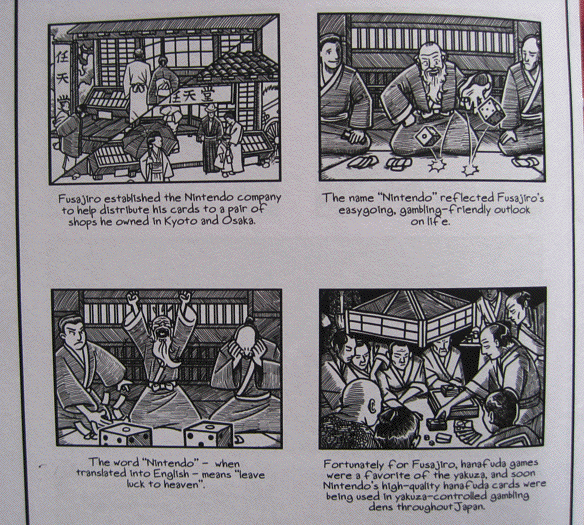
Did you know that the Nintendo company was founded in 1889 and originally sold playing cards and operated brothels? Comic book artist Bill Mudron is composing a comic-form history of the company.
Les Jones on what superhero comics have taught him:
If you make a sentient robot that’s indistinguishable from a human being and has superpowers like flight, laser bolts, and invisibility you shouldn’t start a business and sell it on the free market. Instead you should try to kill Superman and become mayor of Metropolis.
This is something that I've thought about for quite a while. If I had superpowers, the first question I would ask myself is "How can I make a lot of money from these powers?", not "How can I become a secret, tormented hero, likely to be killed at some point in the future?"
I've started watching the more recent Battlestar Galactica series. I watched a bit of the late 70s series when I was a child, which never really grabbed my attention.
So far, I've seen the 2003 miniseries and the first episode of the show which began in 2004, and I'm deeply impressed. The worldbuilding is outstanding, and the stories are well-written, acted, and directed.
I suspect that Stargate: Universe (an excellent show in its own right) is derivative of it. Both feature the same shaky-camera documentary style cinematography. And central to both shows is that the characters have been thrown at random into the unknown with minimal resources.
Have you seen Battlestar Galactica? What did you think of it?
I don't need some pencilneck with four Ph.D's, one-thousand hours of simulator time, and the ability to operate a robot crane in low-Earth orbit. I need someone with four years of broad-but-humanities-focused studies, three subsequent years in temp jobs, and the ability to reason across multiple areas of study. I need someone who can read The Bell Jar and make strong observations about its representations of mental health and the repression of women. Sure, you've never even flown a plane before, but with only ten days until the asteroid hits, there's no one better to nuke an asteroid.
Film critic Roger Ebert kicked in a hornet's nest in the geekosphere when he asserted that video games are not and never can be art (via Nerd Bastards).
Having once made the statement above, I have declined all opportunities to enlarge upon it or defend it. That seemed to be a fool's errand, especially given the volume of messages I receive urging me to play this game or that and recant the error of my ways. Nevertheless, I remain convinced that in principle, video games cannot be art. Perhaps it is foolish of me to say "never," because never, as Rick Wakeman informs us, is a long, long time. Let me just say that no video gamer now living will survive long enough to experience the medium as an art form.
Ebert wrote in response to a TED talk from game designer Kellee Santiago on the subject.
I would prefer to do a straight fisking of Ebert, but he wrote largely in response to Santiago, who I think provided an inadequate definition of art and thereafter proceeded in the wrong rhetorical direction.
So rather than defending Santiago's perspective and rebutting Ebert, let me argue positively that video games can be art.
We begin with the most foundational question: "What is art?" Here, I think, Santiago makes an early mistake by defining it as "the process or product of deliberately arranging elements in a way that appeals to the senses or emotions."
Without consulting other sources, let me offer this alternative: art is the outward expression of an inward conception of an ideal condition, such as beauty or terror. If a person thinks of something beautiful, it is not, in and of itself, art. If that person can effectively communicate it through text, performance, or a physical rendering, then he has created art.
It is necessary to note that some degree of technical skill is required. If a person is able to fully externalize his inner vision, then he has created good art. If he is hampered by a lack of technical skill, then the product represents a limited and obscured expression of the image trapped within the confines of the mind.
A person may attempt to disguise his lack of technical ability by choosing an expression that does not require great technical skill and claim that the original intent has been fulfilled. This is how we can discern the difference between Bouguereau and Pollock. Pollock chose more abstract expressions because he lacked the technical skill necessary for concrete expressions. Bouguereau, if he wished, could have created a Pollock. Pollock could never have created a Bouguereau.
So art is not fully egalitarian. A talented few, with training to hone their raw talent, will be able to outwardly express their inner vision. The rest of us will not. Or as Rudy Giuliani has been quoted "If I can do it, it's not art."
Therefore, one test of an activity as a medium of art is to ask "Can anyone, with sufficient training, do it?"
I'm inclined to think not.
Ebert suggests that the anonymity of game designers evidences their unworthiness of mention:
Yet she concedes that I was correct when I wrote, "No one in or out of the field has ever been able to cite a game worthy of comparison with the great poets, filmmakers, novelists and poets." To which I could have added painters, composers, and so on, but my point is clear.
Quick -- name ten composers. Now name just three game designers.
How well did you do? I'm not a musical person, but I came up with ten composers and not a single game designer. Does this mean that they are not artists? Does fame denote true art?
No -- and for a reason that Ebert of all people should understand. If game design may be compared to any medium, it is filmmaking. Both media are enormous collaborative projects that require between dozens and hundreds of specialized workers. Give Spielberg the job of creating a film entirely by himself, and he'll create something as mediocre as a game designed entirely by a solitary producer at Ubisoft. If filmmaking is an artistic medium, then so is game design. If art can be created collaboratively on film, then it can be created collaboratively in pixels.
But we can name Steven Spielberg. And Oliver Stone and the Coen Brothers and many more. But no game designers. Why? Because game production is a very rapidly changing industry, and viciously cut-throat. The technology that empowers it is growing so fast that the market rolls over any designer who can't keep up with the frenetic pace. A game made ten years ago is as crude as Georges Méliès' 1902 Le Voyage Dans la Lune. But a movie made ten years ago can be better than current releases because the medium is comparatively stagnant. Filmmakers can rest on their laurels; game designers cannot.
Both Santiago and Ebert actually mention Méliès and his film Le Voyage Dans La Lune. Ebert writes:
Now she shows stills from early silent films such as George Melies' "A Voyage to the Moon" (1902), which were "equally simplistic." Obviously, I'm hopelessly handicapped because of my love of cinema, but Melies seems to me vastly more advanced than her three modern video games. He has limited technical resources, but superior artistry and imagination.
How so? Ebert does not explain. To Santiago's most effective argument -- that video games are at an early stage of artistic development comparable to the earliest movies -- Ebert is almost silent.
But I won't argue from Santiago's perspective, which, as I've said, starts with a somewhat faulty definition of art. I define art -- and specifically good art -- as the effective outward expression of an inward conception of an ideal condition. If a person thinks of a story, and can express that story fully in text, that person is an artist and has produced art. If a person thinks of a sound and can fully express that sound in music, that person is an artist and has produced art. If a person thinks of a movement and can fully express that movement in dance, that person is an artist and has produced art. If a person thinks of an image and can fully express that image in paint, that person is an artist and has produced art.
If a person can envision a video and gather a team together that can accurately express that inner vision, that person is an artist and has produced art.
If a person can envision an interactive video and gather a team together that can accurately express that inner vision, that person is an artist and has produced art.
And that's what video games are -- interactive visual and auditory environments that express an inner vision. Not everyone is capable of producing good video games. I can't and Roger Ebert can't. The task requires people with a natural talent sharpened by formal training. They can create artificial worlds where we can experience their inner vision. Such people are artists.
And the product of an artist is art.
Now yesterday this post began as a comment at Nerd Bastards, and it grew and grew until I realized that I should write an entire post on the subject. While composing it, I encountered this excellent response from Jerry Holkins of Penny Arcade (via reddit). An excerpt of its brilliance:
so there's nothing here to discuss. You can if you want to, and people certainly do, but there's no profit in it. Nobody's going to hold their blade aloft at the end of this thing and found a kingdom. It's just something to fill the hours.
Also, do we win something if we defeat him? Does he drop a good helm? Because I can't for the life of me figure out why we give a shit what that creature says. He doesn't operate under some divine shroud that lets him determine what is or is not valid culture. He cannot rob you, retroactively, of wholly valid experiences; he cannot transform them into worthless things.
He's simply a man determined to be on the wrong side of history, the wrong side of the human drive to create, and dreadfully so; a monument to the same generational bullshit that says because something has not been, it must not and could never be.
All of this is true. Ebert, film critic, is no different from the people a century ago who proclaimed that film could never amount to anything; that it was not real art. His views will end up on the ash heap of history, and we know it, and he knows it.
Anna the Red made this lovely bento box featuring a Bioshock Big Daddy and Little Sister. You can read more about the project and see in-process photos here.
Leonard Nimoy, 79, announced that after an upcoming episode of Fringe, he will retire from acting. Nimoy is an accomplished photographer, and the article about his retirement shared this touching story:
He acknowledges he was met with skepticism initially about this latest creative venture, “but I’ve built credibility now in the art world.”
And among the general population, too. He recalls an incident in which he and Tom Hanks were approached by a young man who wanted his picture taken with Hanks. When Hanks asked who would take the photo, the man turned to the now former Mr. Spock.
“He said, ‘Mr. Nimoy, you’re a wonderful photographer. Would you take our picture?’”
In other news, George Takei turned 73 years old. Sci Fi Wire has a list of 25 interesting facts about him, such as that he was named after King George VI.
A Star Trek actor named after a Windsor monarch? Sure, why not. After all, William Shatner might become the Governor-General of Canada, representing Queen Elizabeth there.
So here's the idea for this Splinter Cell video game viral marketing stunt: hire a guy to dress up in bloody bandages, run around in public pointing a fake gun at people. What could possibly go wrong?
The police showed up. Their guns were not fake.
About 20 revellers drinking outside Degree bar dived for cover after the promotions worker threatened them with a black imitation pistol about 8pm on Friday.
Witnesses said they heard someone shout “he’s got a gun” and outdoor drinkers dived behind their tables.
Degree manager Steph Kurtovich said: “This guy with bandages on his hands pointed a gun at customers sitting outside. They were pretty terrified.”
The stunt, to promote the release of Xbox title Splinter Cell Evolution, was condemned by police.
Senior Sergeant Ben Offner said officers could not tell the gun was made of plastic until they had taken it from the actor.
I'm not sure why this scene exists, but I think that punching Hugh Grant is self-evidently good, so here it is. I'm informed that this is a scene from some chick flick called Bridget Jones’s Diary. You can tell that it's a chick flick because Hugh Grant is in it.
Maddie Chambers of Chesterfield, UK, made this very detailed model of the home of Bilbo and Frodo Baggins:
There is a tiny one-inch version of the Baggins family tree framed on one of the walls, an even smaller, fully accurate map of Middle Earth and even notes in Frodo's 'Elvish' handwriting littering the hobbits lounge.
The kitchen is stocked with miniaturised food and utensils and a barrel bearing a longbottom leaf label the ale drunk by the hobbits in the record-breaking films.
Every scrap of furniture been created from scratch and duvets, rugs and towels mean any tiny hobbits could live in comfort.
There is also a shelf of microscopic books on offer and beautiful dresser drawers and wardrobes to help fashion-conscious elves look the part.
This isn't my usual fare here at The Zeray Gazette, but it's too good not to share. This video imagines the Dude as a clutzy, incompetent MacGyver. Almost as good as the Shakespearean version.
Good Show Sir is a photoblog of bad science fiction novel cover art. Here's the annotation for Will Shetterly's The Tangled Lands:
It was my late teens and I was studying hard at some top notch university. Then came the LSD and it was all, floating semi translucent men surrounded by magical orbs in a forest being watched by unicorns. I suppose that has something to do with the world of cats, right?
I watched about a twenty episodes of Babylon 5 when it aired -- enough to know that I was missing something pretty awesome. So in the past couple months, I watched the entire run of the show, the movies, and a few episodes of the awful spin-off show Crusade.
It was as good as I remembered. Some of it is creepy-cultish (e.g. "We live for the one, we die for the one."), but it is a rousing adventure and an intricate story arc, well-executed.
Have you watched Babylon 5? What did you think of it?
The long struggle between the Alliance and the Horde in World of Warcraft recently boiled over into real life and real consequences. This might be a hoax, as the claim has not been verified, but one man claims that he was turned down for a job because the interviewer's character was in the Alliance, and his character is in the Horde:
A recent thread located on the Official World of Warcraft Forums told a story about what a player went through at their recent job interview. The job in question was a pretty important position at a local television stated located in Chicago. It seemed like a reputable place to the player, and all was going well according to the interviewee.
As the interview carried on, the player, known as "Urge," was asked what they enjoyed doing in their spare time. Of course, to this question this Urge responded by saying she played World of Warcraft. It turned out that the interviewer was also a big fan of World of Warcraft, and like any fan, asked which race Urge played on.
Excited now, the the player told her interviewer that she played a level 80 Blood Elf Priest. Unfortunately, it seemed as though this was the wrong answer because he replied, "Well I play Alliance" and almost immediately the interview was cut short, leaving Urge to ponder.
While browsing through deviantART for blog fodder, I discovered that user Timothy Miller has created many fine works of stained glass, including several Transformers. Pictured above is his Bumblebee. At his gallery, you can see his Optimus Prime, Galvatron, and Unicron pieces. Also, his John Deere logo is just cool.
YouTube user Shane Bang has created some impressive music videos using nothing but pencils and pens. He does a lot more than just tap to the rhythm. Here's his rendition of the Super Mario Bros. theme music.
By Andrew Zubko, the same artist responsible for the Batman vs. shark painting. Zubko created this cover for The Portland Mercury to the specifications given to him by readers in an online poll. That makes me really respect that magazine's readership.
This marvelous website asks readers to discern, from one thousand possible choices, the most awesome thing ever. It randomly selects two to display, and you select one. For example, which is more awesome, the planet Jupiter or Mariah Carey's Glitter?
Go forth and lend your voice. The five most currently awesome things are (in order) the Internet, a nap, life, oxygen, and music.
This funny short film by Studio Joho provides a more realistic and certainly more cynical view of what happens to the video game hero after he rescues the princess.
io9 is hosting a poll that asks which science fiction and fantasy fanbase is the most fanatical. I'm going with Harry Potter, but I admit that I'm influenced by my utter lack of interest in the series. I had to read the first novel back in library school, and it never grabbed me. What did you vote for?
At Mental Floss, Brian Gottesman compiled ten things about J.R.R. Tolkein that you may not have known:
2. He didn’t share your enthusiasm for Hobbits. Tolkien saw himself as a scholar first and a writer second. It always irked him that his scholarly works went largely unknown by the general public, who flocked to his fantasy writings. The Hobbit and The Lord of the Rings were largely Tolkien’s attempt to construct a body of myth, and their success caught him largely unaware. In fact, he spent years rejecting, criticizing and shredding adaptations of his work that he didn’t believe captured its epic scope and noble purpose! He was also utterly skeptical of most LOTR fans, who he thought incapable of really appreciating the work, and he probably would have probably been horrified by movie fandom dressing up like Legolas.
8. He invented languages for fun. A philologist by trade, Tolkien kept his mind exercised by inventing new languages, many of which (like the Elvish languages Quenya and Sindarin) he used extensively in his writing. He even wrote songs and poems in his fictional languages. In addition, Tolkien worked to reconstruct and write in extinct languages like Medieval Welsh and Lombardic. His poem “Bagmē Blomā” (“Flower of the Trees”) might be the first original work written in the Gothic language in over a millennium.
10. He wasn’t nearly as fond of Nazis as they were of him. Tolkien’s academic writings on Old Norse and Germanic history, language and culture were extremely popular among the Nazi elite, who were obsessed with recreating ancient Germanic civilization. But Tolkien was disgusted by Hitler and the Nazi party, and made no secret of the fact. He considered forbidding a German translation of The Hobbit after the German publisher, in accordance with Nazi law, asked him to certify that he was an “Aryan.” Instead, he wrote a scathing letter asserting, among other things, his regret that he had no Jewish ancestors. His feelings are also evidenced in a letter he wrote to his son: “I have in this War a burning private grudge—which would probably make me a better soldier at 49 than I was at 22: against that ruddy little ignoramus Adolf Hitler … Ruining, perverting, misapplying, and making for ever accursed, that noble northern spirit, a supreme contribution to Europe, which I have ever loved, and tried to present in its true light.”
 Ugh. I have a fever of 102.1°F.