Showing posts sorted by relevance for query individualism. Sort by date Show all posts

Friday, April 13, 2007

Two Cheers for Humanism!

I have previously described myself as a recovering humanist. American society is strongly humanist, and I drank deep from that well, particularly during my years in atheism. American humanism is not a new phenomenon, but is intrinsic to its national character.

Yet humanism, it is pure form, is incompatible with Christianity. Humanism has a very high moral view of humanity, in contrast to Total Depravity. The American church, both Right and Left tends to feel icky about the notion that humans, though made in God's image, have somehow brutally effaced that image to the point where we cannot repair it on our own, but must rely on God's unmerited grace to be saved. We like being self-reliant, not other-reliant, and our popular heroes reflect this tendency.

I reflexively rejected this as a new Christian, but through formal instruction (Asbury made me Totally Depraved) and God's convicting grace in prayer, I came to understand that I was hopelessly lost, not simply from the tribulations of this earthly life, but from the spiritual forces in my corrupted soul.

But before I became a Christian, I was a libertarian, and I still am now. And libertarianism, or any political philosophy which supports limited and representative government, is predicated upon the belief that humans are basically decent creatures who deserve to rule their own lives. The notion of human rights presupposes that people deserve certain things simply by being born human.

From the beginning, this humanistic concept was written into the fabric of America's self-definition. For example:

We hold these truths to be self-evident, that all men are created equal, that they are endowed by their Creator with certain unalienable Rights, that among these are Life, Liberty and the pursuit of Happiness. — That to secure these rights, Governments are instituted among Men, deriving their just powers from the consent of the governed, — That whenever any Form of Government becomes destructive of these ends, it is the Right of the People to alter or to abolish it, and to institute new Government, laying its foundation on such principles and organizing its powers in such form, as to them shall seem most likely to effect their Safety and Happiness.

My studies of libertarian political philosophers, such as the Founding Fathers, Friedrich Hayek, and Ayn Rand led me to place high value to the word "individualism". The concept of the individual is the essential foundation of all limited-government political philosophies. Ayn Rand wrote:

The smallest minority on earth is the individual. Those who deny individual rights cannot claim to be defenders of minorities.

These rights are, when summarised in Lockean fashion, life, liberty, and property. Limited-government political philosophies hold that there are certain things that the government may not do. The founders of the American republic strongly believed this premise, and hence provided for a Bill of Rights.

But if individualism is wrong and misguided, then the ideas built upon that foundation stone must collapse. If individualism is in total error, then there should not be limited government.

As I said, I traditionally attached positive, not negative value, to individualism. My first encounter with widespread rejection of this notion was in the Methodist Blogger Profile Series. One of the questions that I ask is "What philosophical thesis do you think is most important to combat?" Many, many people responded that it was individualism. A simple word search for 'individualism' in my blog's archives show how prevalent this view is. I was initially shocked by this response, especially since my response for my Methodist Blogger Profile was 'collectivism' -- the exact opposite of individualism.

But I was thinking of these terms politically, whereas my colleagues were thinking theologically. Many of them hold that American Christianity has a privatized faith, where there is a separation between public and private lives, as well as a rejection of the need for a rigorous community life. Postmodernism, which holds that truth is not objective, but subjective to the individual, is contributing to the development of this individualized Christianity.

All well and good. I happen to agree that people can excessively privatize their faith and create a false dichotomy between how they live and private and how they worship in public. But theological premises have political consequences, which is why my libertarian spidey-senses get inflamed when I hear Christians attack individualism.

No society predicated on individualism has ever built a death camp. But other societies, such as Nazi Germany or the Soviet Union, have determined, as an official concept of national self-definition, that the collective is more important than the individual. A death camp is a political statement to the effect "For the good of the collective, this individual must die."

Now this is not to say that those who raise concerns about individualism in American Christianity would to build death camps or destroy democracy. They are thinking of these terms as theological, not political assertions. But as I said, theological premises have political applications. The road that begins with "The individual is less important than the collective" ends at the gates of Auschwitz.

So having been attentive to politics since the age of twelve, I tend to reflexively contemplate how different ideas, theological and philosophical, could be used or abused in a political dimension. In this manner, arguments that the individual is unimportant or that human beings are helpless and incapable of directing their own lives set off all sorts of political alarms in my head.

Limited and representative government cannot exist without the acceptance of certain humanistic beliefs. Yet humanism is contrary to the Gospel. Humanism is responsible for distorting true Christian belief and the full confrontation of our sinful nature. Nevertheless, humanism is useful. In fact, it's essential if we wish to live in anything remotely resembling a free society. And I think that the proper measure of an idea is how it effects people's lives when it is carried out.

American democracy, although imperfect, has proven that humanism has some real advantages. Americans may prefer to think of their political philosophy as somehow Christian, but even cursory study overthrows this notion. Again, the Declaration of Independence:

We hold these truths to be self-evident, that all men are created equal, that they are endowed by their Creator with certain unalienable Rights, that among these are Life, Liberty and the pursuit of Happiness.

Here, the Founding Fathers make a traditional nod to Christianity as the essential presupposition of their new society. But Biblically speaking, their claim is nonsensical (hence why they do not quote any passage of Scripture). Although one may proof-text Biblical passages to support democracy, historically, democracy came from humanism, not Christianity.

So what is the impact of humanism? It has simultaneously undermined the Gospel and made human existence far more livable. So I cannot proclaim "Three cheers for humanism!" But I can manage two.*

*Line paraphrased from What's So Great About America? by Dinesh D'Souza.

Friday, October 28, 2005

Observations from the Methodist Blogger Profiles, III

What intellectual thesis do you think is most important to combat?

Andy Bryan:
Pharisaic rigidity. Jesus fought against the “my way or the highway” people of his day, and lo and behold, they are still around today.

Michael Daniel:
That man is into doing good only because he is expecting something in return. We view too many actions and question ulterior motives when we refuse to realize that man is quite capable of doing good for the sake of goodness itself

Richard Hall:
Individualism.

Greg Hazelrig:
It would probably be the individualistic view of those who believe it’s all about them and Jesus, while love of neighbor is absent from their thinking. I just love the quote from Jim Wallis’ book God’s Politics that goes “God is personal but never private.” These people are often times the ones that hold to the belief that once they have become Christians they can do pretty much what they want while judging others for their sinfulness. People may not say this, but many live it.

Steve Heyduck:
Following on my previous answer, that we in the US are somehow “beyond” culture and particularity.

Larry Hollon:
The thesis that science and religion are incompatible.

Grandma Jean:
I don’t waste my time on stuff like that.

Whit Johnstone:
Prosperity Theology. It’s the antithesis of the Gospel.

Lorna Koskela:
Erm …can I skip this? Seriously the belief that all truths are equal is anti-scriptural. We should respect people’s right to believe what they choose, but we cannot in all honesty say that their belief is right and when asked we must learn to say that Scripture says and we believe that salvation comes from belief that Jesus is the Christ and died for our sins.

Gregory Lee:
Liberal theology where the deity of Christ is denied.

John the Methodist:
Collectivism – the notion that people only have value as members of groups, rather than as individuals. It is collectivism that has led to the worst evils the world has known: communism, fascism, and the Teletubbies.

Craig Moore:
Call me a ‘modernist,” but I hate to conceive of a world without absolutes and any reliable authoritative truth. I think that people need to have something bigger than themselves to believe in, inspire them and guide them.

Chris Morgan:
The underlying philosophical principle of determinism, a principle seldom clearly expressed but appearing everywhere. Sex-ed classes assume that because teens have sexual urges, they must inevitably act upon them. Criminal defendants claim that their actions are determined by their upbringing. “We can’t help it,” everyone seems to say about something.

I, on the other hand, believe quite strongly in personal responsibility. No one forces a man to have an affair with his secretary. Those who are fired because they do not come to work on time have no one to blame but themselves. I am certain everyone will encounter the unexpected, even the unfair. But we must own our actions and reactions; we are not all innocent victims of circumstance. I believe a great deal of personal growth takes place when we recognize our capacity for choosing wisely and take responsibility for doing so.

Jonathon Norman:
I think in our culture- the idea that “it’s all about me”/ie individualism is a HUGE problem that must be addressed by the church, and responded to. An affect of individualism is that Christians tend to see our relationship with Jesus as personal rather than communal (it’s just me and Jesus). I won’t go into specifics here, but both conservative and liberal Christians suffer theologically from individualist theology. If we take the Trinity seriously then we take serious that God is communal in nature

Gerry Charlotte Phelps:
The conceits that science has proved Christianity false, and that God does not exist; and that modern scholarship has debunked the Bible.

Beth Quick:
I think it is important to combat views like those that hold God directly responsible for things as acts of punishment, such as God punishing America in September 11th because of gays and lesbians in the world, or God punishing Southeast Asia with earthquake and tsunami because of non-Christians. I think those views can be so harmful to people, their faith, and their relationship with God.

Shane Raynor:
Religious and moral relativism. We have high-profile people within our own denomination who teach that there are ways to eternal life apart from Jesus Christ. This is unacceptable.

Gavin Richardson:
“God is Dead” by nietzche. Being in youth ministry I get questions from my youth that they feel that God is dead (they don’t actually know of nietzche) but I feel it’s a feeling more and more people are feeling comfortable to finally say ‘this is my view of God, but I don’t want it to be.’ So I see part of my role as a minister in helping people relate to their God that is alive.

Brett Royal:
I don’t believe that truth is relative. If two people believe differently, and their beliefs are mutually exclusive, at least one of them is wrong. I had a coworker make the following comment to me (almost verbatim): “To me, God doesn’t exist. If you believe in God, that’s ok, because to you he does exist.” I told him that he is missing the point. Either God exists or he doesn’t. If He does exist, my coworker’s disbelief is not going to make God not exist. On the other hand, if God doesn’t exist, all the prayers in the world will not conjure him up. We can’t both be right. We can agree to disagree, but we can’t both be right. To say we are both right is nonsense.

Josh Tinley:
I don’t know if this counts as a philosophical thesis, but I abhor the practice of classifying everything as either liberal or conservative, left or right.

Joel Thomas:
Objectivist-type philosophies such as those of Ayn Rand because they conflict with Christ’s command of “love of neighbor.” Although I disagree with libertarianism, which seems a distant cousin to objectivist philosophy, libertarians can and often do feel there is a moral obligation to help by private means those in need. Objectivist philosophy, however, seems centered around the created, as opposed to the Creator.

Dean Snyder:
If I had to pick one, I guess I’d go with laissez-faire capitalism -- the idea that human welfare is best achieved by a free market left to its own devices; the idea that less government involvement in economic decisions such as pricing, production, labor, and distribution of goods and services improves human welfare in the long run; the idea that weak individuals should be sacrificed for the greater good. In social life, its spiritual equivalent might be called “survival of the fittest.”

Jay Voorhees:
Individualism and consumerism. These are the ethical challenges that put our society most at risk.

Cole Wakefield:
What an interesting question

Dave Warnock:
Christian Faith is a personal thing disconnected from Christ and his Church that should not affect the whole of life or other people.

John Wilks:
In terms of evangelism, relativism has to be the biggest issue. Relativism and monotheism are flatly incompatible. Besides, relativism, when it gets passed academia and into practice, becomes "might makes right" and opens the door for great oppression and injustice.

Thursday, August 14, 2008

Individualism and the Christian Life

Andrew Thompson speculated about the pervasiveness of individualism in American culture and asked:

Is it possible to embrace a robust understanding of individualism without that including narcissism or selfishness as well?

And if not, doesn't that present an enormous problem for the church when it is forced to exist in a consumer culture like the one we've got in America?

My own thoughts are here.

Friday, October 14, 2005

Observations from the Methodist Blogger Profiles

Well, I'm back from a short time in a detox facility to address my addiction problem. I would stay longer but the press of seminary work will not permit it.

My thanks to Inlehain and Hyzenthlay for filling in for me. As you can see from their writings, they are..uh, different. My dog, thankfully, has a more mainstream political ideology.

Anyway, various Methobloggers have completed 25 Blogger Profiles, all of which are archived in the sidebar on the left. Over the next few days, I will post observations from reading over them.

What is your favorite hymn and why?
20% of all respondents replied "And Can It Be" by Charles Wesley, making it the most popular hymn among Methobloggers.

What intellectual thesis do you think is most important to combat?
Jay Voorhees, Richard Hall, and I gave diametrically opposite answers.

Jay:
Individualism and consumerism. These are the ethical challenges that put our society most at risk.

Richard Hall:
Individualism.

John the Methodist (me):
Collectivism – the notion that people only have value as members of groups, rather than as individuals. It is collectivism that has led to the worst evils the world has known: communism, fascism, and the Teletubbies.

Monday, July 18, 2005

Methodist Blogger Profile: Jonathan Norman

Posted by Picasa

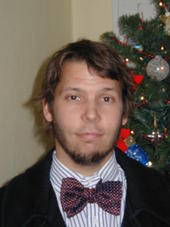
Jonathon Norman of the Phaith of Saint Phransus

I have lived in Tennessee all my life- and Nashville most of my life. I didn’t grow up going to church but began attending a United Methodist church when I was in middle school. I became active in the life of Dalewood UMC through the youth group, fell in love with one of the girls in the youth group and never left the church after that. I dated Jennifer (the girl in the youth group) all through high school, college and we got married right after college and how have 2 beautiful children- Jonas, 3 and Abby, 9 months.

I attended Middle Tennessee State University where I studied Philosophy with a minor in Religious Studies. I am now working on a Masters in Theological Studies at Trevecca Nazarene University. I’ve been a youth pastor for 11 years now and am currently in the candidacy process to become a licensed local pastor. I absolutely love youth ministry.

Why do you blog?
I blog mainly because I love to write, and for me- blogging is a spiritual practice, a lot like journaling. Plus, it helps me get my ideas out and wrestle with what I think.

What has been your best blogging experience?
My best blogging experience was my interview with theologian James K.A. Smith. Smith is the author of “Introducing Radical Orthodoxy” which is a book I’m reading that is having a big impact on my thinking. The interview went great and I discovered that he also blogs. So we’ve developed a pseudo friendship now.

What would be your main advice to a novice blogger?
Keep writing until you find your voice. Once you do, look for others to network with. My favorite part of blogging has been the small community of friends I’ve made that all visit one another’s blog.

If you only had time to read three blogs a day, what would they be?
1. Gavin Richardson’s http://www.gavoweb.blogs.com/
2. Jonny Baker’s http://jonnybaker.blogs.com/jonnybaker/
3. Jay Voorhees’ http://onlywonder.com/wordpress/

Who are your spiritual heroes?
1. Saint Francis (duh, go figure)
2. St. Benedict
3. Oscar Romero

What are you reading at the moment?
At the moment I am reading, not completely by choice although it’s good, Introducing Radical Orthodoxy by James K.A. Smith, Radical Orthodoxy by John Milbank and others, and then by choice- Another City by Barry Harvey

What is your favorite hymn and why?
“Jesu, Jesu”, 432 in the UM Hymnal. It’s a really cool folk song from Ghana. I love the lyrics and the melody.

Can you name a major moral, political, or philosophical issue on which you've changed your mind?
I have actually changed my mind twice on the issue of abortion. During college as my theology and politics began to shift I went from being pro-life to pro-choice. I also moved from supporting the death penalty to not supporting the death penalty. Since then I have adopted a pro-life stance: pro life that means that I believe ALL LIFE is sacred. For me pro life is inconsistent unless it opposes: 1. abortion, 2. capital punishment, 3. war.

What philosophical thesis do you think is most important to combat?
I think in our culture- the idea that “it’s all about me”/ie individualism is a HUGE problem that must be addressed by the church, and responded to. An affect of individualism is that Christians tend to see our relationship with Jesus as personal rather than communal (it’s just me and Jesus). I won’t go into specifics here, but both conservative and liberal Christians suffer theologically from individualist theology. If we take the Trinity seriously then we take serious that God is communal in nature

If you could affect one major change in the governing of your country, what would it be?
At this point, being the very impractical person that I am, I would find a way to create a level playing field for 3rd party candidates- whether green or libertarian, etc… Democrats and Republicans have taken us for granted for two long and their arguments and squabbles tire me.

If you could affect one major policy change in the United Methodist Church, what would it be?
I would like to see Bishops able to move across jurisdictional boundaries. I think our conferences and bishops have missed out on some wonderful potential “good fits” for ministry because we only allow bishops to move within a certain geographical area. Although, I’m still holding out that Bishop Willimon might make it to Tennessee next go around.

What would be your most important piece of advice about life?
When it comes to others- take life seriously; when it comes to yourself- don’t take it too seriously. I’m a pretty serious person who acts way to silly; although some would say that I am a pretty silly person who acts way too serious. Go figure.

What, if anything, do you worry about?
Paying bills on time, being a good dad and husband, and the violence in our world.

If you were to relive your life to this point, is there anything that you'd do differently?
I married my high school sweetheart, I have 2 extremely cute and loving kids, and I love what I do presently- hmmmm… Nope. I fear if I were to relive something it would be like “Back to the Future” and all of a sudden the faces of people I love are disappearing from family photos. That’s scary stuff.

Where would you most like to live (other than where you do now)?
Easy- I’d live in either Savannah Georgia, or Charleston SC. I love the southern charm of both cities. Every time I see a youth pastor position open in one of the cities I kind of get teary eyed thinking, “wouldn’t that be nice”.

What do you like doing in your spare time?
I would say that I enjoy writing (which I actually do immensely) but grad school has sucked the fun out of it... (not really, but my procrastination certainly has). But I also enjoy road trips with Jen, Jonas and Abby, hanging out in coffee shops with Gavin, reading fairly dry theology, and songwriting.

What is your most treasured possession?
Well, I don’t really consider my kids, Jonas and Abby, possessions- but they are what I treasure the most. But if it must be a possession, I suppose it would be my laptop since I depend on it for work, play and communication.

What talent would you most like to have?
Quick wit, and the ability to create ice cream socials all over the country where liberals and conservative Christians would sit, eat, and lick ice cream cones in joyful merriment, talking doctrine and theology while laughing and commenting on how good the chocolate chip ice cream is.

If you could have three guests, past or present, to dinner, who would they be?
1. Stanley Hauerwas (he would be fun as all get out to hang out with, especially with Soren in the room)
2. Soren Kierkegaard (I hear he was the life of the party back in the day)
3. Socrates (I think he’d keep the conversation going with all his questions)Now, that’s one kickin’ dinner party with some rich theological /ethical conversation, eh?

Saturday, March 03, 2007

Methodist Blogger Profile: Wayne Cook


Wayne Cook of TN Rambler's Ramblings

I am a 47 year old, second career, first-time appointee, full-time licensed local pastor in the Holston Conference of the United Methodist Church. I’m currently serving at Lookout Mountain UMC. I’m married to the love of my life. We are the parents of an amazingly talented 12-year-old daughter and we are the godparents of a beautiful Bassett Hound named Blossom.

I am a native of Franklin, Tennessee and grew up literally within a stones throw of First United Methodist Church and was very active in the UMYF at the local and district level (mid 70’s). I drifted away from church while in college but eventually came back with an even stronger faith than when I left.

I met my wife in college, although it took 8 years for her to finally catch me. After we married, we moved to Nashville and attended Belmont UMC. When my wife accepted a teaching job in Clarksville, TN, we moved to a community that was half way between our jobs, Pleasant View, TN. We joined Pleasant View UMC and found a home with the greatest and most loving bunch of people that I’ve had the privilege of knowing. We were there for 7 years before moving to Chattanooga to help care for my wife’s mom.

We joined Brainerd UMC in Chattanooga, the church home of my wife’s grandparents. I became a lay speaker, hoping to quiet a sense of calling that I had been running from since high school. However, the feeling intensified and I entered into the ministry inquiry process, candidacy studies and eventually was licensed on June 14, 2006. My long-range goal is ordination as an Elder, hopefully before I retire.

Why do you blog?
That’s a question that I ask myself almost every day. I started at the suggestion of a friend who thought that I might have something worth saying. TN Rambler’s Ramblings has evolved into more of a journal than anything else. I don’t write as frequently as I would like.

What has been your best blogging experience?
The discovery that there were folks actually reading and responding to what I had to say. Oh, and having Keith Taylor pop in at the church just to say Hi was cool too.

What would be your main advice to a novice blogger?
Find your voice and keep plugging away. Write about the things that you have a passion for and share that passion with your readers.

If you only had time to read three blogs a day, what would they be?
Three is pretty limiting, because I check my list of favorites at least once a day. Besides, how can I do this and not insult the bulk of the Methodist Blogroll (and my Nashville connection)? Oh, what the heck...
Locusts and Honey – I have a unique (some say strange) sense of humor and I like your style.
Ragamuffin Ramblings – Steve was the first blogger that I started reading regularly. He always has something important to say and he says it well.
Questing Parson

Who are your spiritual heroes?
Besides Jesus and John Wesley? Thomas Merton, C.S. Lewis, St. Benedict, Charles Wesley.

What are you reading at the moment?
Bill Clinton by Bill Clinton (although I’ve been “reading it” for the last year)
The Beatitudes for Today by James C. Howell
Creativity and the Divine Surprise, Finding the Place of Your Resurrection by Karla Kincannon

What is your favorite hymn and why?
O Love Divine, What Hast Thou Done by Charles Wesley. The words really speak to me of the centrality of the cross and the sacrifice that Christ made on my behalf.

Can you name a major moral, political, or intellectual issue on which you've changed your mind?
Abortion – I do not favor abortion but I don’t believe that it should be abolished. I find myself in agreement with ¶ 161J of the Discipline. I was once in favor of capital punishment, but now cannot condone it.

What philosophical thesis do you think is most important to combat?
Individualism – the sooner folks realize that it’s not about “me” the better off we’ll all be. As a society we are drifting away from the communal aspect of our nature and this is not a good thing.

If you could effect one major change in the governing of your country, what would it be?
I would require our politicians in Washington to be locked in a room until they could get along. The political divide in this country is destroying us. We also need to return to the days of statesmanship, when our representatives did what was right, not necessarily what was expedient. But then again, was there ever such a time?

If you could effect one major policy change in the United Methodist Church, what would it be?
I have spoken on my blog about my concerns re the draft report of the study of ministry commission. I believe that if these recommendations are adopted (as stated in the draft report) the church will disenfranchise many of our congregations being faithfully served by licensed local pastors by restricting the authority of all of our licensed clergy to celebrate the sacraments of baptism and holy communion. In my own charge, we have moved from once or twice a year celebrations of communion to monthly. As a first-year licensed local pastor just entering Course of Study, I would no longer be allowed to consecrate the elements or baptize under the current proposal. I fail to see how maintaining ecumenical relationships can be allowed to overshadow the needs of our congregations. So, I guess that I’m advocating that we NOT change our policy.

What would be your most important piece of advice about life?
Find yourself and become comfortable with who you are. Don’t take yourself so seriously. Find something to laugh about every day. Never forget that you are a child of God.

What, if anything, do you worry about?
I worry about having enough money to pay the bills and save for the future. I worry about how we’ll be able to afford college for my daughter (and for me, for that matter). I worry about the fact that we’re all about consumption and what kind of world we’re leaving for our children.

If you were to relive your life to this point, is there anything that you'd do differently?
I would have taken college more seriously and I would have completed my BA rather than accepting a great job (with great pay) in the summer before my junior year. However, I realize that my past has made me who I am, so would I really change anything? Probably not.

Where would you most like to live (other than where you do now)?
I would move back to Franklin, TN (or the Vandy/Belmont area of Nashville) in a heartbeat. A cabin in the Smoky Mountains of East Tennessee or Western North Carolina wouldn’t be bad either.

What do you like doing in your spare time?
Listening to music (My tastes are very varied) and reading for fun, especially in a rocking chair on a porch in the Smokies.

What is your most treasured possession?
They are not possessions, but my wife and daughter mean everything to me. I need to do a better job of letting them know that.

What talent would you most like to have?
The ability to accompany myself on piano or guitar would be great.

If you could have any three guests, past or present to dinner, who would they be?
My paternal grandfather – he died a month after I was born, Charles Wesley and Eleanor Roosevelt. It would at least be an interesting evening.

Sunday, August 27, 2006

Methodist Blogger Profile: Kevin Baker


Kevin Baker of Christian Conversations

I am a 39 year old pastor, husband, and father of three. My wife, Denise, is a saint for putting up with me for the past 18 years, and I am grateful for her love, support, and correction. I believe marriage is one of God’s vocational laboratories for growing into perfection in love, and Denise has never shied away from her Christian duty to “speak the truth in love” (thank God). If I have grown in discipleship at all over the past two decades, a large part of it is due to the Holy Sprit working through my wife and family.

My children are making me feel old these days, but that feeling is only surpassed by a good dose of pride and increasing doses of respect. All three of them are quickly approaching birthdays: Sarah (16), Zachary (15), and Rachel (12). I am an elder in the United Methodist Church, a graduate of Duke Divinity School (’94), and am one of two founding pastors of Reconciliation Church in Durham, NC, where I have served for the past 9 years. It is an intentionally multicultural, multiracial congregation that is committed to living into God’s call to be “agents of reconciliation.” My first appointment prior to Reconciliation was a three point charge in rural North Carolina. In the spare time that I don’t have, I also write for the UM Publishing House and serve as a teaching assistant and summer instructor at Duke Divinity School.

Why do you blog?
I love to write and I welcome any discipline that can help develop that passion. I started out with a weekly email meditation years ago, and have since written several things for publication. Blogging is different and the audience is immediate. I can write on current events and concerns and have immediate feedback (and a file of what I wrote in case I ever want to develop something further).

What has been your best blogging experience?
Having blog topics spark deeper theological reflection in small groups, studies, and hallway conversations.

What would be your main advice to a novice blogger?
I am a novice blogger. Ask “John the Methodist.”

If you only had time to read three blogs a day, what would they be?
Novice bloggers like me don’t read blogs every day, but if I were able to (and besides my weekly dose of MBWR?):
The Ivy Bush – by Jonathan Marlowe
Accountable Discipleship – by Steven Manskar
Kyrie Eleison – by Sky Lowe-McCracken

Who are your spiritual heroes?
 My mother (who has been through so much in her life that she should be canonized before death. When I hear of “prayer warriors,” she always comes to mind).

 Sabra (A former member of my first charge, now deceased, who was limitless in her generosity, her kindness, and her unconditional love. She never had much, but whatever it was she shared it freely regardless of race, creed, or worthiness)

 Peter (had his mind blown by Jesus at work while fishing, and on a roof while praying – I can relate)

 John Wesley (Among many things, he had a radical commitment to the poor – no holiness that is not “social holiness.”)

 Martin Luther King Jr. (Was able to engage the public square as a patriotic American without succumbing to blind nationalism and idolatry. Also became convinced of nonviolence, as more than a means to an end, but a way of life. A preacher, first and foremost before he was anything else)

 Oscar Romero (Loved books and reading; a life that was transformed by encounter with Christ among the poor; martyr for the cause of righteousness)

What are you reading at the moment?
In addition to “searching the Scriptures”:

Considering the Great Commission: Evangelism and Mission in the Wesleyan Spirit edited by Gunter and Robinson;

Making Disciples: Faith Formation in the Wesleyan Tradition: by Sondra Higgins Matthaei

Eat this Book: by Eugene Peterson

Making Room: Recovering Hospitality as a Christian Tradition: Christine D. Pohl

What is your favorite hymn and why?
“O for a Thousand Tongues to Sing” by Charles Wesley. It is a majestic poem of praise that paints a vivid picture of Jesus’ transforming power breaking into the lives of the poor, the lame, the blind, the deaf, the sick, and the sinful. I am always reminded of the “tongues” of Pentecost and the gift of language that accompanied the disciples in Jerusalem. The original has 19 stanzas with gems like:

Harlots and publicans and thieves
In holy triumph join!
Saved is the sinner that believes
From crimes as great as mine.


Can you name a major moral, political, or intellectual issue on which you've changed your mind?
I could actually name several, though in retrospect the changes seem less of an about face and more of a maturation in thought, theology, and discipleship. War and capital punishment are at least two examples – changes that came from taking seriously Jesus’ teachings on love for enemies. I had difficulty with what Wesley would call the “plain meaning” of these New Testament texts, and could not reconcile why Christians were so quick with all the footnotes and the “yeah, buts …” When I transferred into the United Methodist Church from the Nazarene Church, I was impressed that the UM stands on both issues more readily reflected Biblical teaching (at least on paper).

What philosophical thesis do you think is most important to combat?
Generic individualism

If you could effect one major change in the governing of your country, what would it be?
Where to begin? – It would be a nice start to have a president that is not a white male. (We certainly can’t use the excuse that there are no other qualified candidates)

If you could effect one major policy change in the United Methodist Church, what would it be?
Consciously move every local church towards weekly Eucharist in their main Lord’s Day services (Word and Table).

What would be your most important piece of advice about life?
Foster holy friendships, which Greg Jones describes as people who: “affirm the gifts you are afraid to claim, challenge the sins you have come to love, and dream dreams with you that you thought were impossible.”

What, if anything, do you worry about?
Keeping a healthy balance of work, leisure, and family time – and avoiding the subtle, but insidious ladder climbing scramble so prevalent in our appointment process.

If you were to relive your life to this point, is there anything that you'd do differently?
Hindsight is only good for changes in the present and future, and I have certainly learned from foibles and failures. The short answer is, no.

Where would you most like to live (other than where you do now)?
In the mountains next to a good trout stream.

What do you like doing in your spare time?
Most of my spare time is spent with family. Otherwise, reading, hiking, and playing b-ball. I have to admit that physical labor feels like Sabbath renewal to me now that I am a pastor (so working in the yard and garage should be included).

What is your most treasured possession?
An extremely large tea glass that my Grandfather used to use and that I now drink from every evening. (probably worth about 10¢ at Good will)

What talent would you most like to have?
To play the piano like Kent Brooks (gospel) or sing like Fred Hammond.

If you could have any three guests, past or present to dinner, who would they be?
King David, St. Francis, and Bishop Leontine Kelly (for different reasons)
As someone else has said before, I eat with Jesus all the time.

Saturday, July 15, 2006

Methodist Blogger Profile: Jonathan Marlowe


Jonathan Marlowe of The Ivy Bush

I am an elder in the Western NC Conference and the pastor of Shiloh United Methodist Church in Granite Quarry, NC. I am married to Angela Rogers Marlowe (who is also a pastor), and we have two of the greatest children in the world: Elizabeth (age 11) and Rachel (age 8). My favorite activities are spending time with my family and friends- talking, playing, traveling, and just having fun.

I grew up in a Methodist parsonage in SC, and my experiences in church and home helped foster in me a deep sense that I am loved of God, as we all are. I remember an experience in UMYF when we had a week of “youth disciple” where I felt Christ in a refreshing and convincing way. I owe a lot to my parents and church workers who helped shape me as a young person.

I went to college at Emory University in Atlanta, GA, where among other things, I was exposed to the writings of Stanley Hauerwas. I remember reading The Peaceable Kingdom , my freshman year of college, then reading it again, then reading it again. Finally I began to understand more of it. I began reading other books by Hauerwas and by John Howard Yoder, and wrote my sr. honor thesis on these two theologians. The summer between my junior and senior years of college, I worked with inner-city youth at the United Methodist Community House in Grand Rapids, MI. At the end of that summer, I felt called to become a pastor. I went to seminary at Duke, where my theological vision was deepened by my studies with Geoffrey Wainwright and I was introduced to the work of Karl Barth and Lesslie Newbegin. I was also shaped by the worship at Duke Chapel where Will Willimon was dean. I think I read as much theology now as I did when I was in seminary 14 years ago. I understand my pastoral vocation to be one of teacher, preacher, worship leader, spiritual guide, and trusted friend.

Why do you blog?
Like most bloggers, I blog primarily to express myself and organize my thoughts. As a bonus, it gives me a chance to engage in theological conversation in a way that I would otherwise never have.

What has been your best blogging experience?
Someone who reads my blog and lives in another part of the country was visiting in the area, and he came to see me and we had lunch. That was fun. That was probably my best experience with blogging: a real flesh and blood encounter.

What would be your main advice to a novice blogger?
I am a novice blogger. I should be asking you this question! I am not worthy to untie the thong of your sandals! But anway, I think one of the most important things to do when you are blogging is to post regularly. Of course, I don’t always practice what I preach in this regard. But it would be nice if I did, and if others did.

If you only had time to read three blogs a day, what would they be?
Bear Witness to the Love of God in this World by Ken Carter
Christian Conversations by Kevin Baker
The Phaith of St. Phransus by Jonathon Norman, even though he misspells “Jonathan”

Who are your spiritual heroes?
St. Francis – he really followed Jesus
John Wesley – he was an evangelical, sacramental, sanctificationist (he had the trifecta going!)
Dorothy Day, she found Jesus in serving the poor and resisting the principalities and powers
Martin Luther King, Jr. – his commitment to nonviolence and his courage
Eugene Peterson – makes spirituality local and particular; has the heart of a poet
N. T. Wright – his grasp of the New Testament
Marva Dawn – because she calls attention to all the unacknowledged assumptions we all make

What are you reading at the moment?
Gilead.
I am re-reading Lauren Winner’s Girl Meets God

What is your favorite hymn and why?
“The Church’s One Foundation is Jesus Christ, her Lord.” The hymn is about the relationship of ecclesiology and Christology. There is nothing more important for the recovery of Christian theological formation than this. It makes me weep tears of joy when I meditate on it.

Can you name a major moral, political, or intellectual issue on which you've changed your mind?
Not exactly. My whole life, I have been pretty much on a consistent trajectory of affirming life as God’s good gift- that means opposing abortion, war, capital punishment, euthanasia, and embryonic stem-cell research. That also means being for social justice, opportunities for the poor, universal health care, quality public education, housing for all, social structures that allow everyone to eat and have the basic necessities of life. One of these days, I may become a vegetarian, but right now, I like BBQ too much! I think I am more affirming of the good parts of American culture than I used to be. One of my hopes is that people will see that truly affirming all of life as God’s gift will cut across the artificial boundaries of liberal/conservative.

What philosophical thesis do you think is most important to combat?
Individualism: the assumption that I get to make up my own mind about everything without regard to the community. George Lindbeck uses the term experiential-expressivism to describe what I am talking about.

If you could effect one major change in the governing of your country, what would it be?
Abolish all nuclear weapons and WMD’s. If we don’t want other countries to have them, why should we? Save the money we spend on weapons of war and use it to help the poor. Beat our spears into pruning hooks. Think about how crazy this is: we have to reform welfare so that some mother with small children won’t get too many food stamps, but we can spend millions of dollars on nuclear weapons. I don’t get it.

If you could effect one major policy change in the United Methodist Church, what would it be?
Follow the advice of Richard Hays: suspend our debate over homosexuality and instead have a theological discussion on war and peace. The debate over homosexuality is not helping us to become a more holy people.

What would be your most important piece of advice about life?
Life is about relationships, and we foster relationships by spending time with people. So we enrich our lives by working, playing, and praying with others, especially God. Relationships are sacramental. I get this emphasis on relationships not from pop-psychology, but from Trinitarian theology.

What, if anything, do you worry about?
I worry about the depersonalizing effects of technology. I think that the uncritical use of technology can be a hindrance to forming deep and lasting friendships. If I spend more time with this computer than with my daughter, I will lead a hollow life. People with hollow lives are more easily manipulated by forces that would use them for unholy purposes.

If you were to relive your life to this point, is there anything that you'd do differently?
In high school and early college, I focused too much on academics. I should have just relaxed and had fun. Ironically, the more fun I had, the better my grades got.

Where would you most like to live (other than where you do now)?
Jasper, Canada. You have the most beautiful lakes and mountains in the world. You can’t be around such beauty and not be reminded of God’s goodness. This in turn helps me to see the beauty in each person.

What do you like doing in your spare time?
I really do love the Harry Potter books. I even taught some Harry Potter Bible studies with my children in my church, and I’ve had some writings published in this area. The one and only television show I watch regularly is Monk on USA. I also love Duke basketball and USC (Gamecock) football. The novels of Clyde Edgerton (about life in small towns in North and South Carolina) make me chuckle with the nod of recognition.

What is your most treasured possession?
Probably the Bible I received when I was ordained (deacon). I preach from it every Sunday, as a reminder of the fact that I proclaim the church’s faith, not just my own.

What talent would you most like to have?
A photographic memory. I wish I could remember everyone’s names. I wish I could remember all my sermon notes so I wouldn’t have to look at the outline. I wish I could remember all the different things I’ve read. I wish I could remember all of life’s little details.

If you could have any three guests, past or present to dinner, who would they be?
Dietrich Bonhoeffer, the Apostle Paul, J. K. Rowling

(I have dinner with Jesus all the time anyway).

Tuesday, April 11, 2006

Methodist Blogger Profile: Sky Lowe-McCracken


Sky Lowe-McCracken of Kyrie Eleison


I am the pastor of Reidland United Methodist Church, located in the suburbs of Paducah in greater McCracken County (no relation, as far as we know). Reidland UMC is a 430-member congregation that averages around 210 at the two Sunday morning worship services.

I have a BS from the University of Tennessee (Martin) and an M.Div. from the Candler School of Theology at Emory University. In the past, I served in the fire and emergency medical service in paid, paid-on-call, and volunteer positions. I am an avowed member of the Order of St. Luke, having professing vows in 1991 and Life Vows in 2000.

I am married to Liz Lowe-McCracken, who is employed by LiquidServices/Neel Enterprises of Ledbetter, Kentucky. We have one daughter.

Why do you blog?
It gives me a forum to communicate my musings and extended thoughts, and reaches a generation of people that are “online literate” who may also be hungry for faithful and spiritual food. I think it can also be an extension of how the Church communicates the Gospel. As a by-product, I think my blog has also allowed the people in my parish see my “human side” that struggles and celebrates life just as they do.

What has been your best blogging experience?
I was recently interviewed by a newspaper about my blog, and how it was different from other blogs in our local area with a focus on faith. I took that as a compliment.

What would be your main advice to a novice blogger?
Don’t be afraid to write about your dreams, hopes, fears, and struggles. Just be sure when you use sources that they are accurate and factual; there are enough gossip blogs out there already.

If you only had time to read three blogs a day, what would they be?
Besides Locusts and Honey?

1. Shane Raynor’s “Wesley Blog”
2. Ben Witherington (http://benwitherington.blogspot.com/)
3. Jay Voorhies “Only Wonder Understands”

Who are your spiritual heroes?
John Wesley, St. Luke the Evangelist, Augustine of Hippo, Frederick Buechner, Kathleen Norris.
What are you reading at the moment?
Holy Communion for Amateurs, N.T. (Tom) Wright. The newer edition is published under the title, The Meal that Jesus Gave Us.

What is your favorite hymn and why?
“Be Thou My Vision.” It’s a tune from my Irish rootage and a hymn that best expresses my spiritual yearnings.

Can you name a major moral, political, or intellectual issue on which you've ever changed your mind?
Abortion. I used to take the stance that it was preferable to an unwanted child or undesirable situation, but I came to realize that the same ethic I use to say that capital punishment is a premeditated murder equally applies to abortion.

What philosophical thesis do you think is most important to combat?
Without a doubt, individualism.

If you could effect one major change in the governing of your country, what would it be?
Healthcare and health insurance reform. Besides the immorality of some not having access to it, our present system simply isn’t working effectively anymore.

If you could effect one major policy change in the United Methodist Church, what would it be?
I would declare a moratorium on the mere utterance of the word homosexuality, as well as any derivatives of the word and any legislation on the matter. Regardless of what “side” some are on the matter, the issue has reached the status of idol in our denomination.

What would be your most important piece of advice about life?
Find balance and perspective, and let it be reflected in how we pray and spend our time, money, and efforts.

What, if anything, do you worry about?
I’m a worry-er, so I worry about everything… showing a lack of faith on my part.

If you were to relive your life to this point, is there anything that you'd do differently?
I would have done my community service project and become an Eagle Scout.

Where would you most like to live (other than where you do now)?
The mountains – either the Rockies or the Smokies. Scotland would be a very, very close second.

What do you like doing in your spare time?
I enjoy long motorcycle rides, and officiating basketball. Both relax and renew me.

What is your most treasured possession?
A Westbury 12-string baroque guitar (a craviola look-a-like). I got it the summer I graduated from high school, not knowing how I was going to pay for it ($325 in 1983). When my parents got wind that I was struggling to make payments, they paid it off. I have since “retired” it from active duty and it sits prominently in our living room.

What talent would you most like to have?
A solo singing voice. I can sing with a choir or ensemble, but have always envied those whose voice can make a sure and strong joyful noise.

If you could have any three guests, past or present, to dinner, who would they be?
Jesus of Nazareth, Martin Luther, and Benjamin Franklin (although I wouldn’t allow him to sit next to my wife).

Monday, March 13, 2006

Methodist Blogs Weekly Roundup # 56

Here's the week in review in the Methodist blogosphere:


Steven Manskar wrote about what it means to "take up your cross."

Andy Bryan blogged about the Missouri legislature's efforts to assert a Christian history to America and the culture of entitlement and UMC connectionalism.

Andy Stoddard lectionary blogged for March 6, 7, 8, 9, and 10.

At Bandits No More, Richard Heyduck wrote about the murder of a previous church member. Steve Heyduck wrote about re-reading Barth on community and his concerns about the way his Conference manages its budget.

Beth Quick wrote about the presence of women in the blogosphere, and the Methoblogosphere in particular.

Betty Newman used a washbasin as a model of our relationship with God.

Bruce Alderman wrote about Constantinian Christianity in America.

At Connexions, Joel Thomas the UMC understanding of the Apocrypha, whether criminal law should reflect the doctrine of Total Depravity (Best of the Methodist blogosphere!), and the burden or lack thereof of Wesleyan perfection. Richard Hall wrote basic guidelines to interpreting the Bible.

Dave Warnock wrote about switching to the Ruby on Rails web platorm.

Steve Heyduck reviewed the movie Crash.

Gavin Richardson wrote that bloggers should write with prophetic voices.

Gerry Charlotte Phelps advised Christians to learn another language for the sake of evangelism.

Grandma Jean is making prayer shawls.

Growing Up wrote about the spiritually cleansing power of rain.

Henry Neufield blogged about how science reporting in the media is too brief to be accurate, Brian McLaren's views on kingdom language, a vote on the sales tax in his county in Florida, issues in determining date and authorship of the Bible, rising American distrust of Islam, false representations of the other side in creation/evolution debates, how to be a grace-filled church, congregational size as a measurement of orthodoxy, the Bush Administration's failure to expect criticism, and dating the Book of Daniel.

Jay Voorhees wrote that even great Christian leaders, such as Bernard Law, can fall into sin. He also blogged about a Christianity that lays on the other side of patriarchy.

John Battern blogged about Christians staying in touch with the secular world, whether or not the UMC has high expectations of members, and the vain search for personal validation.

John Wilks wrote that taking up the name 'Christian' requires a transformation toward holiness.

Jonathon Norman wrote his understanding of what it means to be ordained.

Josh Tinley blogged about the turmoil of airline travel and how personality cults in baseball have created the steriod problem

Chris Kindle artblogged from the Carnegie Museum of Art.

Larry Hollon wrote about the decline of the newspaper business, the ongoing reconstruction of New Orleans, communication in an era of individualism, and organization in era of mass communications.

Mitchell Lewis blogged about having enough faith to pursue God's mission.

Mark Winter wrote about what the spirituality of children implies for the church and comparing worship service styles and baseball.

Craig Moore asked readers to define the evangelistic mission of the church.

Michael Daniel wrote about the prophecy of Fred Phelps and what parents expect from churches for their kids.

Mike Lamson differentiated between ministry to, for, and as postmoderns.

Jeff Lutz wrote about his work on the board of Walk to Emmaus.

Louie Gannon blogged about how Christians should understand fear.

New Reality Blog wrote about why the younger generation is abandoning church.

Olive Morgan blogged about sex trafficking in Europe, raising children without corporal punishment.

Peter Raser wrote about the Tom Fox, the member of the Christian Peacemaker Teams who was murdered in Iraq.

Jason Woolever wrote about what the Bible and Lincoln have to say about schism in the UMC and the hierarchical nature of UMC leadership.

Theresa Coleman heard the legendary Fred Craddock preach and recounts tales of good ideas gone bad.

Sandpiper reviewed the book Extraordinary Faith and wrote about trusting in God when things don't go your way and the purpose of funerals.

Lorna Koskela reviewed the book So Much More and wrote about authentic confession, the asceticism of Jesus, walking through Lent, and our devotional body language.

Stephen Fife saw human virtues and foibles in Peter.

Kurt Boemler wrote about his experiences getting drunk.

Brett Royal explained how a loving God can condemn people to Hell.

Thoughts from a Clay Pot wrote about the exploding growth of the Methoblogosphere.

Tony Mitchell wrote that Lent, like church in general, it a time of preparation for mobilization.
Jim McKay wrote about the minimum wage in West Virginia and a worldwide snack competition.

Shane Raynor launched Wesley Daily, a new Methodist webzine.

Brian Russell blogged about the critical elements of discipleship and the mission of his church planting.

Additions? Corrections? Do you know of a blog that should be included in the MBWR? Woult you like to have the MBWR e-mailed to you every week? Leave a note in the comments or e-mail locustsandhoney2005 at yahoo dot com!

UPDATE: More added to Jim McKay, corrections to Bandits No More's annotations, and Brian Russell added.

Tuesday, January 24, 2006

Methodist Blogger Profile: Mike Holly


Mike Holly of Inside Mike's Head

I’m married to Julie and we are both pastors in Birmingham, Alabama. We’re about to have our first child, Lena. I’m originally from South Carolina and went straight from college to Duke Divinity School for seminary. I’ve worked for the Southeastern Jurisdiction of the United Methodist Church, a Wesley Foundation and am now an associate pastor at a growing suburban church.

Why do you blog?
A friend of mine began blogging in 2004. After graduating from seminary where I was used to writing paper after paper, I figured that it would be a way for me to express my thoughts a part from my congregation. Blogging has become, however, more of a conversation for me, rather than a form of expression. This way, it seems as though we Methodist bloggers are constructing theology. Or rather, we are hashing out our theology in practical ways.

What has been your best blogging experience?
The best experience has been the camaraderie of the Methodist bloggers, engaging in the conversations and leaving uplifting messages. When my still yet-to-be-born baby’s heart had an arrhythmia, several people left messages saying that they would be in prayer. I never thought that blogging would lead to random friends being in prayer for my family!

What would be your main advice to a novice blogger?
Seriously, why would you want to do this? There’s so much pressure when the weekly roundup comes around and you haven’t written anything. So you have to come up with something brilliant you can say…hoping that you’ll get a “Best of the Blogosphere” award in order to stroke your own ego. You have to keep your mind set on being part of the conversation. It’s ok to post something as a thought (even though your write it as a proof or statement of faith) and then have people attack or disagree with you. The whole project is to put something out there that makes people think. But you have to listen to the honest responses that might guide you to a deeper understanding of your own theology. So in one word, focus!

If you only had time to read three blogs a day, what would they be?
Hit the Back Button: http://gavoweb.blogs.com/
St. Phransus: http://stphransus.blogspot.com/
John: http://locustsandhoney.blogspot.com

Who are your spiritual heroes?
I tend to quote Bishop William H. Willimon a lot. That’s because I went to Duke Divinity and he is now my bishop in North Alabama. But my heroes would have to be the German theologians in the 1930’s (mainly Barth and Bonheoffer). Most of modern theology has come from pre-war Germany, where they were battling with the creation of the Third Reich as a new “Roman Imperial Cult” and confronting earlier German theologians’ historical Jesus quest. There is nothing as rich as the confessing movement that admitted that allegiance to Christ trumps any other allegiance there is!

What are you reading at the moment?
I tend to read something heavy and something light at the same time. I just got “The Faith of Jesus Christ” by Richard B. Hays and began reading it. At the same time, I’m reading “Good To Great” by Jim Collins, as suggested to me by my D.S., about how some companies perform well and others perform excellently.

What is your favorite hymn and why?
Well, the one that immediately comes to mind is “A Mighty Fortress Is Our God.” When I was in South Africa in 2002 with the Southeastern Jurisdictional worship team, Kadasha, teaching youth ministers – we went to several Dutch Reformed churches that were caged in. Literally, some had barbed wire and guard stations. We sang “A Mighty Fortress Is Our Church” as a joke with a few people. They didn’t find it very funny.

The most meaningful hymn is “Come Thou Fount.” I especially like the last verse: “prone to wander, Lord, I feel it, prone to leave the God I love.” It speaks to me about how we all can be like the Israelites approaching God and then avoiding/abandoning God.

Can you name a major moral, political, or intellectual issue on which you've ever changed your mind?
Probably war. In high school and college I studied about Vietnam and I understood why people would protest. However, I only knew Desert Storm. And to me, that looked like a “good” war. It looked as though we had indeed saved lives and executed a war quickly and ended something horrible from happening. However, in reading Barth and Bonheoffer and then learning about the Mennonite anti-war stance, I feel that it is vital that Christians push for the preservation of life in war, just as we fight for the preservation of life in unborn children. I’m not going to engage the “just war” argument yet, because I’m still not sure how I stand there…

What philosophical thesis do you think is most important to combat?
The idea that faith is a just a segment of our lives…a segment of our brains…a choice we have among many choices. Faith and discipleship are never “ideas.” We are baptized into a new people and a new family. How in the world have we made baptism and church membership into the Mall of America…into a “myspace” where you can deny friends or join groups and then leave groups? The idea of individualism will eventually leave us alienated and alone.

If you could effect one major change in the governing of your country, what would it be?
I know a lot of people who are upset about the government asking for Google for records on searches. They’ll just find some boring searches for other people’s sermons on my part. That and some Google Earth looks at my family’s homes.

If you could effect one major policy change in the United Methodist Church, what would it be?
We are inheriting structures that don’t make much sense anymore. We keep some alive because we “believe” that they matter. When in reality, United Methodists continue to become increasingly unaware of their heritage. There is little “institutional loyalty” left. While I cannot imagine a future of our church where there is a “choose how you want to be Methodist” agreement, continuing with structures to maintain order and discipline may not be the answer. We may need to look at the way we are training our clergy or our laity…or in the way we ignore the idea of the “order” of elders – where they are to hold each other theologically and denominationally accountable.

What would be your most important piece of advice about life?
Based on my life history, I’m not so sure I am the kind of person who should be engaging this question. The best thing I can say is that in your life, you have to be honest about who you are. For years, I was under the impression that other people always had the best intentions for me. Or that I could “feel” my way through life. The thing is you’ve got to know who you are in order to make the best decisions. This might mean serious introspection, or it might mean intensive therapy. Whatever gets you to being able to hear the hard truths about yourself and seeing them as growing areas, that’s what you have to do. Knowing that I am a people-pleasing, wimp in a crisis or conflict, idea person means that I have to grow a backbone, make decisions that sometimes don’t please everyone, and grow in my ability to do ground work and orchestrate groups of people. I couldn’t make any headway in that unless I could own up to my shortcomings.

What, if anything, do you worry about?
Right now, that my wife could have a baby at any minute. Meaning that my life stops for an indefinite period of time!!!

If you were to relive your life to this point, is there anything that you'd do differently?
I feel pretty good about my life. Living through those painful years lead me to be able to learn about who I am, so it paid off!

Where would you most like to live (other than where you do now)?
My honest answer would be that I would have a home with the backyard being the mountains and the front yard would be in a downtown neighborhood close to a coffeeshop and music store. Since that is in no way possible, I would love to live in western North Carolina – specifically somewhere equally close to the Blue Ridge Parkway and Asheville.

What do you like doing in your spare time?
I used to hike, but my spare time now consists of getting ready for a child, working on the computer at home, and reading.

What is your most treasured possession?
Sadly as a techno-geek, I have to say my laptop and my iPod mini. It just seems so cliché to admit that.

What talent would you most like to have?
I would love to be able to play more than five chords on my guitar, but I would really love to have a photographic memory. It would help since I don’t have much time to really absorb much!
If you could have any three guests, past or present, to dinner, who would they be?
First of all, it wouldn’t be dinner – it would be one by one at a quiet coffee shop. So how about Zach Braff, Jeff Tweedy of Wilco and Jon Stewart.

Saturday, January 14, 2006

Methodist Blogger Profile: Nate Loucks

Nate Loucks of Stop. Then Read

My name is Nate Loucks and I'm the Next Generation Pastor at Lamb's Chapel in LaPorte, IN. I graduated from Bethel College (IN) last May with degrees in Biblical Studies and Ministry. I minored in Philosophy and Greek & Hebrew. One Sunday four years ago, snow filled the roads of our Northwestern Indiana town and the pastor at Lamb's Chapel could not come to preach. He was a professor at Notre Dame and couldn't make the nearly 30 minute drive because of the snow drifting over the highways. The people in the church, knowing my uncle Jay from when he attended the church years earlier, heard that Jay was an elder in a larger church nearby. They gave him a call an hour before service and he came and taught. There was 25 people in the congregation.

Jay started attending the small congregation and worked with the local pastor until the pastor was leaving for the east coast. The church decided that they wanted Jay, a plumber by trade, as their pastor. The DS approved such a move and thus started Jay becoming the pastor. After a few months and upon my return from China, my uncle Jay called and asked if I'd come and help him out. I did. Three years later, I've graduated and now I'm serving full-time. It's been the most rewarding yet challenging experience in my life. Four years down the road and we've experienced some growth (160 in weekly attendance) and have had a great time growing with our community.

Why do you blog?
When I was in high school, my friends and I started a terrible rock band. We didn't want to be terrible, it's just how it ended up working out. One day while we were thinking about ways to make our website more trendy and appealing to the four fans that tolerated us, we started “band member” blogs. It started on livejournal and then I moved to xanga. The band has retired since (waiting on my call from the Hall of Fame) and I keep blogging because I like it. There's a strange community amongst bloggers that I enjoy.

What has been your best blogging experience?
Every time I get an email that says, “Hey, I read your blog and I like it.” My first response is usually, “Seriously? My blog? Why?” It puts me in a good mood, though.

What would be your main advice to a novice blogger?
Convey your personality in your writing. Don't try and write as someone you are not. Be honest and authentic.

If you could only read three blogs a day, what would they be?
I'd first check the Blue Gray Sky (bluegraysky.blogspot.com). It's a really great Notre Dame football blog. I love the Fighting Irish. Then I'd check Shane at Wesleyblog. He's pretty neat. After that, and knowing I only had one blog left, I'd flip a coin and choose between Vodkapundit (www.vodkapundit.com), Locusts and Honey, or Finding Rhythm (www.findingrhythm.com)

Who are your spiritual heroes?
Jesus. Gene Carpenter. Jay Loucks. Rich Mullins. John Wesley.

What are you reading at the moment?
I reread Blue Like Jazz last week and enjoyed it again. I finished Flashbang by Mark Steele a few weeks ago and really found it a great read. The staff at LC are reading Leadership Wisdom from Unlikely Voices by Dave Fleming. I enjoy it. I have a problem of not being critical enough of the books I read. Usually, I'll enjoy any book in some capacity even when others don't.

What is your favorite hymn and why?
I'm ashamedly very unfamiliar with many hymns. I've probably read more hymns than I've sung. To tell you the truth, the only hymns I really know by heart are those on Johnny Cash's “My Mother's Hymn Book” cd. And, on that cd, “Just As I Am” happens to be my favorite hymn.

Can you name a major moral, political, or intellectual issue on which you've ever changed your mind?
I once believed that it was the government's responsibility to take care of the poor and impoverished in our nation. “If the government would give more money and more time to taking care of the plight of many of the less fortunate people in our society, we wouldn't have the problems we do,” I thought. Then, I had a major shift and came to the conclusion that I will not put my responsibility to love and care for the poor upon anyone else but me. The challenge to be more like Jesus is mine, not the government's.

What philosophical thesis do you think is most important to combat?
Individualism. The idea that we have to make the most out of ourselves and do whatever we can to further our own agenda. Thus far, in my life, I've learned that we cannot function properly as a family, Church, or society when an individual places himself at the forefront of his own agenda.

If you could effect one major change in the governing of your country, what would it be?
I'm not naïve enough to believe that I have the solution to our nation's problems. To be quite honest, I'm not sure what one change I'd make.

If you could effect one major policy change in the United Methodist Church, what would it be?
I think we have too many committees. Is there a MBP Questionnaire Committee

What would be your most important piece of advice about life?
Love God and love others.

What, if anything, do you worry about?
I worry about the next big change in my life. When I was a teenager, my mother died unexpectedly and, for the first time, I felt insecure about the future. My insecurities about my future usually don't manifest themselves into much but, at times, I can experience a bit of anxiety about “what's next”.

If you were to relive your life to this moment, is there anything that you'd do differently?
I don't think so. I'm very blessed with my family, friends, and Church. I wouldn't want to risk any one of things by changing something about my past. I'm glad my life has lead be to this point.

Where would you most like to live (other than where you do now)?
Since my wife is Romanian, I'd love to spend some time with her family and friends to experience her culture. When I was in college, I spent a semester in Beijing, China and really enjoyed my time their. I wouldn't mind returning some day.

What do you like doing in your spare time?
I like going to sporting events. Reading is fun. I read blogs and listen to podcasts. And, I watch Lost.

What is your most treasured possession?
My wedding ring. It is a constant reminder of the relationship I have with Ema the wife. My wife is incredible. You should meet her.

What talent would you most like to have?
I'd love to be a rock star. There are many talents that rock stars have that I don't. They can sing and/or play the guitar. Usually, great rock stars can write great songs; I can't. That seems to be getting in the way of my rise to rock stardom.

If you could have any three guests, past or present, to dinner, who would they be?
My mother, I'd love to have a conversation with her again. Abraham Lincoln. I think Honest Abe and I could be pretty good friends. Johnny Cash. A party with my mother, Abe Lincoln, and myself is completed perfectly by Johnny Cash. He'd play his guitar and I'd sing along with him. Abe can watch.

Wednesday, November 16, 2005

Methodist Blogger Profile: Richard Heyduck

Posted by Picasa

Richard Heyduck of Bandits No More

I’m pastor of First United Methodist Church in Pittsburg, Texas (http://www.fumcpittsburg.com/). I’m married to Christi & have children Emily, Paul and Hannah.

Why do you blog?
Because I’m opinionated about a wide variety of things and my day job doesn’t allow me to talk about them all. Blogging is also a good way for me to get some ideas down in a form I can access later when I want to develop them.

What has been your best blogging experience?
Hmmmm. Probably having people actually read what I write and comment on it.

What would be your main advice to a novice blogger?
Just do it. Write about things that interest you whether they add up to a coherent collection or not.

If you only had time to read three blogs a day, what would they be?
Instapundit, Lawson Stone, Evangelical Outposts. You asked for three. I always check yours (Locusts & Honey), Wesley Blog, The Corner, Uncommon Descent, Sci Guy, Seth Godin, Tony Morgan etc.

Who are your spiritual heroes?
John Wesley, Martin Luther, G.K. Chesterton, Brother Andrew, Hudson Taylor, my wife’s grandfather.

What are you reading at the moment?
I just wrote about this at Guy William’s place: http://www.bookmining.com/phpbb/viewtopic.php?p=27#27

What is your favorite hymn and why?
And Can It Be if I have to choose one. I love a bunch including Hark! The Herald Angels Sing, For All the Saints, A Mighty Fortress, etc.

Can you name a major moral, political, or intellectual issue on which you've ever changed your mind?
I used to think (20+ years ago) that world government was a good idea. I know a little more now.

What philosophical thesis do you think is most important to combat?
It depends on where I’m at & who I’m with. In many places, it’s the notion that truth or the most real is found in the general, the abstract and the universal. Christianity is rooted in the particular and the historical. As long as we thought with Lessing that “religion” is primarily about the “necessary truths of reason” (and that Christianity was a religion), we were hopelessly misguided. In other circles I argue against individualism.

If you could affect one major change in the governing of your country, what would it be?
That those who govern would be willing to answer questions even if (a) their answer didn’t fit into a sound bite and (b) they thought their constituents might not like their answer.

If you could affect one major policy change in the United Methodist Church, what would it be?
More thorough consultation in the appointment process along with Cabinet members who tell the truth. That’s a policy change. A non-policy change would be to recover the value of unified doctrine in the church.

What would be your most important piece of advice about life?
Pay attention.

What, if anything, do you worry about?
Not being a good dad; never making enough to buy a house; not being able to help my kids through college; preaching for years with no one “getting” it.

If you were to relive your life to this point, is there anything that you'd do differently?
I’d ask more people for advice along the way. Being an introvert, I never really thought people would be willing to tell me anything.

Where would you most like to live (other than where you do now)?
Someplace with mountains & forests.

What do you like doing in your spare time?
Reading, computers, genealogy.

What is your most treasured possession?
My family.

What talent would you most like to have?
Hmmmm. Wise leadership.

If you could have any three guests, past or present, to dinner, who would they be?
G.K. Chesterton, Charles Taylor, Johann Polhemius.